
Lancashire Post at 140: How the Toulmin family steered the newspaper through strikes and war
The Toulmin family's dedication to the Lancashire Post has seen the newspaper navigate significant events, including strikes and war, over its 140-year history.
This weekend, the Lancashire Post will have reached the milestone of 140 years of publication since its launch on Monday, October 18, 1886, as the Lancashire Evening Post, writes Keith Johnson.
As the previous feature revealed, it had been an overriding ambition of George Toulmin to establish a daily newspaper for his George Toulmin & Sons business, having been the proprietor of the Preston Guardian since 1859. His death in 1888 left his sons John and George in control of the business.
In 1893, the paper began publishing an early morning edition and changed its name to the Lancashire Daily Post, a title it would take into the next century before eventually reverting to its original name in 1949. The following year saw the Preston Chronicle published for the last time, leaving the Preston Guardian as the town's leading twice-weekly publication. The Preston Herald, first published in 1855, remained a popular weekly rival from its printing headquarters in Avenham Street until its final closure after a century of news reporting in the town.
Another newspaper was introduced to the market in 1890, the Preston Weekly Advertiser, printed by Mather Bros. That was succeeded in 1897 by the Preston Argus, which enjoyed a 20-year lifespan.
John Toulmin took charge of the business side of the newspaper, while his brother George concentrated on the literary and technical side of the enterprise. Besides his literary talents, George was keenly interested in politics, and after a failed bid to become MP for Bury in 1900, he triumphed in May 1902 as the Liberal candidate in a by-election for the constituency.

His success was regarded as a triumph for Liberal working-class sympathies, having strongly opposed the Conservatives' proposals for a bread tax. At the general elections that followed in 1906 and 1910, he held off the Conservative challenge.
In June 1911, he was knighted by King George V in recognition of his public and charitable work, particularly with regard to the welfare of children. His time as an MP came to an end in the post-war general election of 1918, when he lost out to the Unionist candidate.
The business run by the Toulmin brothers continued under the title George Toulmin & Sons until 1909, when it was formed into a private limited company.
Sir George continued his involvement with the LDP until his death in late January 1923, aged 65, after a brief illness. He had begun the year on the bench as a sitting magistrate at the Preston Sessions. Twice chairman of the Press Association, he was remembered for his contribution to the newspaper industry, having played a significant role in the LDP, Preston Guardian, Blackburn Times and Burnley News.
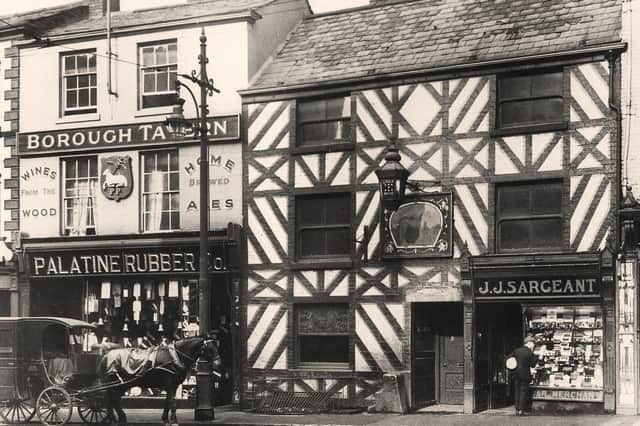
With John Toulmin very much in control after Sir George's death, he took the opportunity later in 1923 to purchase the Borough Tavern and the Grey Horse and Seven Stars, both neighbouring properties to the LDP on Fishergate. Their frontages were converted into shops, while the extensive rear premises were used to extend the Castle Yard printing area.
There was barely a break in production of the Post down the years, save the odd public holiday or the events of May 1926, when several days of production were lost due to the General Strike, which crippled the country. Typewritten news sheets were issued from the LDP headquarters instead.
After edition No. 12,100 appeared on May 3, 1926, it was not until May 13 that edition No. 12,101 was published, with a headline stating that the miners were continuing their strike action.
Active throughout his life, John Toulmin died, aged 84, at his West Cliff, Preston, home in late January 1927. Like his brother and their father before them, he had spent his life as a prominent teetotaller and devoted Wesleyan Methodist and, like them, had served as a Justice of the Peace.
In early July 1927, it was announced that the LDP and its allied newspapers at Preston, Blackburn and Burnley had been sold to the Inveresk Paper Company.
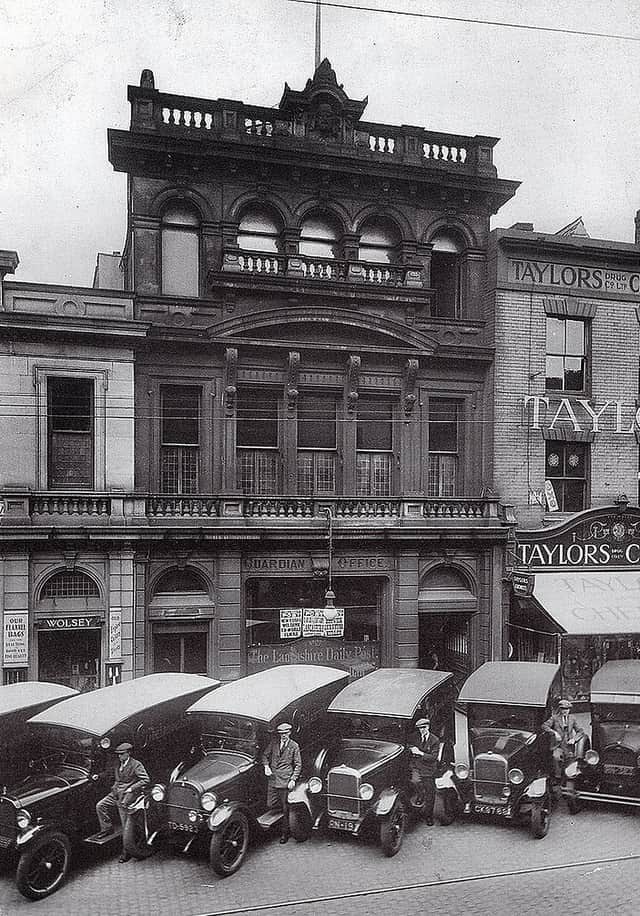
At a supper held for their employees, it was stated that John Toulmin's sons William H. Toulmin and George F. Toulmin, along with their cousin George Toulmin, although no longer the proprietors, had been engaged to stay on for at least five years as managing directors. There would be no change in the policies of the newspapers or the personnel of the staff as a result of the sale.
It was then announced by the Toulmins that Messrs George Toulmin & Sons Ltd had decided to give £25,000 – equivalent to around £1.4 million in today's money – from the purchase price to be divided among the staff.
In September 1929, George Toulmin died, aged 56, at Garthrigg, his family home on Lightfoot Lane, Broughton, after a short illness. Like so many of the Toulmin family, he was remembered for his charitable work, especially with the Mill Hill Ragged School and the Shepherd Street Mission. Consequently, the remaining Toulmin brothers were left to run the newspaper business, which by then was owned by Provincial Newspapers.
By 1937, George Fisher Toulmin was in sole control as general manager, and his cousin James Maurice Toulmin, already experienced in the industry, was brought in as deputy general manager.
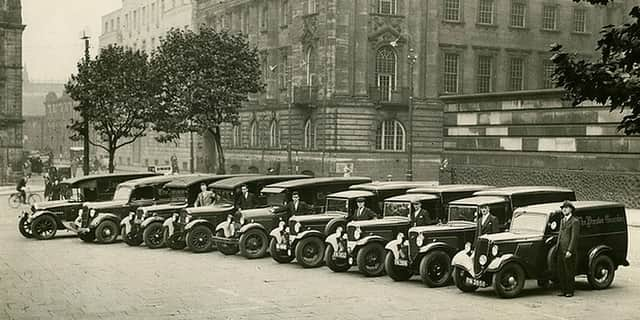
James was well known in sporting circles as both a rally driver and a motorboat enthusiast. He was a member of the Windermere Motor Boat Club, winning competitions along the way, including the motoring experts' coveted Gliksten Trophy in 1937.
After his marriage in January 1939 to Marjorie Callis, he was called up for war duty in 1941, serving in the RAF, where he became a Flight Lieutenant with Bomber Command in England, Belgium and Germany.
With James Maurice Toulmin away serving his country, it was left to George Fisher Toulmin, a grandson of the founder, to steer the Post and the Preston Guardian through those turbulent times.
Traditionally, the front page of the Post, like those of many newspapers, had been reserved exclusively for advertisements – until the outbreak of the Second World War, that is.
A dramatic edition of the LDP appeared on Sunday, September 3, 1939, when it delivered the news that Prime Minister Neville Chamberlain had declared war on Germany. The following day, the front-page headline reported that the liner Athenia had been torpedoed.
The next feature looks at the life of the Post after the war was over, as James Maurice Toulmin returned from war duty to continue the family tradition of shaping the future of founder George Toulmin's legacy.