
Lancashire Post at 140: From humble beginnings to Preston's leading newspaper
The Lancashire Post has been a staple of Preston's news scene for 140 years, with a rich history dating back to its humble beginnings in 1886.
The Lancashire Post will in mid-October 2026 celebrate 140 years of publication, dating back to its humble but ambitious beginnings on Monday, October 18, 1886. It remains Preston's leading newspaper after a lifetime that has seen many local and national newspapers fall by the wayside, particularly in the digital age that is now upon us, writes Keith Johnson.
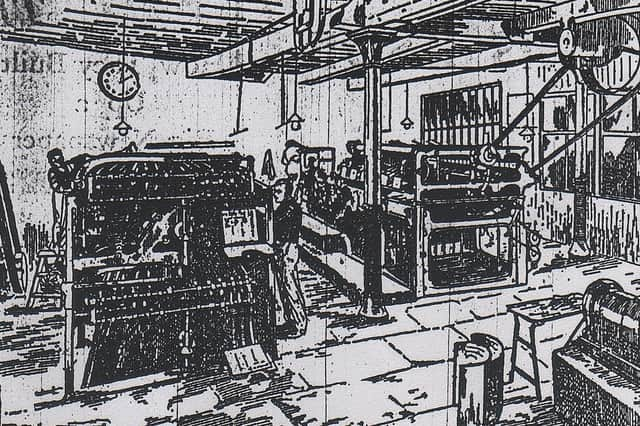

Newspapers on our streets can be traced back as far as 1740, when a publication called the Preston Journal appeared. Its existence was only a short one, as was that of a newspaper published by Robert Moon five years later called the True British Courant.
Headline-making news of the day would likely have included the Jacobite Rebellion and the fleeting visits of Charles Edward Stuart, the Young Pretender. With a population of fewer than 6,000, the potential circulation was somewhat limited. One visitor to Preston in those far-off days was Daniel Defoe, the author of Robinson Crusoe, who wrote of his admiration for the mansions that flanked Fishergate and Churchgate. He also remarked upon the lack of manufacturing in the town, the number of learned gentry and the attorneys, proctors and notaries who wintered there.
A more serious attempt at establishing a regular newspaper took place in 1791 with the introduction of the Preston Review. In the half-century that had passed, Richard Arkwright had patented his first spinning frame, John Horrocks had erected his first cotton mill, John Wesley had preached in Preston and stagecoaches had begun regular services between Preston and Liverpool. The Parish Church had been rebuilt for the first time, a workhouse had opened on Preston Moor, the House of Correction had just opened and the Town Hall had fallen down.
Alas, that newspaper, despite all the headline-worthy news of the period, lasted barely 12 months, and it was not until the 19th century that publishers managed to produce newspapers with any continuity.
A paper called The Journal appeared on the town's streets in 1807. That publication would become the cornerstone of the Preston Chronicle, with which it merged in 1812. Lawrence Dobson was the man behind the Preston Chronicle, and his rival in the newspaper stakes became Lawrence Clarke, who published firstly, in 1821, the Preston Sentinel, which survived for a year, and secondly the Preston Pilot in 1825, which was to enjoy much greater longevity.
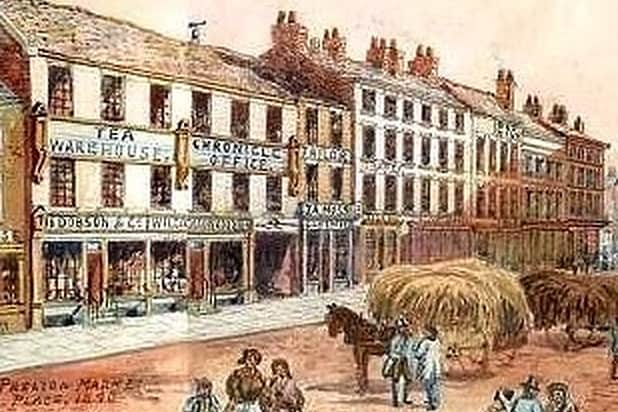
For brief periods, the Preston Observer and the Preston Advertiser challenged the two main newspapers, but it was not until 1844, when Joseph Livesey, who had produced the Temperance Advocate, established the Preston Guardian, that serious competition arrived.
In 1855, Stamp Duty on newspapers was abolished and the price of a daily or weekly read dropped considerably. Consequently, other newspapers arrived on the scene to tempt those who could read, including the Preston Mercury, Preston Telegraph, The Wasp, The Echo and the Preston Herald.
The latter became a twice-weekly publication, like the Preston Chronicle, by then owned by Anthony Hewitson, and the Preston Guardian, bought by George Toulmin in 1859. With the population of the town rising to upwards of 55,000, they all attempted to establish daily publications, but without success.
In 1870, George Toulmin made a serious bid for the daily market with the introduction of the Preston Evening News, but this paper also faltered after just a few months. Undeterred, George Toulmin & Sons gave it another go in October 1886, when they published the Lancashire Evening Post for the first time.
By this time, Toulmin had taken over ownership of the thriving Preston Guardian and the Preston Pilot had ceased publication. The new daily paper was designed to appeal to a far-reaching and diverse readership, and it proved successful. The first edition appeared on Monday, October 18, 1886, consisting of four broadsheet pages and costing one halfpenny.
The front page was devoted to advertising, with errand boys and domestic servants in demand, tea and cakes for sale and piano lessons on offer. The headline news inside the paper included a fire at Hawkins Mill in Adelphi Street, a wife murder in Belgium and a report from the Lancaster Quarter Sessions. There was news and features from Lytham, Blackpool, Blackburn, Darwen, Bacup and Haslingden as the paper sought to cast its net wide for readers.
By the Saturday, in the seven o'clock edition, there was a report of Preston North End's match away to Wolverhampton Wanderers that afternoon, which they won 5-1, thus beginning a long tradition of local football reporting that continues to this day.
The popularity of a daily newspaper caught on, and the Lancashire Evening Post thrived, with a circulation extending far beyond the boundaries of Preston by the time George Toulmin died in February 1888, aged 74, at his Ribblesdale Place home after a short illness.
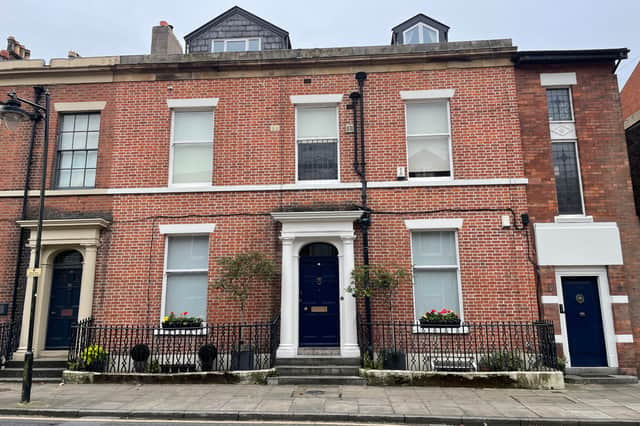
At his funeral days later, the great and the good of the local newspaper industry were in attendance. His sons John and George and grandsons George and James travelled in the leading carriage as the funeral cortège made its way through town and onwards to Preston Cemetery, where he was laid to rest in the family vault beside his wife Lydia, who had died in April 1884.
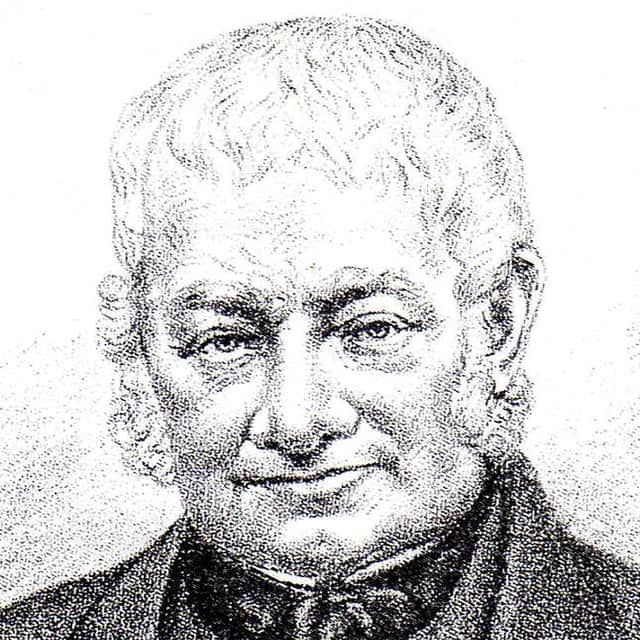
He was born in Feeble Street, Preston, in October 1813, one of the 11 children of John Toulmin. His father was a chairmaker by trade who later became a trader in cheese, partnering with Joseph Livesey. Young George, like many of his generation, started working part-time in a cotton mill at just nine years old. As a teenager, he became a bound apprentice to printer and bookseller John Walker of Church Street.
His training complete, he had a short stint running a provisions shop on the High Street. By then married to Lydia Fisher, he went to work for the Bolton Free Press and eventually became an overseer on the Bolton Chronicle. In October 1859, he, along with his brother James, bought the Preston Guardian, taking over from Joseph Livesey.
In 1872, the Toulmins moved the Guardian printing works to the 127 Fishergate site, installing steam-driven printing presses named 'The Prestonian' and supplied by Joseph Foster. Unfortunately, son James, who was heavily involved in the printing side of the business, died in September 1883, aged just 44.
George Toulmin Senior had been a member of Preston Town Council from 1877 and also became a Justice of the Peace in 1881. A Liberal in his politics and a Wesleyan Methodist who attended the Lune Street Chapel, he was a strict teetotaller who often attended temperance meetings.
During his latter years, he began to take a back seat, although he visited the offices every day, happy that his surviving sons John and George, whom he had taken into partnership, were running the paper.
With his sons now in control of the business, what lay ahead for the Post following the death of its founder is revealed in the next feature.