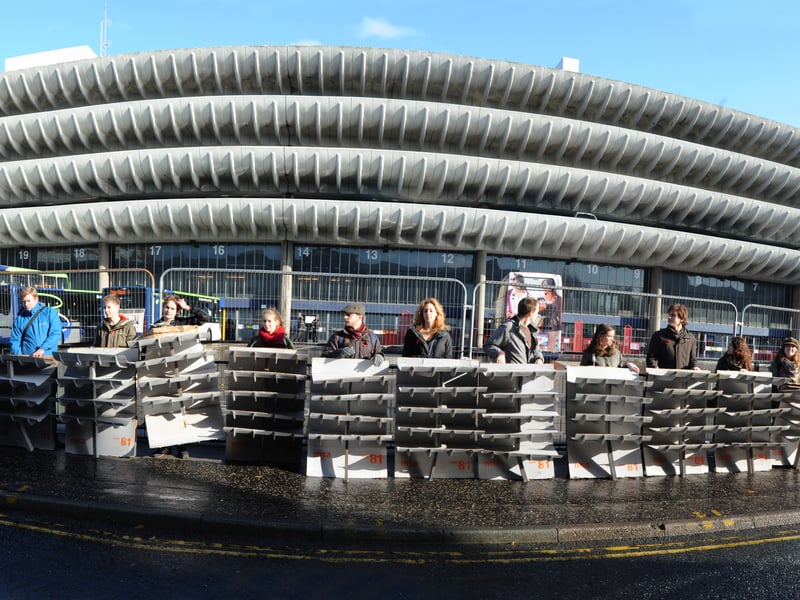
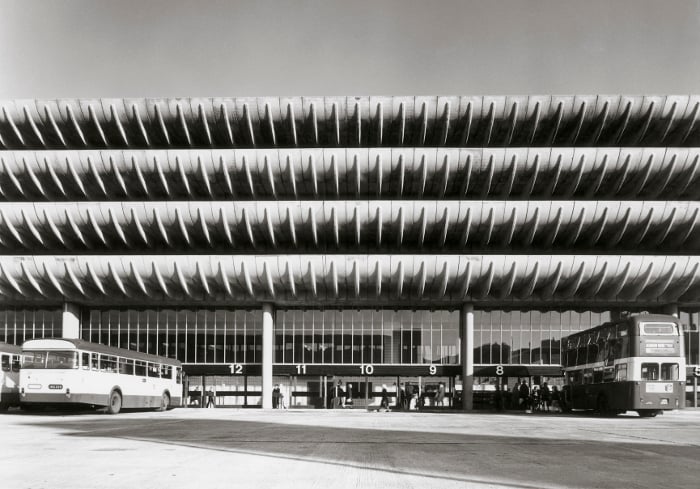
Designed by Keith Ingham and Charles Wilson of Building Design Partnership (BDP), its bold Brutalist architecture became a symbol of 1960s urban planning. With its sweeping, curved concrete facade and vast size, the bus station was once the largest in Europe, boasting 80 bus bays and a multi-storey car park above.
The station’s design, characterized by its use of raw concrete and distinctive, undulating parapets, reflects the Brutalist movement that prioritized function and structure over decorative detail.
Despite being criticised by some for its imposing and stark appearance, Preston Bus Station has earned architectural acclaim and was granted Grade II listed status in 2013, securing its place as a key landmark in the city’s heritage.
In addition to its striking architecture, the bus station became a hub of daily life for thousands of commuters and travelers passing through. Its sheer scale and functionality have made it an integral part of Preston's transport network, while its modernist design has ensured its place in the annals of British architectural history.
Get a bespoke headline round-up, as well as breaking updates, when you sign up to the The Lancashire Post’s free emails
Now, step back in time and explore the station's journey with this collection of nostalgic images from its early days.
Still fancy some more retro nostalgia? Be sure not to miss some of our recent popular picture galleries...
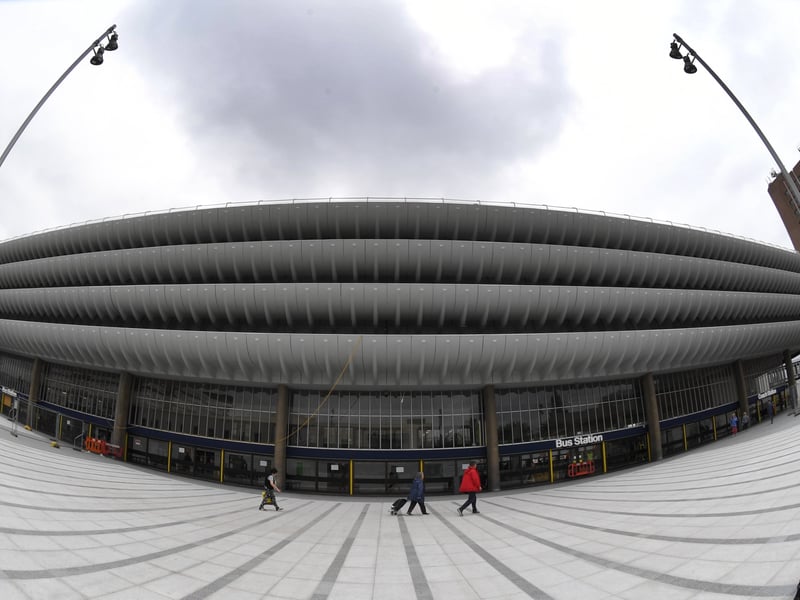
2. Photo Neil Cross The new pedestrianised area in front of Preston Bus Station on Tithebarn Street has partially reopened
National World
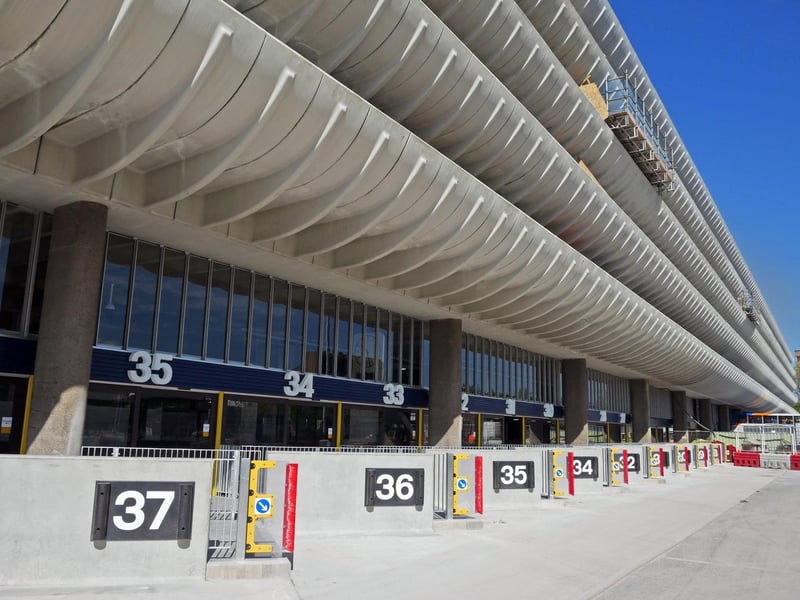
3. New bus bays installed at Preston bus station as part of a major renovation job of the site.
National World