
Chorley mum fights to bring cancer vaccine to terminally-ill daughter
Kayleigh Gray and her 11-year-old daughter Emilia are fighting to bring a life-saving cancer treatment to the UK, after Emilia was diagnosed with a terminal brain tumour last year.
A mother and daughter in Chorley are fighting against the clock to bring life saving cancer treatment to the UK for the first time.
Former journalist Kayleigh Gray and her daughter Emilia have been campaigning for over a year to improve childhood cancer treatment in the UK, after Emilia was diagnosed with a terminal brain tumour last year.
At the time, Emilia had been preparing to enter Year Six in primary school, when she began to complain of headaches and nausea for days on end.
A lifelong dancer, she had also begun to struggle with her coordination more than usual, and started finding it difficult to twirl.
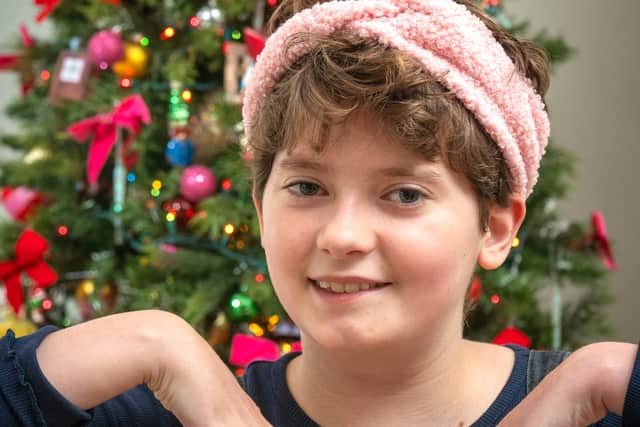

“We were dismissed a lot of times before she got diagnosed,” Kayleigh told the Lancashire Post. “When we took her to Whittle Surgery in Chorley, I took her in and said, ‘She’s been feeling sick every day for five days, I’ve got her starting Year Six next week, and I don’t know what’s going on’.
“I’ve had experiences in the past where I’ve been told, ‘Oh, you’re a first time mum, you’re exaggerating’, or the symptoms get dismissed. I thought I was going to get told she needed better glasses or there was something wrong with her ears.
“She got sent straight away to Preston Royal Hospital to be looked at.”
Emilia was diagnosed with a diffuse intrinsic pontine glioma, or DIPG brain tumour - a fast-growing, aggressive form of cancer which appears in the brain stem.
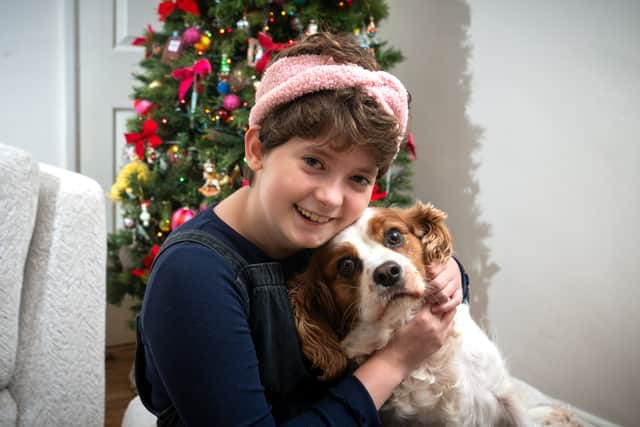
It has no affect on cognitive function, but instead affects the child’s ability to move, speak, and coordinate their body, hence Emilia’s difficulties while dancing.
The extremely rare condition is diagnosed in children roughly every nine days in the UK. With a prognosis of between nine and 18 months after diagnosis, it’s considered the most fatal of all childhood brain cancers.
According to Kayleigh, it was a diagnosis which came “out of the blue” - especially for ten-year-old Emilia.
“Even to see her now, she seems perfectly fine and healthy. It really shocked us all as a family, and we were further shocked to find out it was terminal.
“Emilia was probably just the same as us: confused. She’s a very empathetic and intuitive child, she knows your mood, and she could sense everybody was upset.
“She got a bit overwhelmed because everyone was being very kind to her. She had all these gifts, and it made her upset. She was like, ‘What is wrong with me?’.
“She does know everything, apart from the prognosis, because even we ourselves ignore that - we want to go as far as we can beyond what the doctors say. She’s handled the treatment really, really well.
“But she does have moments where she says, ‘Why me? Why is there no help for me, either?’.”
As it stands, treatment for children with brain cancer is shockingly limited in the UK.
The only treatment available to patients is radiotherapy to slow the progression of the illness, though the condition itself remains incurable.
As the tumour is on the brain stem, it’s impossible to operate to remove it, and chemotherapy has so far not proven an effective treatment.
The only other option for families is to explore private treatment, which most often involves highly-competitive clinical trials held overseas.
Join our WhatsApp channel
“She has radiotherapy, but that’s it from the NHS,” Kayleigh said. “But even for adults [with brain cancer], they’re having to go to Germany for drug trials or T-cell trials as well. There is just not enough in the UK to give any kind of hope.
“As a parent of this, I’m not naïve. I understand what a clinical trial is. But the fact that you get told initially there is nothing, it’s almost like they’re saying, ‘Be grateful you get this time with her’.
“There is literally nothing that they can do, as far as the NHS is concerned. They could give radiotherapy and go make memories.”
Last year, Emilia began a clinical trial with Great Ormond Street Hospital in London for T-cell therapy, which had initially slowed the growth of her tumour.
At the time, she and her mother started speaking out alongside other brain cancer campaigners across the UK, including Commonwealth Games swimmer Archie Goodburn, who broke down in tears on the BBC while calling for more research funding for brain cancer in the UK.
During the campaign, it was revealed that the government’s leadership for brain cancer-related issues consisted of only two people working part-time.
Goodburn’s plea eventually led to a meeting with Prime Minister Andy Burnham, who promised to look into the issue to make it easier for patients to access treatment, and for more research to be done.
He would soon personally promise the same to Kayleigh and Emilia, after the pair made a series of viral TikToks and social media posts tagging him.
However, despite seeing progress with her T-cell therapy treatment, Emilia’s trial has been paused after it was discovered her brain tumour had once again grown in size.
Kayleigh and Emilia have now turned their sights to a different treatment in Canada - an MRNA vaccine developed by the father of a brain cancer patient.
If Emilia were to take the nine-time vaccine, a team of oncologists would specially tailor the medication to Emilia’s biopsy results to hopefully help treat her condition.
“All I know is that if I see an obstacle, I try to brush past it,” Kayleigh said. “I found a family who paid for it privately from Australia, so I'm now currently on a process of finding out how much it will be to bring it from Canada to the UK and have the UK create a medical team to administer it and monitor it here.
“We’re going to try and get in touch with our MP, Lindsay Hoyle, to get in touch with the right people to make create this team to bring the treatment here.
“It’s been done before. A group of Americans actually came here to get treatment with a different kind of vaccine. I’m not asking for anything completely brand new or our of pocket - it’s just not been done before.”
Kayleigh said she hopes the vaccine would be a turning point for her daughter, who is now 11 years old. In the meantime however, the pair are working on completing Emilia’s bucket list, which has so far seen her dine at the Savoy, and even fly a plane.
“It was between Leeds and York. It used to be a charity who did it, which has since stopped, but [the pilot] wanted to take Emilia out. We went on a little private plane for four people and flew around - that was scary!
“She’s driven a tractor, and she got to be a farmer for a day. And she actually learned to ride a horse before she learned to ride a bike!”
Tomorrow night, Kayleigh Emilia, and all of her friends are family are preparing to attend a special prom made just for her.
It had been one of the top things on the 11-year-old’s bucket list, and will see members of her dance group get together and perform alongside all of her friends.
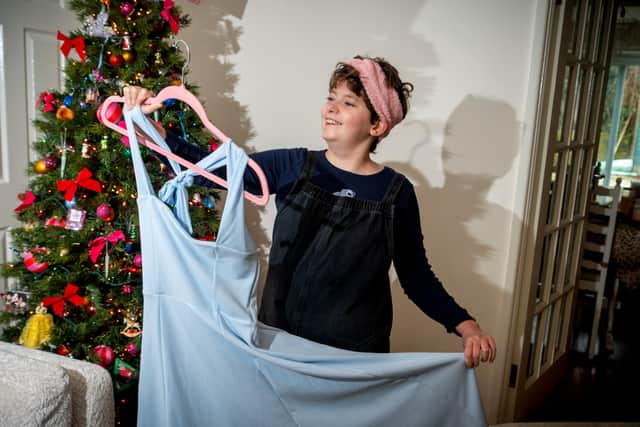
“She’s a very girly girl, and she loves her dresses, she loves twirling and feeling like a princess, so it will be a fairy tale prom. That’s the theme.
“It’s been heart warming to see the response from people who want to help Emilia,” Kayleigh said. “It’s not about the treatment, it’s just that she gets to be a little girl going to a prom party with all her friends in a lovely dress, surrounded by people she loves. It’s going to be magical for her.
“But that’s the nature of what we do. We’re trying to find the joy in every day, because we have no choice.”