
New housing plans in Lancashire could be scuppered by a shortage of sand and gravel
It is not bricks that planners are worried about, but sand and gravel, the aggregates used in everything from concrete and housebuilding to roads and infrastructure
Housing development schemes are cropping up across Lancashire as councils scramble to meet government building targets, but a newly-published planning document suggests that push could ultimately be undermined by a shortage of one of the most basic construction materials.
It is not bricks that planners are worried about, but sand and gravel, the aggregates used in everything from concrete and housebuilding to roads and infrastructure.
Lancashire’s three minerals planning authorities, Lancashire County Council, Blackburn with Darwen Council and Blackpool Council, have acknowledged that the county does not have enough sand and gravel reserves to meet forecast demand through to 2042 in a draft Joint Lancashire Minerals and Waste Local Plan, which had not been updated since 2009.
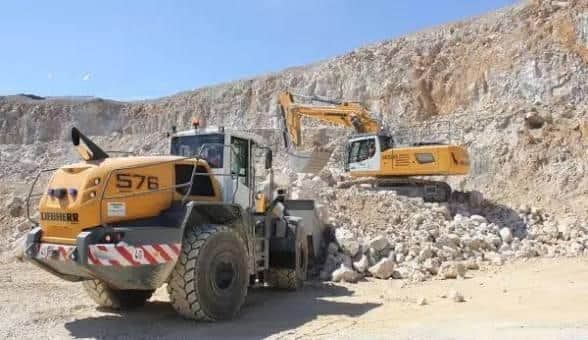

By the end of the new plan period, Lancashire is forecast to face a 6.39 million tonne shortfall of sand and gravel, which could lead to new quarry applications being brought forward across the county in the years ahead.
The draft plan concludes that forecast demand between 2025 and 2042 will be 11.56 million tonnes, compared with only 5.17 million tonnes of permitted reserves, leaving a substantial gap in supply.
Council officers state that the assessment of need “identifies a shortfall in permitted reserves now and during the Plan period” and that the plan therefore supports new reserves in order “to support the plan area’s economy”.
The plan itself describes a “significant unmet need for sand and gravel now and throughout the Plan period”.
However, while acknowledging the shortage, the authorities have stopped short of identifying where any new extraction should take place.
Instead, the executive member decision report from Blackburn with Darwen Council states: “No allocations have been submitted so if this need is to be met, planning applications will need to come forward during the Plan period.”
That means any future quarries, extensions to existing sites or new extraction proposals will need to be brought forward by operators through individual planning applications.
The revised minerals plan, which will guide minerals and waste development across Lancashire, Blackburn with Darwen and Blackpool until 2042, is due to go out for public consultation later this year before being submitted to the Secretary of State for examination.
The shortage warning comes against a backdrop of growing national concern about aggregate supplies. The latest published Joint Lancashire Local Aggregate Assessment, which forms part of the evidence underpinning the plan, notes that minerals planning authorities are required to maintain a steady and adequate supply of aggregates and regularly assess whether sufficient reserves remain available.
Nationally, the Mineral Products Association recently warned that sand and gravel reserves are being replenished at only around half the rate at which they are being extracted, raising concerns about the industry’s ability to support future housebuilding and infrastructure programmes.
The revised Lancashire plan places considerably greater emphasis on the economic importance of the minerals industry than earlier drafts.
Following a decision by Lancashire County Council to defer consideration of the document earlier this summer, officers introduced amendments aimed at strengthening references to economic growth and the importance of minerals supply.
Support our journalism and get unlimited access to our website
Find out more and sign up today.
The executive member report says the changes were intended to “strengthen some background and supporting text relating to the importance of minerals and waste in economic terms”.
According to the amendments, sections of the document were reordered so that economic growth policies appear before environmental protections, with officials noting that sections “have changed places so that the economy section comes first”.
The plan describes minerals and waste infrastructure as part of Lancashire’s “long term economic priorities” and estimates that the minerals sector contributes around £40m in gross value added to the local economy.
Nevertheless, the draft plan would continue to support additional reserves at existing gritstone and limestone quarries in certain circumstances.
According to the report, the policy “provides support for releases of new reserves at gritstone and limestone quarries under certain circumstances” in recognition of local supply and demand issues and the need for a sustainable distribution of mineral supplies.
That could prove particularly significant for Rossendale, where gritstone quarrying has historically supplied construction materials across Lancashire and the wider North West.
Although the draft plan does not allocate any specific Rossendale sites, it potentially opens the door to extensions at existing quarry operations where operators can demonstrate need and satisfy environmental and planning requirements.
The document does identify potential future resources elsewhere in Lancashire, including land at Lower Hall Farm near Preston, where around three million tonnes of sand and gravel has been identified, and land off Bourbles Lane, Preesall, where a further 500,000 tonnes has been identified. Neither site is formally allocated within the plan.
The authorities are also seeking to protect existing mineral and waste operators from future housing development.
The draft proposes consultation zones around mineral extraction and waste management sites. Under the proposals, housing developments and other sensitive uses within 250 metres of most facilities, or 400 metres of hard rock quarries, would have to take account of the impact on existing operations.
The executive member report says these consultation areas are intended to ensure mineral and waste sites are considered when housing developments come forward nearby, protecting “existing businesses, but also future residents”.
The revised minerals and waste plan has been more than a decade in the making.
Adoption of the new minerals plan, which began forming in 2013, is now not expected until summer 2027 after a further consultation, submission to the Secretary of State and then a public examination by a planning inspector.
Officials acknowledge that progress has been delayed over the years by staffing changes, restructuring and budget pressures.
Perhaps in reaction to these issues, the plan states that it intends to be implemented before the now stalled local government reorganisation takes place – when each of these three councils will be abolished and replaced by new bodies.