
‘OMG what is in this water?’: Chorley dog owner to test River Yarrow as part of the Great UK WaterBlitz

“Oh my God, what is in this water?”
A Chorley dog owner is this weekend taking part in a nationwide water testing event at her local park.
Between Friday, September 18 and Monday, September 21, thousands of people across the UK will test their local rivers, streams, lakes and canals as part of environmental charity Earthwatch’s Great UK WaterBlitz.
Chorley resident Helen Mole will be testing the River Yarrow on Saturday September 19 as it is a place she regularly visits with her 12-year-old Labrador/Staffordshire Terrior cross, Lucy.
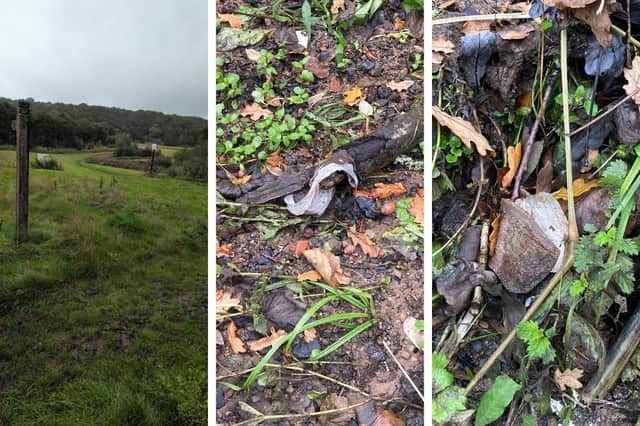
The 65-year-old, who moved from Bolton to Chorley six years ago, said: “I walk my dog in and around Chorley a lot and back in September last year, she was splashing around with a ball at Dob Brow, an area that's quite heavily used by dog walkers in Chorley. Whilst she was having a swim [in the River Yarrow], I thought I’d pick up a bit of rubbish so I bent down, picked up what I thought was a piece of white paper, and then recoiled because it was actually a sanitary towel. I looked around me and there were five sanitary towels just lying around or hanging on trees, and I suddenly thought, ‘Oh my God, what is in this water?’ so that's initially why I started to get concerned about the quality of the water in the rivers locally’.
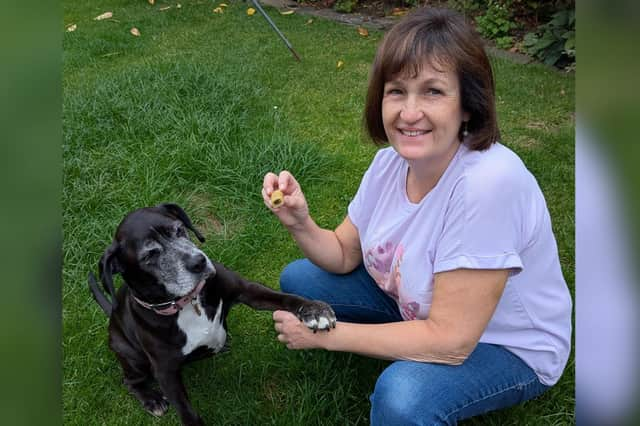

Helen’s concern for the water’s safety was heightened this summer when Lucy wound up with an antibiotic-resistant infection, which she feared came from swimming in the river.
The mum of two explained: “Because Lucy's part lab, she loves swimming, and there's two places I take her swimming regularly, both off the River Yarrow. In June, she ended up with open blisters between all of her paws- one of which still remains. The vet was just at a loss to know what on earth it was. In the end, after spending about £300 plus on medicines and veterinary fees, she said ‘I think it's an antibiotic-resistant bacteria you've got here’.
“I was racking my brains as to where she's picked up an antibiotic-resistant infection from, because she generally walks in parks or in the countryside, but she does swim in that river so I want to find out if what she's got came out of that water. The WaterBlitz test this weekend won't show me categorically that, but it will show me if there are increased levels of nitrates and phosphates in the water, indicating there's sewage in there potentially.”
Concerns that the blisters came from the River Yarrow intensified when, after three months of routine treatment, Lucy, who appeared to be cured, gained a new blister after just one return visit.
Helen said: “We spent two and a half months-washing her feet three or four times a day, putting ointment on them, putting socks on the poor dog to try and stop her from licking them. I took her back in the water, once, because I thought she was pretty much okay, and then the next day I looked at her feet again and found a blister. My initial thought was maybe she's run through hogweed when my back was turned, but I know that she hasn't because there's no hogweed nearby, so although I can't say for sure I want to eliminate the water as being a cause of the problem.”
Helen’s concerns extend past her own dog’s health: she told the Post she was also spurred on to look into WaterBlitz after spotting a man and his two young children playing in the River Yarrow last month.
“His two young children, one of whom I'd say was about 18 months, were paddling/swimming in the same water and I thought ‘gosh, do I say something to him about what I've seen in here, or do I just let him go ahead because the kids are having a great time’. You just don't know what to do you don't know whether you should alert people and or not.”
Retired administrator Helen, who ironically once worked in communications for a water company down south, will also be joined for the water test by Chorley councillor Beverely Murray and the council leader Alistair Bradley.
Councillor Murray said: “I always want to hear about the concerns of local residents and so when Helen invited me to the water testing I was keen to find out more. Water quality is a topical issue at the moment so learning more about it helps me to better represent local residents.”
The WaterBlitz testing will measure nitrate and phosphate levels, helping build a nationwide picture of pollution.
For the first time, selected volunteers will also collect PFAS samples (synthetic ‘forever chemicals’) for analysis by Imperial College London, broadening the picture beyond sewage.
Claire Williams, from Earthwatch Europe Freshwater Watch Team, said: "This is our biggest WaterBlitz ever, with more than 6,000 people expected to take part right across the UK. Together, they’ll be testing the health of their local waterways, creating a huge new body of data that will help us understand the pressures facing our rivers and the impact on the wider environment.”
The testing comes as the government prepares a Clean Water Bill, which it has described as a "once-in-a-generation" reform of a water system it says has failed people and the environment.
Earthwatch says that makes the timing of this WaterBlitz particularly significant as thousands of local tests will provide a snapshot of pollution across the country while key decisions on the bill are still being made.
They add that the real test will be whether the final law tackles pollution at its source - from sewage and agricultural runoff to PFAS - and delivers wider reform of the water system.
Want the latest Lancashire news straight to your phone? Join our WhatsApp channel
Antonia Staats, Campaign Director at Avaaz, a global citizen movement collaborating with Earthwatch on its September WaterBlitz, said: “The government has called this a once-in-a-generation reform - so it needs to deliver once-in-a-generation ambition. This Bill cannot just tinker at the edges or focus on sewage alone. It is a chance to tackle pollution at its source, hold polluters to account, fix a broken system and put people and nature first. The question is whether the government will seize that opportunity and give future generations rivers that are truly alive again.”
For Lancastrians who want to get involved in the this weekend’s WaterBlitz, unfortunately registrations are now fully booked.
You can however express your interest to sign up for the next one, which will be in April 2027, by on the Earthwatch website.
Has the Enviornment Agency said anything ahead of the WaterBlitz?
We approached the Department for Environment, Food & Rural Affairs (Defra) with Helen and Lucy’s story.
In response, an Environment Agency spokesperson said "We regularly monitor water quality in the River Yarrow and work with partners to improve the health of the river.
"United Utilities are planning a number of investigations and infrastructure improvement projects to reduce pollution and improve water quality in the area, as well as meet Environment Agency standards and minimise harm to the environment."
The government body also provided some useful background information on the River Yarrow, including that its catchment generally declines in condition from upstream to downstream, “with the upper reaches close to achieving good ecological condition”.
Defra added that the main environmental challenge in the catchment is phosphate pollution and ecological recovery in the middle and lower reaches. explaining that phosphate pollution comes from a combination of agricultural runoff and wastewater sources.
Through United Utilities' AMP8 investment programme, six investigations and 11 infrastructure improvement projects are planned across the catchment to help reduce pollution and improve water quality.
These projects are intended to reduce the impact of intermittent discharges, ensure compliance with regulatory requirements and reduce environmental harm.
The Environment Agency then carries out around 20 inspections of United Utilities assets each year in the Chorley area, alongside inspections in response to reported incidents.
All combined sewer overflows operated by United Utilities are fitted with Event Duration Monitoring (EDM) equipment, which records discharge activity and supports regulatory oversight.
The Environment Agency says it is not currently aware of any significant compliance issues relating to United Utilities assets in the area.