
Coroner demands answers from United Utilities after Lancashire cyclist dies following fall linked to road defect

A coroner has called for answers from United Utilities after a Lancashire cyclist died following a fall caused by hitting a road defect.
Robert Ingram, aged 75, suffered a broken hip in the accident in Cowling Brow, Chorley, in August 2024.
He died in hospital around two weeks later after suffering a stroke and multiple pulmonary embolisms.
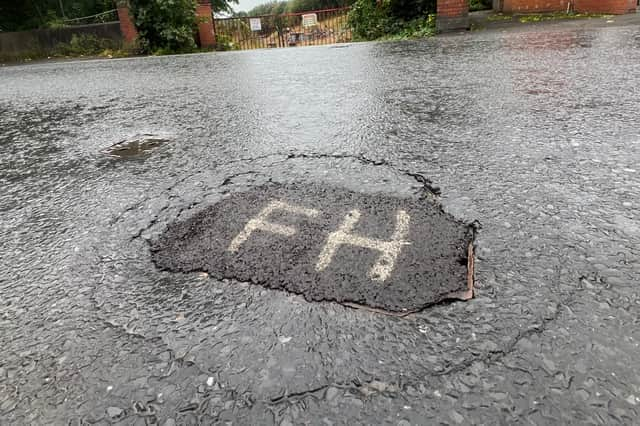
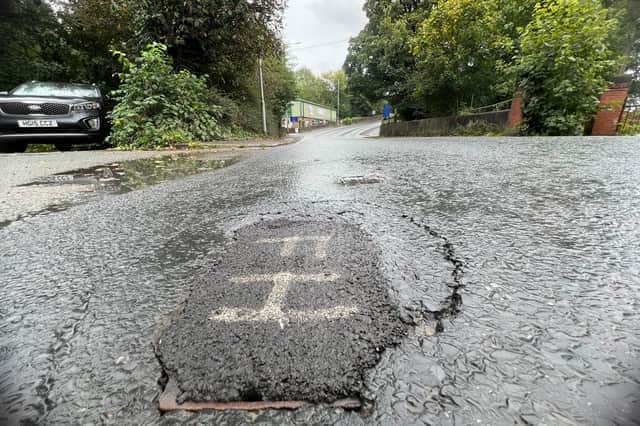
The inquest at Preston Coroner's Court heard that Mr Ingram's bike hit a sunken fire hydrant in the road.

Recording a narrative conclusion, area coroner Kate Bissett said she was writing to United Utilities - who have responsibility for the fire hydrant - to raise her concerns.
One issue was the apparent reliance on third parties to report defects to them, and another was what happened after the defect was reported following Mr Ingram's accident.
It was several weeks before a temporary repair was carried out.
The hearing was told that Mr Ingram, of The Willows, Chorley, was a fit and keen cyclist.
The grandad had gone for a ride on August 14 but fell off his bike in Cowling Brow. He told passers-by and medics that his bike had hit a fire hydrant.
He was attended to until an ambulance arrived and was taken to Royal Preston Hospital.
He complained of an injury to his hip and seemed otherwise all right and coherent.
The following day staff became concerned that his speech was slurred.
His condition deteriorated and he was admitted to the intensive care unit. Tests showed that he had suffered a stroke and multiple pulmonary embolisms and he died on August 30.
Karen Marsden, who was in a car on Cowling Brow at the time of the accident, said she saw a cyclist around 50 yards in front of her. He appeared to wobble and fell off his bike.
He told her he must have hit a pothole, but she could see nothing obvious that would have caused him to fall.
The inquest heard that Mr Ingram's bike was examined and found to have no defects.
A fire hydrant had sunk below the level of the road, which in the opinion of police investigators would have been enough to cause a cyclist to lose balance if they caught it.
Robert Wilson, Lancashire County Council highways manager, said Cowling Brow was inspected every three months. A walking inspection was carried out by two inspectors on July 12.
No concerns were raised. He said many HGVs used that route and it was possible that the fire hydrant sank quickly in the weeks after the inspection.
Mr Wilson said his department was made aware of the defect on August 15.
It was not categorised as a serious defect because it had sunk less than 100mm.
Andrew Cunliffe, head of operational services at United Utilities, said there were more than 100,000 fire hydrants in the North West.
There had been no defect reported with the Cowling Brow hydrant before the accident.
He said fire hydrants were inspected by the fire brigade, and United Utilities, and the firm was also notified by Lancashire County Council and members of the public if any problems were seen.
The company was notified of the drop on the fire hydrant on August 15 and a temporary repair was carried out on September 9.
A team tried to complete the repair on September 10 but could not because of nearby parked cars.
The work was finally completed on September 15.
Mr Cunliffe said if United Utilities had been aware that there had been a fatality, the work would have been deemed more urgent.
Coroner Ms Bissett said it was likely that Mr Ingram's fall was caused by the defect in the road.
She felt that Mr Ingram had suffered a stroke some hours after the accident.
She said she did not have enough evidence to reach a conclusion on a link between the accident and the stroke, but it may be that the fall and previous health issues had "drained his physical reserves".
Ms Bissett said she was concerned about United Utilities' systems with regard to how issues were managed.
She would be asking questions about the firm's reliance on third parties to alert them to problems, and what happened following Mr Ingram's fall.
She said it was "weeks" before the defect was repaired.
"The defect remained in the road and remained dangerous to road users and cyclists," said Ms Bissett.
"I will put in writing the concerns that I have."