
Lancashire Post 140: The newsagents and street vendors who helped the paper thrive
The Lancashire Post has relied on the dedication of newsagents and street vendors to reach readers across the county for 140 years, with many families involved in the business for generations.
During its 140 years, the Lancashire Post has had cause to thank the newsagents and street vendors who have ensured the newspaper was available to purchase, writes Keith Johnson.
I recently came across a headline that read 'Preston's Oldest Newsagent' in a 1904 edition of the Preston Herald. His name was William Clarke and he told the reporter that he had just celebrated his 81st birthday. His age surprised the journalist, who viewed him as a sprightly 60-year-old.
The son of a cobbler, he had been brought up in Blackburn and, when the family moved to Preston, although still a youngster, he found work in Paley's cotton mill. It was only when the cotton famine took its toll on the cotton trade that he ventured into the world of newspapers, opening a newsagent's shop on Bridge Street in 1863.
At that time, the Preston Herald, Preston Chronicle and Preston Pilot, all weekly publications, were jostling for customers. Each morning, he would be down at the railway station on Butler Street before five o'clock to collect the bundles of national newspapers arriving from Liverpool and Manchester.
The introduction of the LEP in 1886 had been good for business, so much so that in 1892 he moved to the sub-post office at the bottom of Fishergate Hill, from where he continued to sell the LEP. Sadly, the next time he made the news was in August 1908, when it was announced that he had died aged 84.
When the LEP was launched, only a handful of newsagents were already established in business. One of them was Samuel Hesketh, who had his shop in North Road. His sons also became newsagents, one of them, William, setting up shop in Friargate and then in Long Lane, Ashton.
The Post had many loyal newspaper sellers from those early days, such as William Shepherd of Wellington Street, who, after the paper had been in circulation for about a month, decided to join the eager vendors. Each evening, he would tour the streets with a bundle of newspapers, hoping to earn his commission. It was only a spare-time job, as he spent over 20 years working in a biscuit factory and then obtained employment as a knocker-up.
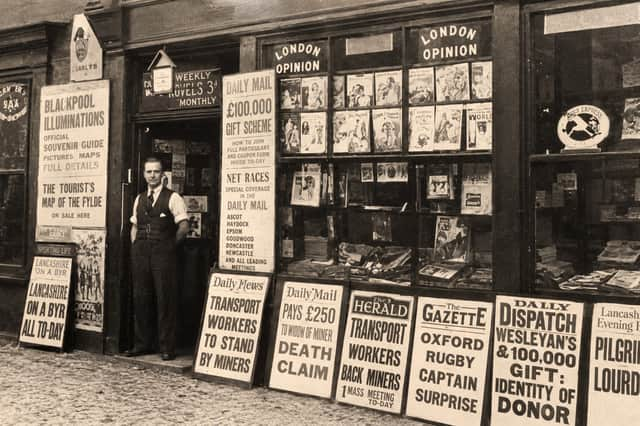

As the paper grew in popularity, he found many loyal customers in the Maudland area of town, which became his daily round. When the Post celebrated 50 years of publication in 1936, one of his regular customers was Nurse Marchbank, a resident of Maudland Bank. By then a cheery older lady of 74, she was full of praise for her mature paper lad, who had never failed to deliver.
Without a doubt, the continued success of the Post and the arrival of the daily national newspapers had provided an outlet for many a local newsagent in Preston. After 50 years, the handful of newsagents had grown to almost 200.
One of the veteran newsagents at that time was Mr Dewhurst of Stanley Street, who recalled those early days when anyone who could run fast enough and yell loud enough could sell papers. Consequently, dozens of men of all ages and classes became news vendors.
Many street vendors were characters, and their memories live on. Back in the days of the First World War, Old Zep, a disabled lodging-house dweller, used to sell the Post from his dilapidated wheelchair on Fishergate. Whenever he was pestered by street urchins, he would let out a volley of abuse which sent them scurrying away.
A lady called Queenie had a daily stand at the corner of Guildhall Street for many years. She was said to be an old dear with blackened teeth who was often drunk on duty – rumour had it that she had once been rich and beautiful.
Little Billy, another wheelchair user, always wore a bowler hat. He was a gentle soul whose stand was by the old Ribble bus station. Flat-capped Billy Dawson and his two daughters were also familiar newspaper sellers along Fishergate. When the LEP opened its kiosk on Fishergate in 1953, red-faced, red-haired Billy Morley was chosen to sell the Post.
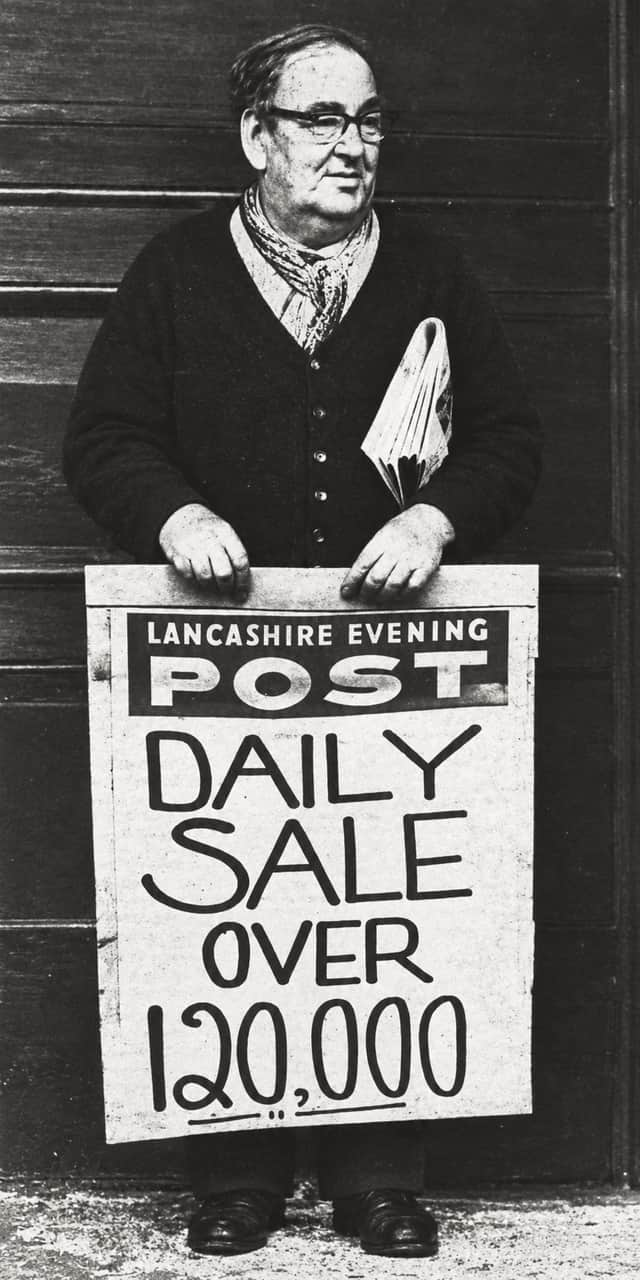
From the start, the Post was keen to be seen as the newspaper of the county, and great efforts were made to spread its distribution far and wide. Consequently, bundles of newspapers, hot off the presses, were loaded on to the railway network each day, heading to far-flung Lancashire locations.
No opportunity to increase circulation was missed, and at holiday times extra copies were dispatched to the seaside resorts. In Blackpool, at Talbot Road station, a band of eager paper boys awaited delivery before setting off to the promenade and the sands to capture the deckchair dwellers.
A former policeman, George Pemberton, who had begun selling newspapers in 1882, was by the turn of the century handling so many newspapers that he acquired premises on Falkland Street.
With newsagents' shops dotted all over town, the Pembertons, with horse and trap, were soon distributing newspapers to numerous outlets. It was a business that would be passed from generation to generation for over a century, their familiar delivery vans becoming part of the early morning scene for decades.
In 1994, Alan Pemberton told the Post how the business, operating from Croft Street, was supplying 300 retail newsagents from Forton to Adlington, Kirkham to Ribchester and beyond.
Twenty-five vans were out on the early morning delivery rounds, with 30 staff at the distribution centre handling over 100,000 newspapers on a Sunday alone.
Within a couple of years, Pemberton's Wholesale Newsagents became part of North West Wholesale News Ltd – a business which dissolved in 2006. Newspapers and magazines are nowadays delivered by Menzies Distribution Ltd on the Red Scar Estate.
The local newsagents were very much at the heart of the community and often members of the National Newspaper Federation. One of them, Thomas Singleton, even had a spell as President of the NNF before becoming Mayor of Preston in Coronation year, 1953.
On London Road, the Fearnleys, with their newsagent's and off-licence shop, saw their customers through the years of the Second World War. At the time of the Preston Guild of 1952, local children gathered outside their shop to watch the processions go by.
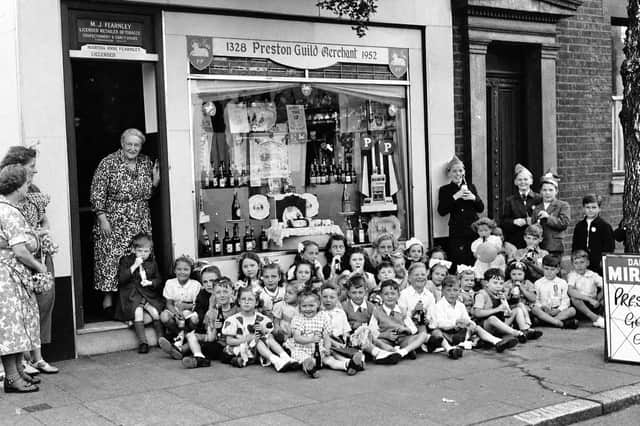
Martha Fearnley, aged 67, had run the business for 14 years, with her retired husband Paul, aged 70, up at five o'clock each morning delivering the newspapers.
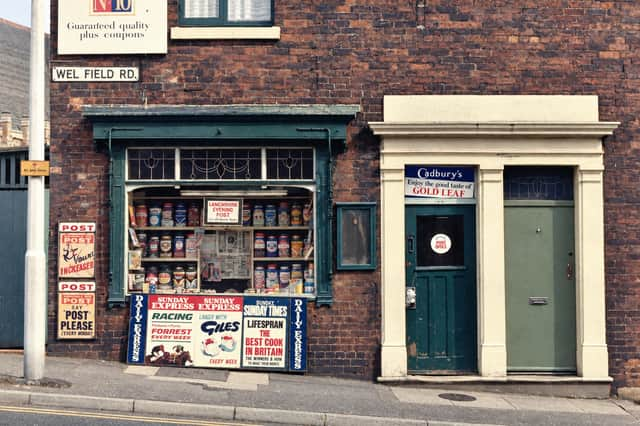
For myself, it was the Cunliffes' newsagent's shop on New Hall Lane that loomed large in my life. George Cunliffe and his wife Bertha ran the business in the 1950s. It was situated on New Hall Lane, just past Higford Street, where I grew up.
I was one of several young newspaper delivery lads who posted the papers in the nearby streets from Mr Cunliffe's shop, which seemed to be open all hours.
The Lancashire Post has, without a doubt, been a part of our lives down the decades, and the newsagents of Preston have certainly served the newspaper well.