
Lancashire Post at 140: How the newspaper entered the modern era after the Second World War
The Lancashire Post has reached a milestone 140 years after its launch on October 18, 1886, with a history spanning three generations of the Toulmin family.
With the Lancashire Post having reached the milestone of 140 years of publication since its launch on Monday, October 18, 1886, Keith Johnson concludes his three-part history of the newspaper.
This third feature looks at the period following the Second World War, as the Toulmin family's influence continued decades after founder George Toulmin's death in 1888. For Maurice Toulmin, back from his service with the RAF, there was a bid to become the latest member of the family to enter Parliament. He was nominated as the Liberal candidate for Preston in the 1945 general election but was unsuccessful, as Labour claimed both Preston seats.
His return to the newspaper business was timely, as in May 1946 George Fisher Toulmin, a grandson of the founder, retired after steering the LDP and Preston Guardian through the turbulence of the war years, having recorded 39 years of service.
His cousin Maurice Toulmin took control at a time when the Post had a readership of more than 50,000 and restrictions on newsprint were about to be lifted, with more pages promised in future editions. The war years had seen the newspaper limited to four broadsheet pages, while the front page had been dominated by news of the worldwide conflict.
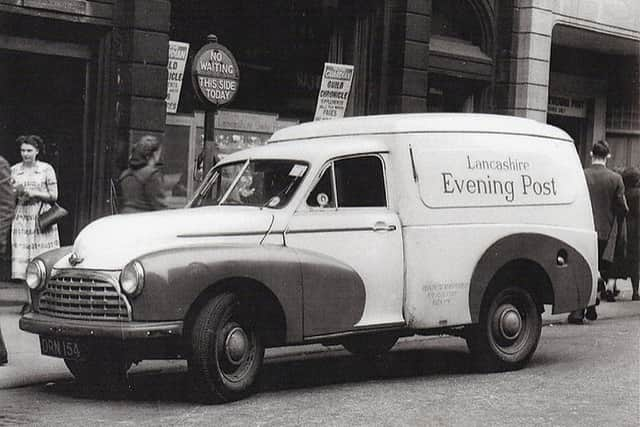

When Provincial Newspapers Ltd went on to acquire the Lancaster Guardian and Morecambe Guardian weekly newspapers, Maurice Toulmin was appointed chairman of the whole business. Various newspaper councils and committees also enlisted him to their governing bodies, and in 1955 he was elected as a director of the Press Association.
Speaking at a National Federation of Retail Newsagents meeting in March 1956, he announced that the price of the LDP would soon have to be increased from tuppence by a halfpenny, due to the cost of newsprint being six times what it had been before the war. Other expenditures making the increase necessary included plant replacement and labour costs.
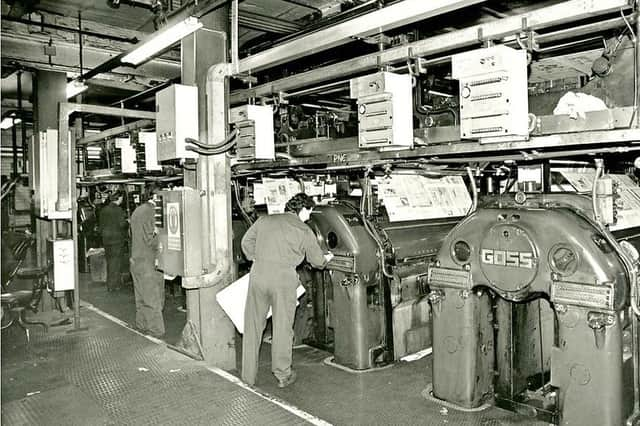
A Goss press had just been installed at a cost of £150,000, yet its production was only half the capacity required. He concluded by praising the newsagents of Preston, who delivered the news whatever the weather, be it sleet, rain or dense fog.
With his passion for motor racing and speedboat racing, he was happy to report on those events, including the famous Tourist Trophy races, often held in Ulster or on the Isle of Man. Another interest of his was the theatre, and he was a founder member of Preston Drama Club, becoming its director of lighting.
Unfortunately, he succumbed to ill health in 1958 and died in Preston Royal Infirmary on the Saturday before Christmas that year, aged 52. Just 10 days before his death, he had been carrying out routine business in his office.
Following his death, the link with the Toulmin family was temporarily broken, as his assistant Donald B. Anderson was appointed to replace him as general manager of Provincial Newspapers Ltd in March 1959. Anderson, who resided on Janice Drive, Fulwood, had joined the Post in 1954, working in the Wigan office.
He had barely had time to settle into his new role before the printing presses were halted by the seven-week national printers' strike of 1959, which ended on the first Thursday of August with an agreement to reduce the working week from 44 to 42 hours.
Folk had clearly missed the Post, as a queue formed outside the Fishergate kiosk for a copy of edition No. 22,550, costing 2½ pence, with a promise that the news they had missed would be included in forthcoming issues.
The Preston Guardian, which in the 19th century had been printed in Cannon Street and had campaigned in its early days on such matters as free trade and the Anti-Corn Laws, remained a popular publication until the autumn of 1964, when it was merged with the Farmers Guardian.
By this time, the newspapers were all being printed at the LEP headquarters in Fishergate, where town centre shoppers could purchase copies hot off the presses, with the latest racing results and football or cricket scores appearing in the late news column.
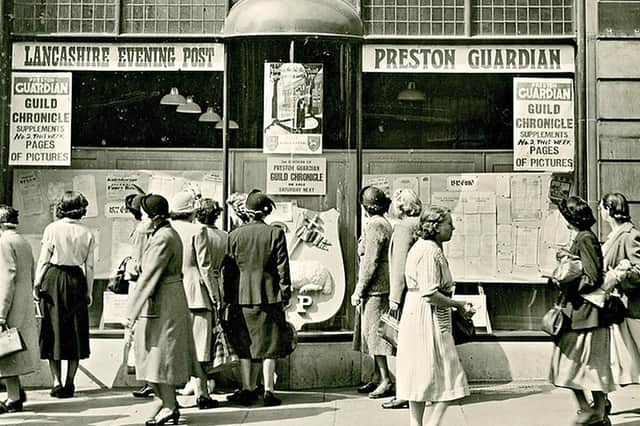
On a Saturday evening, shortly before six o'clock, a queue would form to obtain a copy of the Last Football, essential reading for Preston's sports fans. First published in 1892, it continued until the end of the 1981-82 season.
Certainly, the old newspapers became an essential part of daily life. They were used to wrap our fish and chips and hot potato pies, as essential packing for our crockery, as liners for many a drawer, as tinder for coal fires and to cover the floor while decorating.
Opposition emerged in 1979 when the weekly Preston Citizen launched, with news among the adverts in the free publication that popped through our letterboxes. In response, the LEP introduced its own free weekly publication, titled the Preston Leader, in 1985, with news and features appearing alongside the advertisements.
The Preston Citizen remained a significant rival throughout the 1990s, with offices on Chapel Street, Preston. It was not until December 2008 that its owners, Newsquest, announced that the Preston & Leyland Citizens had ceased publication.
In 1989, there was considerable interest when the LEP moved from its familiar Fishergate location to a greenfield site at Broughton. To mark the last print run at the old site, Michael Toulmin, chairman and chief executive of United Newspapers and the son of Maurice Toulmin, set the presses rolling.
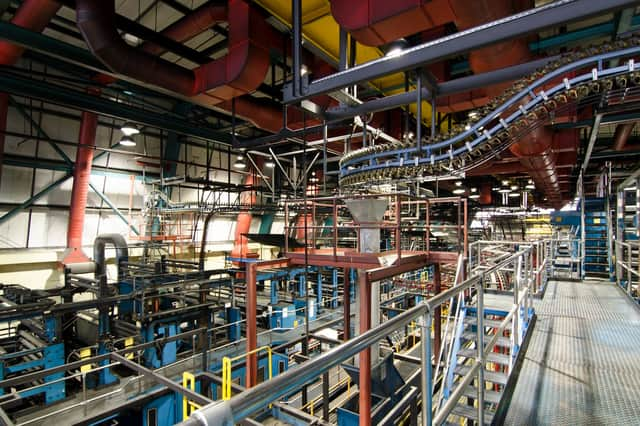
The LEP's owners, United Newspapers, had invested £28 million in the latest locally built Goss printing presses, together with a purpose-built press hall and office block on Oliver's Place. With the advances in printing technology, it was the dawn of the colourful newspapers of today.
Michael Toulmin continued as chairman of the LEP until his retirement in December 1996, when he received an honorary fellowship from UCLan in recognition of his service to the community.
His family's links to the university were highlighted by Quaker William Toulmin, a brother of Post founder George Toulmin, who had attended the original meeting that led to the creation of the Institution for the Diffusion of Knowledge, the Mechanics' Institution that can be traced back to the birth of what became UCLan in 1828.
In later years, the LEP became part of the Johnston Press group, while the printing side of the business, following mergers and takeovers, became part of the Northern & Shell Group in 2001 under the banner of Broughton Printers.
Despite the closure of Broughton Printers in 2015, the newspaper continues today under Iconic Media, part of the Media Concierge group.
After 140 years, more than 43,000 editions and several changes of name, the newspaper has been known as the Lancashire Post since January 2017.
Prolific North+1 Although now printed further afield, it maintains its strong Preston links, with its editorial staff based at the University of Lancashire's Media Factory on Kirkham Street, off Fylde Road, since 2023.