
Take a look at this bird's-eye video of Preston Docks - and the story of its incredible history
Today we celebrate the 140th anniversary of the Lancashire Post. As part of this we want to shine a light on some of Preston’s best-known and best-loved places and landmarks, exploring their history and meaning to our readers. We start with Preston Docks.
How old you are will probably determine how you think of Preston Docks.
For the area has seen significant change in its history - from boggy marshland to a busy hive of international business - to then dereliction, an infamous nightclub, rebirth and now leisure, residential and retail.

So, where does the story begin?
Before it was excavated and turned into the Albert Edward Dock, it’s formal name, the area that became Preston Dock was a meandering stretch and old winding bed of the River Ribble alongside low-lying marshland. This would all change with the Industrial Revolution in the 18th century, when the textile industry boomed and within decades, dozens of large textile mills had sprung up across the town.
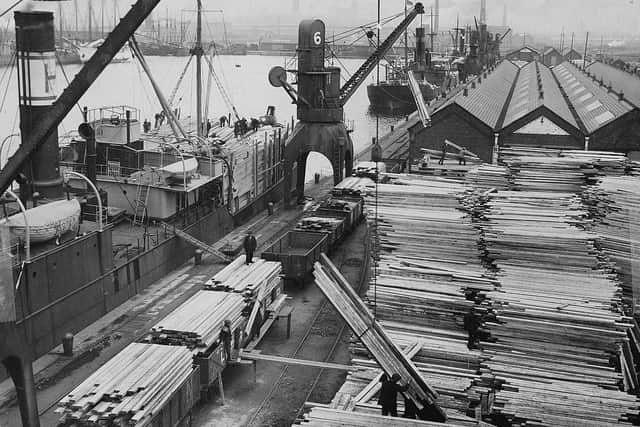
Ships were taking texiles to overseas destinations as well as bringing in timber, coal and cotton for the town's mills and factories, as well as food for its growing population.
At that time, the vessels would come up-river to Preston to unload and shelter in a natural basin known in its time as 'Preston Anchorage', where the Moorbrook joined the Ribble, where the town's original docks were located. However, by the last decade of the 18th century, the town's wharf facilities were already struggling to keep up with demand; the shallowness of the river was limiting ships to around the time of high tides, and storage warehouses built on marshlands surrounding the river banks were prone to flooding.
Several attempts were made to reduce the shallowness of the channels, including a 14-mile chanel being dredged in the river up to its estuary at Lytham.
However, even with the new deeper navigation channel there was still an ongoing issue of the river's shallowness, and in 1861 the Preston Consortium discussed a proposal to locate the docks away from the river in deeper water with a constant level maintained by a series of locks. Nothing came from this proposal until 1882 when the corporation voted to adopt this as their strategy for their town's future port. Parliament passed the Ribble Navigation and Preston Dock Act 1883 to allow construction of the new docks.
The work begins
In September 1884 the contract for the construction work was awarded to Thomas Andrew Walker, and construction began with the diversion of the River Ribble and the excavation of the new basin, with the first sod being turned on October 11, 1884.
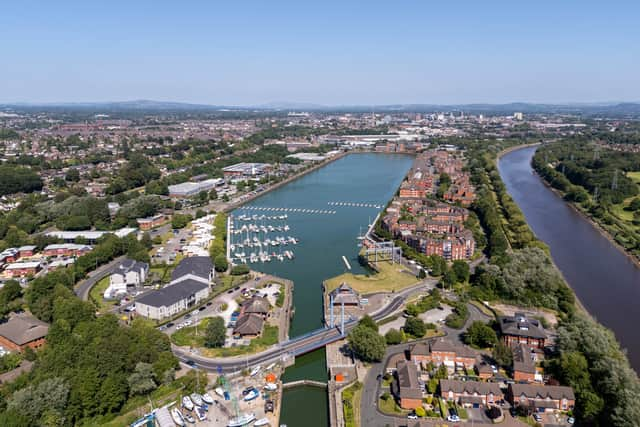
Preston’s dock is actually the old basin of the Ribble. Workmen dug a whole new channel for the river away from its original northern course (where the A583 Riversway runs now), lined it with stone, then diverted the river down the new route before remodelling the old riverbed as the dock.
According to local historian Peter Smith, when the river was diverted, a whole slice of Penwortham moved over to what became the opposite bank of the river. He said: "The landscape before the diversion is captured on the first Ordnance Survey map of the district published in 1849. By the time of the next survey in the 1890s, the earlier landscape had disappeared, with the Preston Dock estate superimposed upon it.
"The diversion took over Penwortham Marsh, several fields, a farm, a cottage and the ‘Pedestal of a Stone Cross’. The cross had probably marked the start of one of the fords that used to cross the Ribble, before the first Penwortham bridge was built in the 18th century."
Where the name comes from
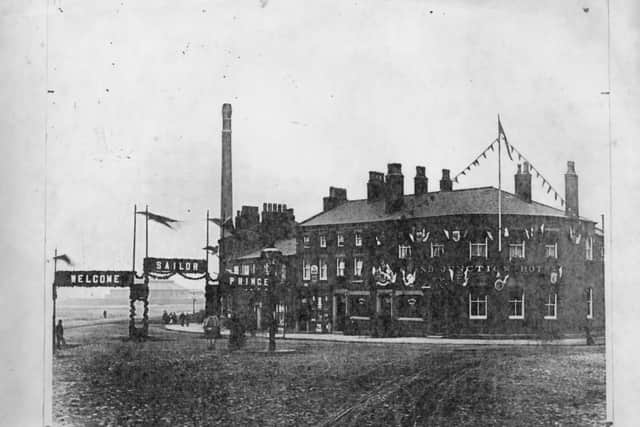
On July 17, 1885, the dock's foundation stone was laid by Queen Victoria's eldest son, Albert Edward the Prince of Wales, after whom the basin is named.
A special bridge over the old river bed had to be erected at the bottom of Pedder Lane to allow spectators access to the ceremony. Seven years later on June 25, 1892 the docks were officially opened by Prince Albert, the Duke of Edinburgh, who arrived in the dock on the open bridge of a steamer and declared the new dock open by sailing through a blue ribbon which had been placed across entrance to the main basin. A crowd of 10,000 people watched the opening and there was a flotilla of small boats and pleasure craft on the Ribble.
It was the the largest single dock in the country with water area of 40 acres when it first starting welcoming ships from the Ribble.
There is dispute over which was the first commercial vessel to enter the lock and use the new docks, with some saying it was SS Lady Louise, chartered by the Lancashire firm EH Booth and Co Ltd, and which carried an inbound load of cargo, while others say it was the Hebe, which unloaded a cargo of cement.
As the dock developed in the first half of the 20th century, warehouses were built, a railway line connected the dock to the rest of the country and even a hospital was opened in 1894 to manage infectious diseases and quarantine protocols for arriving ships.
The Control Tower was on the site now occupied by the Ribble Pilot pub, huge brick warehouses sat where apartment buildings now lie, and the well-known 1844 Victoria Warehouses (bonded warehouses used for liquor and tobacco) stood where the Guild Way flyover now presides.
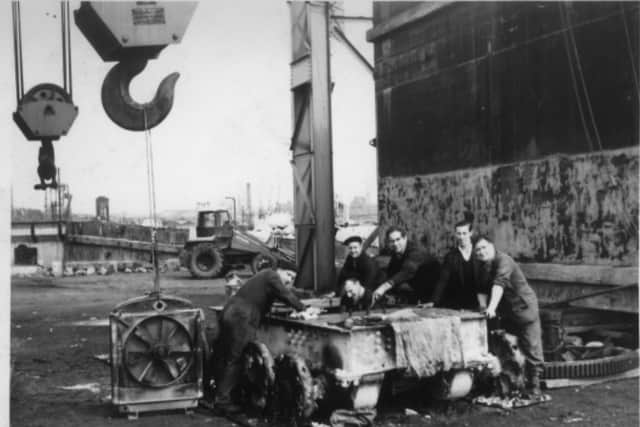
During the Second World War, the dock was taken over by the military and used as a marshalling post for the D-Day landings in Normandy, 1944. During the course of the war the docks had to be closed twice due to naval mines. After the war, the dock pioneered roll-on roll-off ferries, with a service bringing lorries from Larne, in Northern Ireland. This partly led partly to the docks’ most successful period as a working port, from 1960-1972.
At its peak of activity—with 1968 being the busiest year on record recording 3,558 vessels—the docks employed roughly 300 staff members alongside 300 registered dock workers, with thousands more relying on it indirectly.
Decline and closure
However, it wasn't long till the decline of the dock’s traditional role, which came with a series of disruptive labour strikes —including a major 10-week strike in 1969 that damaged reliability and caused companies to move their business elsewhere. This was compounded by the growing size of ships that the dredging of the River Ribble wasn’t able to keep up with and road transport via new motorways replacing regional shipping routes.
In 1975, the docks reported a loss of £1.5m (around £12m in 2026 terms), the biggest deficit in the port’s history. The number of ships visiting the port was recorded at 675 and sank to an all-time-low of 538 one year later. Port managers’ response was to announce the redundancy of 450 dockers - effectively serving notice on almost a century of transatlantic trade.
A committee was set up, responsible for investigating the possibility of dock closure. A survey was put out to explore the options available to the failing dock: to see whether it could continue to operate as it was at present with all possible economies; to assess the financial future of the dock with predictions of trade at their lowest expected level; and finally to judge the cost and potential benefit of closing the dock altogether. The committee soon said that a mere reduction in the labour force would not be enough to save the dock - more drastic action needed to be taken.
A suggestion was made of a redevelopment of the dock, which would offer employment for 2,000 people, an increase on the 1,500 who were working in the port in 1976. The news that the dock potentially faced closure was broken to workers on Saturday October 16, 1976.
Campaigns were launched to save the docks, but on Thursday, November 11, 1976, Preston Council voted by 44 votes to 11 to close the docks as it could not longer afford to keep it open. In protest at the decision, dockers from all Britain’s major ports marched through Preston, with 700 people marching to the Town Hall to hand in a 2,000 name petition against the closure. Twenty dockers remained outside the Town Hall after the meeting on picket duty. Nevertheless, the closure went ahead and five years later on October 31 1981, the last ever ship left the dock.
In the mid to late 1980s, the area became a redevelopment zone. Backed by central government Derelict Land Grants and local council planning, the area was cleared and rezoned for industrial, commercial, and leisure use.
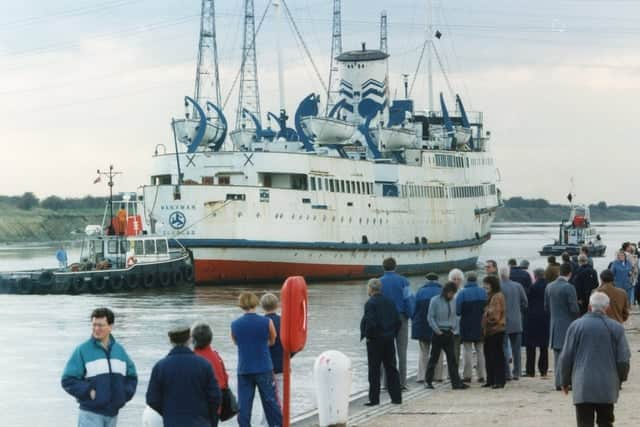
One of the first leisure uses came with the arrival of the 'floating nightclub', the Manxman, which arrived in 1982 with plans initually for it to become a floating museum and visitor centre. The museum project failed, so owners transformed the ship into a floating nightclub and restaurant.
The ship left Preston in late 1990 because the River Ribble began to silt up and the docks were redeveloped.
Redevelopment
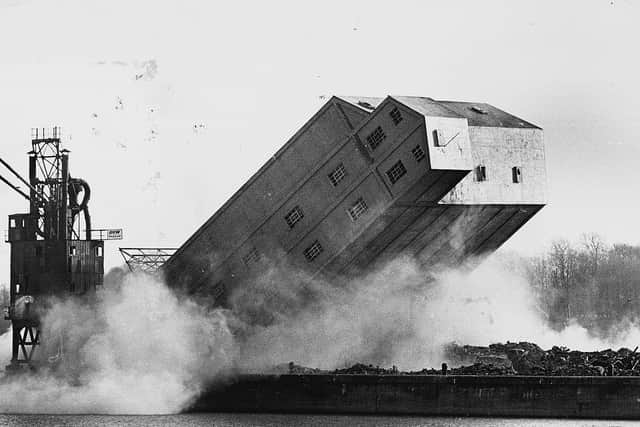
Preston Marina had opened by this time - in March 1986 - inside former dock buildings, shifting the basin's purpose toward leisure sailing and recreation, and around the same time, roads and rail lines were re-routed, as old industrial grain silos and structures were demolished.
The first major retail space in the redevelopment was Morrisons, which opened in 1986 and famously constructed a replica Lighthouse outside the store to serve as a nod to the area's maritime and river-trading history.
The docklands retail footprint has continued to evolve with recent redevelopments on disused parcels, including a recently-opened Aldi supermarket, and Loom Loft.
Check out this video and many more on the Lancashire Post’s own channel
Click here: https://www.youtube.com/@LEPONLINE
Heritage
But parts of the Docks maritime heritage do remain, including the bull nose, the Docklands Railway - now part of Ribble Steam Railway, 1890s Nelson red bell-boat buoys marking the original course of the River Ribble, green cone buoys on the dockside near to McDonalds, which used to help vessels navigate after passing Lytham Bend, and a 100-ton crane built in 1958 and still towering over the south side of the basin.
Old Docks House located at the intersection of Waters Lane and Port Way on the northeastern edge of Riversway also still stands and is in use as officers. Built in 1936 in the Art Deco style and featuring a central clock tower, this building used to hold the offices of the Port of Preston.