
Take a fresh look at Winckley Square - Preston's hidden gem
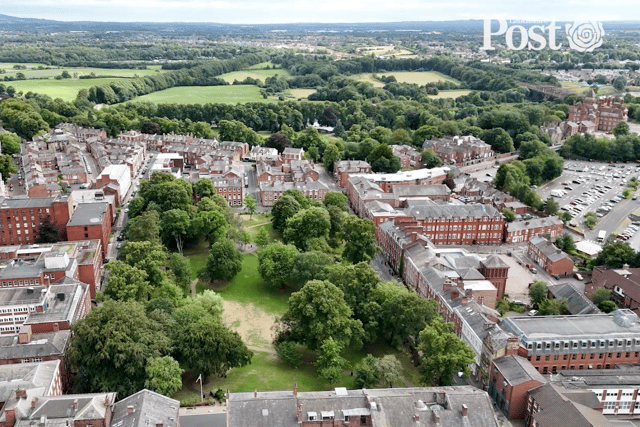
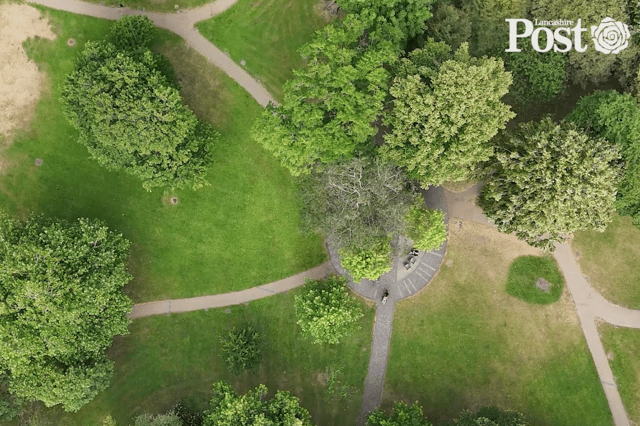
As part of the Lancashire Post’s 140th anniversary, we have taken to the skies to view our favourite landscapes from a different angle. Today we’re in Winckley Square.
Just a few minutes’ walk from Fishergate lies one of Preston’s greatest treasures.
Surrounded by handsome Georgian buildings, Winckley Square Gardens provides a peaceful green sanctuary in the heart of the city. Yet behind its elegant appearance lies a remarkable story of ambition, decline and renewal; a community determined to celebrate its heritage, to promote its use today and to protect it for future generations.
In the Beginning
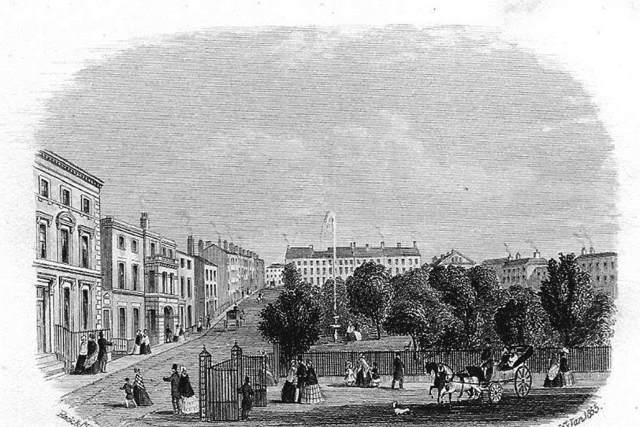
The story of Winckley Square began with William Cross, a distinguished Preston lawyer who envisaged an impressive residential square similar to those he had admired in London. He built the first house in 1799, overlooking ‘Town End Field’ which was then open land, south of Fishergate. Cross’s vision gradually took shape as plots were sold to wealthy merchants, lawyers, manufacturers and civic leaders. However, he died in 1827 before his vision was realised fully. Finishing the task became the passion of his wife, Ellen Cross, a widow at the age of 44 with six children aged from six months to 11 years old.
The houses surrounding the Gardens became some of Preston’s most desirable addresses. The Square was home to people who influenced not only the development of the town but, in some cases, events of national importance. Among its notable residents were cotton manufacturers, judges, politicians,educational pioneers and social reformers. They included Thomas Miller of Horrockses, Miller and Company; suffragette Edith Rigby; educational pioneerCornelia Connelly; Sir Robert Charles Brown a prominent Victorian surgeon, physician and principal benefactor of Preston Infirmary. The Square also becamehome to prestigious schools, religious communities and cultural institutions.

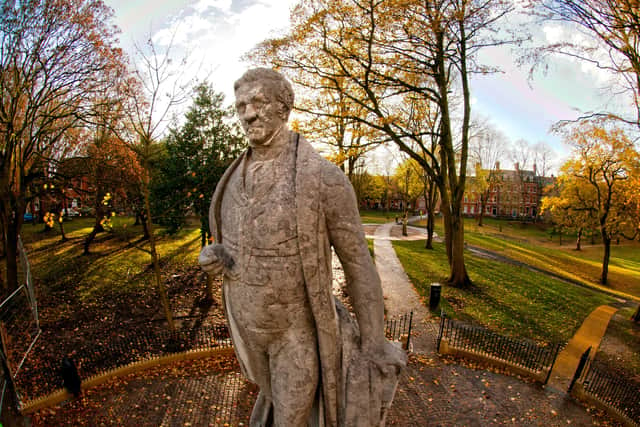
Originally, the central Gardens were divided into privately owned plots for the use of residents. In 1852, the statue of Sir Robert Peel, created by Preston sculptor Thomas Duckett, was erected by public subscription. It remains one of the Square’s most familiar landmarks. The 7’ 6” sq. piece of land on which it stands was in the garden owned by James German and was purchased by Preston Corporation for £21 in 1852.
The original plan of a ‘pleasure garden’ envisaged by William Cross was for the ‘few’ rather than the ‘many’. It was to be a collective commitment of plot holders to have one large central garden similar to London Georgian Squares with gated access to residents, but that idea did not last. Residents made their plots private gardens by dividing them with hedges and flower beds.
Change and decline
As Preston expanded during the nineteenth century, Winckley Square stood at the heart of the town’s professional and social life. During the 20th century many families moved away, and the grand houses were converted into offices, schools and institutional premises. After the Second World War, the gardens transitioned into an open public space after remaining private for decades, and in 1951 Preston Borough Council reached a formal agreement with landowners to maintain the space as a public amenity. Around one third of the Gardens is still made up of privately-owned individual plots belonging to neighbouring plots, leased directly to the city council.
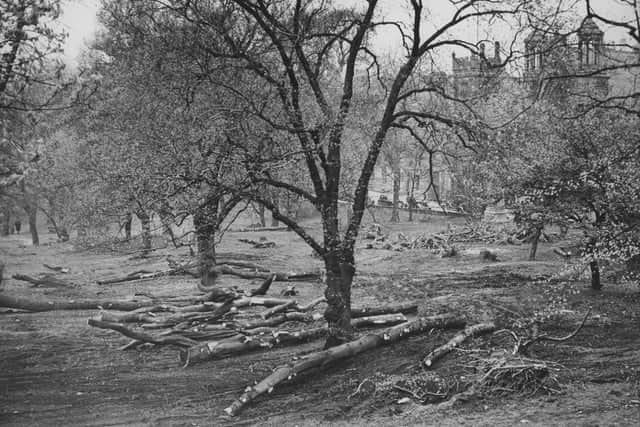
It was also in the 1950s and 60s that important buildings were demolished; the Gardens became neglected and persistent drainage problems left parts of the site waterlogged. By the beginning of the 21st century, this once-prestigious Georgian Square was uninviting and in danger of permanent decline. It could have disappeared completely when the Council considered building a multistorey car park. But the public outcry was such that the Council did a u-turn.
The Rebirth of Winckley Square
A decisive change came in 2011, when six local professionals established Winckley Square Community Interest Company (WSCIC) to campaign for the Square’s revival.Working with Groundwork, Preston City Council, Lancashire County Council, Preston Business Improvement District, resident garden plot owners and other partners, WSCIC developed an ambitious plan for the sympathetic restoration of the Gardens.
Public consultation demonstrated strong support for protecting the Square’s historic character while creating a safer, more accessible and welcoming public space. WSCIC appointed Groundwork to support a funding bid to the Heritage Lottery Fund, and a £1.2m grant was secured in 2015 to transform the gardens. Improvements included new drainage, wider paths, lighting, seating, heritage interpretation and the restoration of the Robert Peel statue.The renewed Gardens reopened in 2016. What had once been an overlooked and declining space was transformed into a beautiful, accessible city-centre park—but physical restoration was only the beginning.
Friends of Winckley Square
As part of the £1.2m funding, a new Friends of Winckley Square (FoWS) group was launched in 2016 and under the leadership of its Chair, Patricia Harrison, it oversees a programme of activities and events that have drawn in visitors from across the region and beyond. The FoWS was established to help sustain the Gardens and involve the wider community. and has developed into an energetic, volunteer-led organisation of around 40-50 people.Working as the activity arm of WSCIC, it brings together people who care passionately about the Square, its heritage and its future.
Its work is guided by three closely connected aims:Preserving the Past: protecting and celebrating the timeless heritage of the Gardens and the surrounding Winckley Square Quarter.Engaging the Present: maintaining a vibrant, well-used green space where people can connect with history and enjoy the sanctuary of a pleasure garden in the form of the countryside in the heart of the city. Securing the Future: fostering community stewardship so that future generations inherit the Square and continue the work of caring for it.
Volunteers contribute as researchers, writers, speakers, tour guides, event organisers, stewards, gardeners and fundraisers. This shared sense of ownershiphas been fundamental to the continuing success of the Square.
Patricia said: "The future is very promising, as long as we continue to recruit passionate volunteers."
Check out this video and others from the Lancashire Post on our own YouTube channel
Click here: https://www.youtube.com/@LEPONLINE
A Garden to Be Proud Of
The restored Gardens have received the Britain in Bloom North West Excellence Award every year since 2017. Also, the Green Flag and the Green Flag Heritage Site Accreditation Awards since 2017. This sustained achievement reflects the close partnership between Preston City Council’s gardeners, Friends of Winckley Square and the many volunteers who help care for the Gardens.
Each year, the FoWS listen carefully to the Green Flag and Britain in Bloom judges and responds positively to their recommendations. In 2025, the judges advised that more could be done to increase biodiversity. The Friends responded by successfully applying to the Lancashire Environmental Fund for support to install a bespoke Bug Hotel in 2026. Surrounded by carefully selected planting, it provides shelter and feeding opportunities for minibeasts, butterflies, moths and other wildlife.
Mrs Harrison said: "The project demonstrates that Winckley Square is not a landscape frozen in the past. It is a living green space that can protect its Georgian character while responding to modern environmental priorities."
Guided Walks and Illustrated Talks
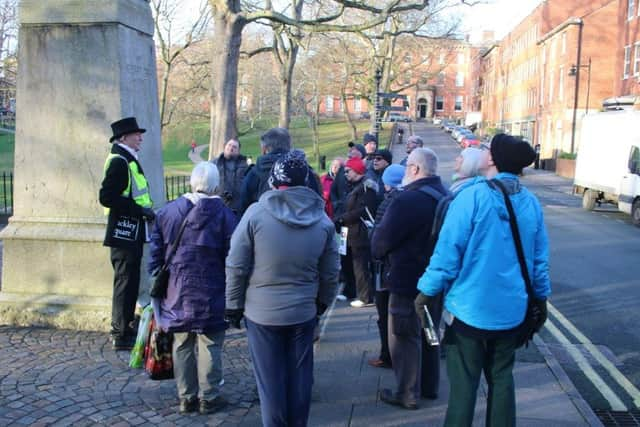
The Friends’ programme of guided walks and illustrated talks has grown enormously. The walks are researched and delivered by trained volunteer tour guides supported by stewards. From one monthly heritage walk in 2016, the organisation now offers dozens of public walks covering more than 20 themes.
Some concentrate on the Square’s famous residents, while others explore Preston’s cotton lords, servants, suffragettes and suffragists, temperance campaigners, bridges, tramways, architecture and Preston Cemetery which is a designated Grade II historic Park and garden. Together, they reveal how the history of Winckley Square is woven into the much wider story of Preston.The Friends also provide bespoke walks and talks for historical societies, community groups, businesses, schools and colleges. Routes can be adapted to improve accessibility, helping as many people as possible to participate. Income raised through the programme walks and talks helps the Friends provide freeevents for families in the Gardens during the summer and Christmas.
Free Family Events
The annual Winckley Summer Festival brings the Gardens alive with music, entertainment and activities for all ages. Live performers, circus skills, face painting, bubbles, games and creative activities turn the Square into a welcoming outdoor venue for hundreds of families. The guiding principle is simple: no family should be excluded because it cannot afford to pay. Entertainment and activities are therefore provided free of charge, with support from sponsors, partners, fundraising and volunteers.The Winckley Christmas Concert creates a very different atmosphere. Families and friends gather around the Christmas tree to enjoy seasonal music, sing carols and entertainment, accompanied by traditional festive refreshments. It has become a popular part of Preston’s Christmas calendar and reflects the Friends’ determination that the Gardens should remain active and welcoming throughout the year.
Researching and Sharing Preston’s Heritage
Behind every walk, talk, exhibition and publication lies painstaking research. Volunteers examine census returns, newspapers, trade directories, maps,photographs and original documents, many held by Lancashire Archives and Local History. Their work has recovered the stories of remarkable people who might otherwise have been forgotten, particularly women, working-class people and members of minority communities whose achievements were often overlooked in traditional accounts of Preston’s history.
Members of FoWS have worked with 30-40 schools about local history, Newman College and various departments at the University of Lancashire, including history and architecture.
Extraordinary Women and the Blue Plaque Projects
Increasing the number of blue plaques in the Winckley Square Quarter has become an important priority for the Friends. For many years, the achievements of women, working-class people and black people eere largely absent from the commemorative landscape. Friends of Winckley Square is helping to redress that imbalance. The group’s extensive research into the Extraordinary Women of Winckley Square led to an exhibition at The Harris and contributed to the installation of two additional blue plaques. The exhibition received a commendation from the NationalWomen’s History Network. Patricia said: "The Blue Plaque programme is not simply about placing names on buildings. It brings overlooked stories into public view and raises awareness of people in the past whose achievements have gone unrecognised. There are now 10 Blue Plaques in the Winckley Square Quarter and the FoWS are hoping to add a tour of them as a new guided walk in 2027."

A Square for Everyone
Patricia said: "The restoration of Winckley Square is an impressive achievement, but its real success lies in what has happened since. The Gardens are no longer simply an attractive space to pass through. They have become a place where people meet, learn, volunteer, celebrate and feel connected to their city.The story of Winckley Square shows that heritage is not only about protecting old buildings and landscapes. It is about discovering the lives associated with them, sharing previously overlooked stories and ensuring that historic places continue to have meaning."More than two centuries after William Cross built the first house, his vision of a magnificent green square survives. Thanks to the determination of WSCIC, thecommitment of Friends of Winckley Square, Preston City Council’s gardeners and the support of the wider community, Preston’s hidden gem has once again become one of the city’s most precious and best-loved places."
Support
Although the group does receive some grant funding, it relies on support from local businesses and fundraising activities to put on events.
One such event is the FoWS Annual Christmas Talk: Mrs Godfrey’s Regency Winckley Christmas, taking place on December 3 and 10 at the Central Methodist Church. Guests will be able to enjoy a cosy Christmassy afternoon with seasonal music, mince pies, alcohol-free mulled wine and hot chocolate, while Susan Douglass brings the 1814 Winckley Square Quarterto life, based on real people and real events imagining how Mrs Godfrey and her four guests might have celebrated a Regency Christmas together. To book visit: https://www.trybooking.com/uk/GWES