
The reason Preston Guild and egg rolling traditions could get United Nations protection
The events have 1,000 years of Preston history between them.
An attempt to get a pair of historic Preston traditions recognised by a United Nations-backed preservation scheme has been spurred by a push to ensure they survive the abolition of the council that delivers them.
The Lancashire Post understands that that was one of the main motivations behind Preston City Council’s submission of the Preston Guild celebrations and annual egg rolling to the UNESCO ‘Living Heritage’ programme.
The authority announced last week that it had put forward the iconic events to be considered for inclusion on the ‘inventories’ – or lists – of UK cultural practices that have been passed down through the generations and survive to this day.

With a digital subscription, you can see fewer ads, enjoy faster load times, and get access to exclusive newsletters and content. Click here to subscribe.
While the once-in-two-decade Guild festival dates back more than 800 years and the egg rolling in Avenham Park at Easter time began over 150 years ago, it is a present-day change to the local government landscape that appears to have sparked attempts to guarantee that the two traditions continue.
Preston City Council and Lancashire’s 14 other main local authorities are set to be abolished in 2028 and replaced with a handful of new councils covering much larger areas than their district and borough forerunners. It will mean the effective merger of areas that have hitherto had their own councils.
Preston – if the current city authority’s preference is approved by the government – could end up bound together with Lancaster and Ribble Valley. In other scenarios, the city could join up with Blackpool and Fylde or Chorley, South Ribble and West Lancashire.
However the shake up finally shakes down, the new larger council will be under no obligation to continue to support – and fund – events that the city council has always preserved.
The UK signed up to the UNESCO (United Nations Educational, Scientific and Cultural Organisation) convention for the safeguarding of what is described as ‘intangible cultural heritage’ in 2024 – and so committed to upholding its principles and obligations.
They include determining what should be placed on the country’s inventories of living heritage – and then taking steps to preserve the practices that make the cut.
Should the Preston Guild and egg rolling events be included, it would give them a special status that would make it difficult, if not impossible, for a future council to abandon them.
According to the convention, safeguarding includes “preservation, protection, promotion, enhancement [and] transmission” of intangible cultural heritage.
Speaking to the Post about the decision to attempt to secure a place for the Guild and egg rolling on the inventories, Adrian Phillips, Preston City Council’s chief executive, said: “The submission…is a significant step, as both events are deeply rooted in Preston’s cultural identity.
“The UK’s UNESCO Living Heritage inventories is a relatively new scheme and, as representatives of Preston City Council, we are committed to preserving and promoting these longstanding traditions that reflect our culture and community, for the benefit of future generations.”
As the Post has previously revealed, the authority has sought to do all it can to guarantee the next Guild, in 2032, goes ahead by starting the preparations for it earlier than usual. Work began seven years ahead of the festival rather than the usual four or five – and almost a decade’s worth of budgetary support via council tax contributions will have been accrued by the time the big moment comes.
The last Guild, in 2012, cost £5.4m and the bill this time round is expected to be significantly higher.
PRESTON’S LIVING HISTORY
Preston Guild
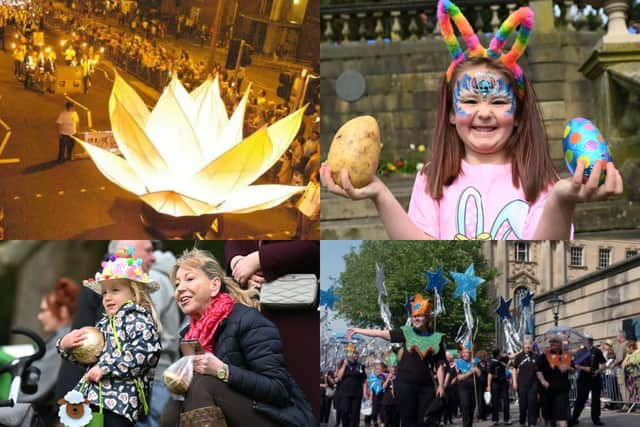
Dating back to 1179, Preston Guild celebrates the city’s first royal charter. Eyewitness accounts from 1682 and records spanning more than 520 years demonstrate its enduring heritage. Taking place once every 20 years, The Guild is a 12-month celebration centred on formal civic ceremonies and four traditional processions: trades, church, community, and torchlight.
Recognised as one of Britain’s oldest and rarest civic traditions, The Guild originated when King Henry II granted Preston its first royal charter, establishing a Guild Merchant to regulate trade and grant exclusive rights to local merchants and craftspeople.
The practice centres on Preston’s residents and involves a wide cross-section of the community, including The Guild Court, The Guild Mayor, hereditary Burgesses, local trades and craftspeople, schools, churches, community groups, marching bands, and thousands of volunteers. Tens of thousands of residents and visitors attend.
Held in the city centre, The Guild features grand street processions, civic ceremonies, and events in parks and public spaces. Since 1542, it has been staged every 20 years, or once a generation.
A central and highly visible element of The Guild is its series of grand public processions. Procession-making plays a vital role in community participation, enabling local groups, schools, trades, churches, and voluntary organisations to contribute creatively. To maintain these skills between Guilds, Preston City Council established the annual Encounters Festival, ensuring that procession-making expertise continues to thrive.
Preston Egg Rolling
Preston Egg Rolling is a much-loved Easter tradition dating back to 1867. Each Easter Monday, thousands of families gather to roll eggs down the hills in Avenham Park, making it one of the city’s most cherished annual customs.
While it has strong local roots, it attracts visitors from across Lancashire and the wider North West, drawn by its novel and family-friendly nature.
Traditionally, participants rolled hard-boiled “pace eggs,” often dyed using onion skins, although today chocolate eggs are also widely used. The event also features Easter bonnet competitions, workshops, live entertainment, art workshops and community activities.
Source: Preston City Council