
Preston agrees merger bid with Lancaster and Ribble Valley amid claim 'South Ribble and Chorley don't want us'
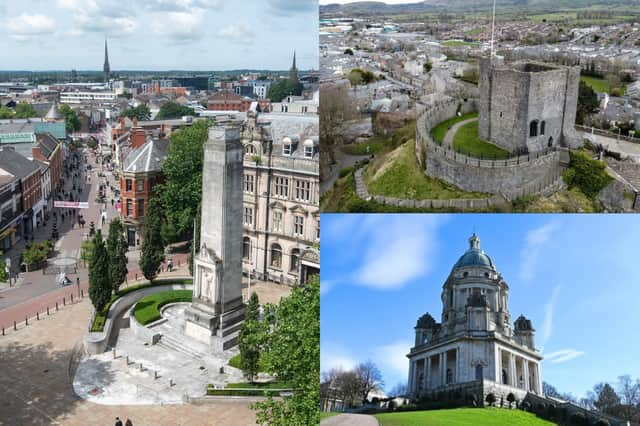
Preston City Council has officially backed a blueprint that would see it merge with Lancaster and Ribble Valley to create a single local authority serving all three areas.
Almost all councillors voted in favour of the move at a meeting of the authority on Wednesday, which city leader Matthew Brown described as a “historic” moment.

The proposal is Preston’s response to a government call for suggestions about the new councils that should replace the main 15 that currently exist across Lancashire – all of which are set to be abolished at the behest of ministers in 2028.
Each authority has been asked to submit its vision for a streamlined local government landscape in the county by Friday (28th November).
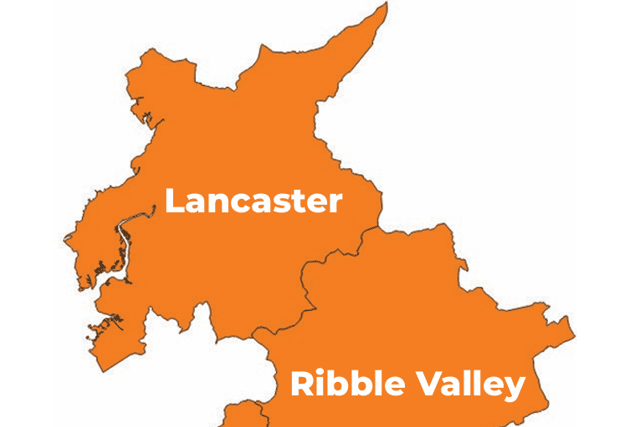
The one favoured by Preston – and which is also the official preference of its proposed partners in Lancaster and Ribble Valley – would lead to the creation of four new standalone, or ‘unitary’, councils in Lancashire after the dozen district authorities, Lancashire County Council and Blackpool and Blackburn with Darwen councils are scrapped.
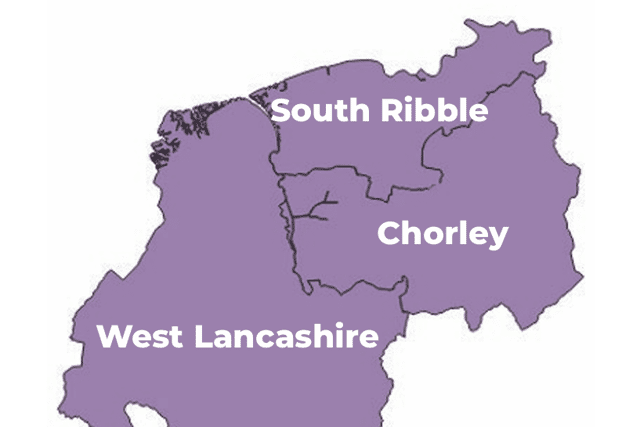
It would also see a tie-up between South Ribble, Chorley and West Lancashire – all of whom support the same configuration put forward by Preston – making the so-called ‘Four Lancashire’ bid the one that has the most backing amongst all of the soon-to-be-axed crop of councils.
Cllr Brown told the meeting that he did not believe the current ‘two-tier’ system – under which responsibility for different services is split between Lancashire County Council and the 12 districts, including Preston – “best served the place and the economy of our city”.
The ruling Labour group leader added: “The vision is to create local government that’s radical in ambition, creative in design and innovative in its delivery.
“We want it to be closely connected to our communities to provide a stronger platform for economic prosperity and to drive transformation of public services through investment in early intervention.
“From our perspective, the proposal…will enable us to meet our priorities. Both Preston and Lancaster strongly support community wealth building strategies – and this new council will be a major purchaser with a budget of £400m.
“It would be a major employer and land-holder where it can support local businesses, [support] residents in less well-off areas – and the [new] organisation would be a real living wage employer and expand the democratic economy,” Cllr Brown said.
The proposal document to be sent to ministers for consideration claims that the new Preston/Lancaster/Ribble Valley council area – and the others suggested to complement it – are “based on credible geographies and recognisable communities”.
However, much of the debate in the town hall was dominated by agreeable disagreement amongst the Liberal Democrat opposition group about whether that ambition was best captured by the creation of three or four new local authority patches..
Lib Dem group leader John Potter said he was in support of the four-unitary option that bound Preston to Lancaster and Ribble Valley, because it “retains a good local structure to it” and creates an “economic powerhouse in the centre of Lancashire”.
He acknowledged that there was “no perfect solution”, but said that the main benefit of any change would be the dismantling of the “monstrosity” of the “super-sized” county council, which he did not believe delivered its services efficiently.
However, others within his group found themselves looking longingly across the river to South Ribble – and wondering why an area with such close ties to Preston would be cut adrift from the city under the shake-up plans, just when the opportunity had arisen to bring the two places together.
They included deputy Lib Dem deputy leader Neil Darby who said that while he thought the four-council option had “a great deal of merit”, his preference was for just three new authorities, one of which would merge Preston with what he suggested were its more natural neighbours in South Ribble, Chorley and West Lancashire.
The proposed Preston/Lancaster/Ribble Valley patch would have a population of just under 374,000 people, while a combined Preston/South Ribble/Chorley/West Lancashire would serve more than 521,000 residents.
Cllr Darby said he recognised “smaller is better” when it came to the new council areas, but added: “I don’t think that’s necessarily all about the number of people – I think geography matters at the end of the day.
“I think that people within Central Lancashire as a whole – whether it’s Preston, South Ribble [or] Chorley – …perhaps feel closer together than Preston and Lancaster [feel to each other].
“Geography has a huge impact upon how we as an authority [would be able to] deliver…services,” Cllr Darby said.
Fellow Liberal Democrat Cllr George Kulbacki noted that South Ribble was a “relatively new borough” – having been formed during the last county-wide local government revamp in Lancashire in 1974 – and described the district as “an artificial and anomalous construct”.
“Demographically, geographically and historically, South Ribble is generally perceived by many locals as part of a…conurbation centre around Preston. Many would argue that having this thriving and productive conurbation could create a sense of community,” Cllr Kulbacki said.
He added that it was his belief that Central Lancashire had lost out to more cohesive areas such as Greater Manchester, having “occasionally suffered from a lack of administrative co-ordination, shared strategic vision and limited cross-borough planning”.
However, Conservative opposition group leader Harry Landless said he saw “distinct geographical advantages” within the Labour proposal for four new councils.
“The key thing to me is local democracy – keeping it slightly smaller keeps us in touch with our electorate and [people will] understand it better,” Cllr Landless said.
Cabinet member for environment and community safety Freddie Bailey agreed that simplicity was one of the main advantages of ditching the current set-up – regardless of what replaced it.
He mused that as things stand at the moment: “If a dog is knocked over in the road, the districts [would be likely to deal with it]; if it’s a deer, it’s a highways obstruction, so [it would be] the county council – [and] if it’s a badger, who knows whose problem it is?”
Cllr Bailey said that under a unitary system, “Gone are the days where [district] councils can blame the county council, the county council can blame the parish councils and the parish councils can blame the district councils”.
But the only Reform UK member of Preston City Council, Stephen Thompson, cautioned against either a three or four-council configuration for Lancashire – instead championing the two-authority split being proposed by the ruling Reform group on the county council. That would result in Preston still marrying up with Lancaster and Ribble Valley – but also Blackpool, Fylde and Wyre to create a new North Lancashire council. South Ribble, Chorley and West Lancashire would join with the remaining five authorities in East Lancashire to create what has been billed as a South Lancashire patch.
Cllr Thompson, formerly the city council’s Conservative group leader before defecting earlier this year – said the new authorities needed to be big enough to be “sustainable”.
He added that there were committee “mechanisms” that could ensure local engagement within a such a large council footprint.
“You’ve got to look at the costings. At the end of the day, people have got to pay their council tax to make these things work,” Cllr Thompson said.
Legally, the final decision on which proposal to submit to the government rests with the city council’s cabinet, meaning it had initially been proposed that the full council merely “noted” the intended Four Lancashire suggestion.
However, Cllr Potter said it was “sad” that all councillors had not at least been able to vote on a “recommendation” to be presented to cabinet in order to show whatever degree of cross-party support there was for the Preston/Lancaster/Ribble Valley option.
After an intervention from Labour deputy leader Martyn Rawlinson, Cllr Brown agreed to a full council vote on the issue.
Accepting that it was “symbolic”, he said “the significance of the decision” nevertheless merited it.
After an amendment from Cllr Darby for the three-council proposal was defeated – he and those who had backed him – swung behind the four-unitary option, with the only dissenting vote ultimately coming from Cllr Thompson.
Summing up, Cllr Brown said: This is a historic day for Preston City Council. We’re basically bringing the council to an end, but we’re creating something new which we think will be a lot better.”
By the time cabinet members had decamped to another part of the town hall for what was a unanimous vote in favour of the Preston/Lancaster/Ribble Valley merger, portfolio-holder for the night-time economy, Cllr Peter Kelly, had discovered that the newly-merged area would boast the most “real ale pubs” in the country.
“So we could do a North Lancashire real ale trail,” he quipped.
Preston ‘not wanted’ by its traditional neighbours
Cabinet member for community wealth building Valerie Wise told those hoping for a Preston merger with South Ribble, Chorley and West Lancashire that there was a simple reason it was not something the city council had proposed.
“They do want to be together – [but] they don’t want us,” she said.
However, when recently quizzed by the Local Democracy Reporting Service about what some regard as the anomaly of Preston potentially joining up with Lancaster and Ribble Valley rather than with South Ribble and Chorley – the trio that has long been identified as forming ‘Central Lancashire’ – South Ribble Borough Council leader Matthew Tomlinson said it was not because of any sense of hostility between the areas.
“We’re not against Preston. What we are is [in favour of] a unitary that joins three councils together that are not only geographically aligned, but demographically very similar.
“If you look at the populations of West Lancashire, Chorley and South Ribble – whether it’s age, academic achievement average incomes – we’re very similar and I think that gives us a unique starting point to say we’ll be able to launch ourselves as a new authority that understands its residents and Its places.
“And it’s interesting that Preston have actually got their own ideas [about the reorganisation process] so it would be strange for us to say, ‘Well, we want Preston’, when Preston have already developed their own unique [proposal] about what they want out of local government reorganisation.
“Pllus, for many of our residents, the line on a map doesn’t make that much sense in terms of their daily lives,” Cllr Tomlinson said.
Preston Chorley and South Ribble have co-operated closely on housebuilding for more than a decade, often pooling and redistributing new housing targets between them. That arrangement is set to be formalised to a greater degree than ever before with the adoption of the first joint Central Lancashire Local Plan next year – a document that will have been eight years in the making.
Acting as a guide to development across the three areas through until the early 2040s, it will remain in force irrespective of whether the individual councils end up in different merged localities.