
How King Charles could protect Preston and Lancaster’s city status amid council shake-up
Action is needed ahead of a major change in how the two places are governed.
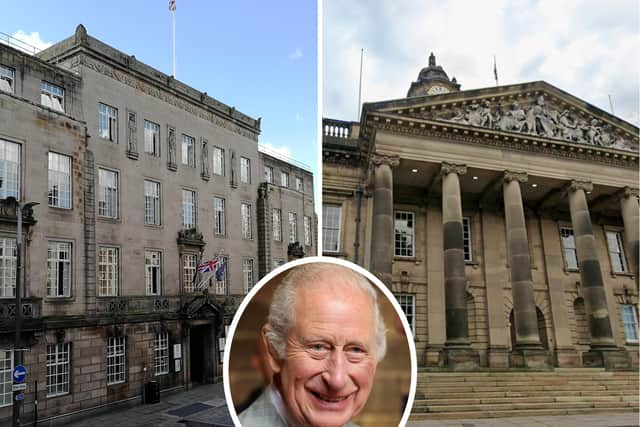
The King could be involved in the process of ensuring Preston and Lancaster do not lose their status as cities when the councils for the two areas are abolished.
The pair are set to be subsumed into a larger local authority patch in 2029 - a change that would see their city titles surrendered unless action were taken to protect them. That is because the honour is conferred via the councils themselves - which would then no longer exist.
Local government minister Jim McMahon last month moved to reassure cities in the almost two dozen parts of England going through a similar shake-up to Lancashire that their identities as such would be “preserved”.
The Lancashire Post understands that Preston and Lancaster have been advised that the mechanism by which their city status will be protected is likely to be through the issuing of ‘letters patent’ - legal documents that are authorised by the monarch, normally upon the advice of ministers.

Join our WhatsApp channel
The government had previously stated that the establishment of ‘Charter Trustees’ - individuals empowered to “hold historic property, such as charters or insignia” for a city - would be the usual solution in such a scenario.
However, there were concerns over the complexity of the process - along with a warning from local government history. Rochester, in Kent, accidentally lost its city status in 1998 when it became part of the new Medway Council - and failed to appoint the necessary trustees to guard the title.
Preston became a city in 2002 as part of Queen Elizabeth II’s silver jubilee celebrations, while Lancaster was given the title back in 1937. They are the only two cities in Lancashire.
The county’s 15 main councils are set to be scrapped as part of a government-ordered overhaul that will see them replaced with a handful of new authorities.
In July, ministers announced that four new councils would be created - one of which would merge the existing Preston, Lancaster and Ribble Valley local authority footprints. However, last month, that decision was ripped up over legal concerns and will now be retaken after the government has once assessed the five different configurations the current councils had proposed to succeed them.
Amid that ongoing uncertainty, Preston City Council leader Matthew Brown welcomed the removal of any risk to city status.
“Preston is a proud city, home to many ancient traditions, and the largest place in Lancashire - an economic gateway with a strong, culturally rich identity.
“It is vital that Preston’s city status is protected for generations to come and I fully support the use of letters patent to protect the City of Preston.
“Whatever the decision may be around local government reorganisation, Preston must remain a city in its own right - with its name, identity and civic status preserved,” Cllr Brown told the Post.
Lancaster City Council leader Caroline Jackson said it made sense to simplify - and centralise - what would otherwise have been a "complicated and expensive” undertaking.
“There are risks that you can lose your city status by doing something inadvertent. So [by giving] us letters patent, the government can [make the arrangements], instead of expecting us to go through a very complex legal process,” Cllr Jackson added.
Letters patent are ordinarily the way in which city status is conferred on an area in the first place.
According to the House of Commons library, they are open letters which express “the will of the Monarch, usually on ministerial advice”.
The documents are classed as primary legislation and can either be statutory - whereby an Act of Parliament provides for their use - or issued under “the royal prerogative”.