
'Neil Armstrong may have been the first man to set foot on the moon - but I was the first man to set foot on Neil Armstrong'
As the Lancashire Post’s 140th birthday takes off, we look back at Dermot Gethings, whose Lancashire Post article took his story - quite literally - out of this world.
“It’s like a staccato, crackling, snapping sound right at the centre of your brain. The rocket begins to arc out over the Atlantic Ocean. In the end, you’re watching a bright star arcing away across the sky, and you hear the sound of the astronauts’ voices all around you.”
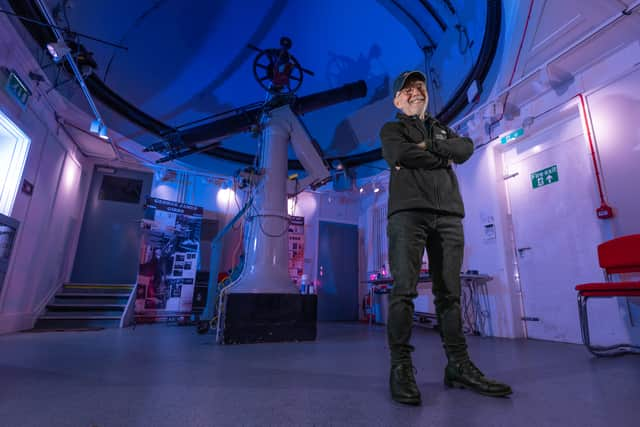

Dermot Gethings had always been fascinated by what lay beyond Earth’s atmosphere.
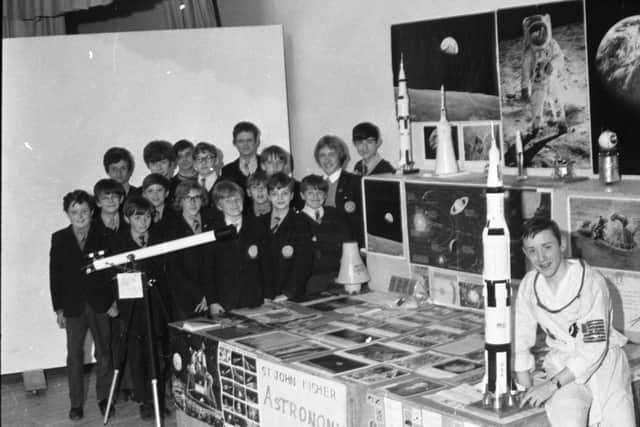
As a secondary schooler in Fulwood, he was forever putting on talks for his teachers and classmates about new scientific developments in outer space, and even had an exhibition of model rockets displayed in the Lancashire Evening Post offices on Fishergate, opposite Waterstones.
But despite his keen interest in the goings-on around the stars, when he received a letter from the US Embassy in 1972 asking for him to call them about the final mission in the Apollo space programme, needless to say, it came as quite a shock.
“The letter was from a Mr Carson, who as an assistant cultural attaché,” Dermot told the Lancashire Post. “It said, ‘I have something important to discuss with you regarding the forthcoming Apollo 17 mission’.
“It was going to happen in December, only a couple of months away, so I rang him up and he answered. He said, ‘We’ve heard a lot about you, and wondered if you’d be interested in something.
“‘NASA, the United Nations, and the US State Department want to do something collectively, something very, very special to mark the last mission to the moon in the Apollo programme. We’d like to take one science student from every United Nations country and take them on an all-expenses-paid tour of the NASA facilities for three weeks, and view the launch of Apollo 17’.
“I had to go down there for an interview, and I sat for a two-and-a-half-hour-long interview with three different people, who were firing all kinds of questions at me about astronomy and space flight. I submitted a 3,000 word essay on the benefits of space exploration. They were really testing my knowledge to see if I was up to it.
“My parents were extremely proud and supportive. We were just a normal working class family, so it was really nice for them.”
Dermot was one of 16 British teenagers to be interviewed for the Apollo programme, and said the wait to hear back after the interview was agonising.
“I started to get a bit downtrodden, I didn’t hear anything for two weeks. And then during the half-term holiday at the beginning of November, a letter dropped through the door from the US Embassy.
“And I thought, ‘Oh, it’s not first class’.
“But I opened it, and it said, ‘We wished to congratulate you. You have been selected for the Apollo 17 launch project’.
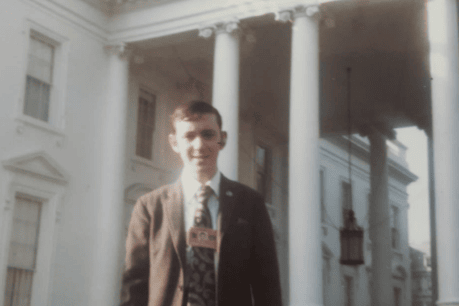
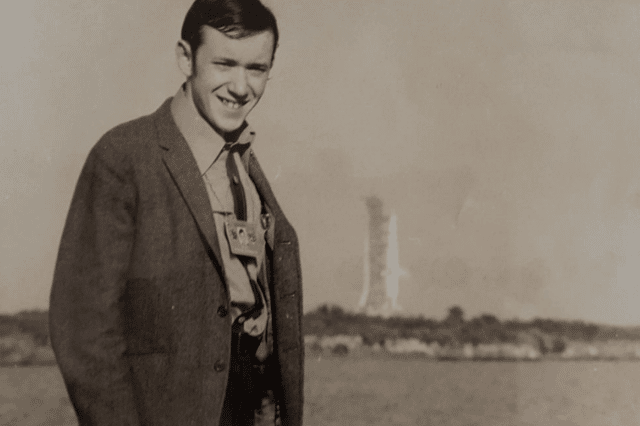
“It was hard to get a passport together, but on December 2 I flew out to JFK in New York, and then flew down to Washington DC and was met by a chauffeur and taken to the University of Maryland.
“We met up with the NASA dignitaries and State Department dignitaries, and we were badged up, given security passes, and even given a briefcase each for all the materials we were going to be given. I’d never been abroad before!”
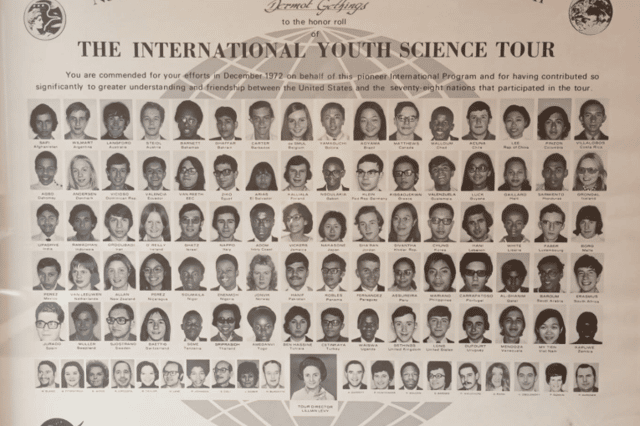
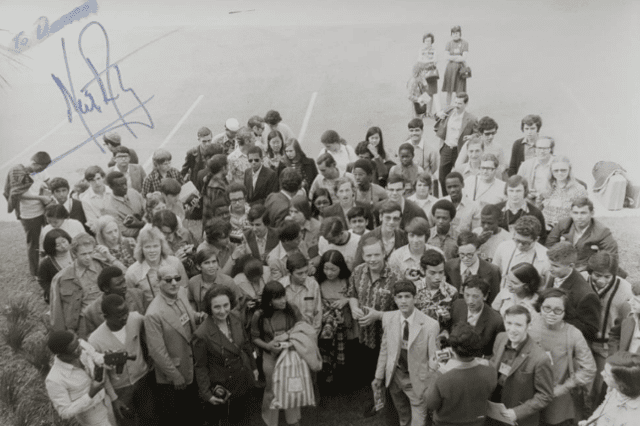
The 20-day trip would see Dermot and 80 other teenagers tour the US top to bottom, starting off with the University of Maryland before heading off to the Capitol; the Library of Congress; and the Smithsonian Museum for a private viewing.
It would also see them go behind-the-scenes at some of NASA’s most exclusive locations - including the back row of Mission Control, where astronauts could send messages from the moon.
“We had 13 flights in 20 days on a private NASA jet,” Dermot said. “We were sat at the back of Mission Control, where all the consoles are watching the big screen, watching the astronauts on the three moonwalks over three days.
“We had special access to areas the public were never allowed into, and we tried the simulators and space-flown hardware: bits of spacesuits, helmets, gloves that had moondust on them. It was a great privilege.
“We went to the Rockwell Plant in Downey, California, where the public aren’t allowed. They had the Apollo 15 command module, which had come back from the moon a few months previously, all burnt from entry and re-entry.
“I was left alone with one of the senior executives, and I asked, ‘Would you mind if I climbed inside?’, and they said yes, if I didn’t touch anything. And then I asked another stupid question: ‘Could I take a piece of the heat shield, please?’
“He said, ‘As long as it’s a tiny bit’. I had a little zip-sealed bag that you put your hearing aid batteries in, and wiggled out a little piece of charred material from the heat shield. I’ve still got it!”
The Apollo 17 Saturn V rocket launched in the early hours of the morning of December 7, 1972.
It was the first time human beings would be launched into space under the cover of darkness.
That night, Dermot and the others lay in their own rooms at the Sheraton Olympic Villas Motel, Orlando, with the stern warning to be at the ready for an early morning take off.
“We had instructions to be down for breakfast early because we were going to be bussed down to the Kennedy Space Center and spend the day there.
“At about eight o’clock in the morning, I showered and stepped out of my motel room onto the balcony with my little plastic camera to take photographs of the palm trees and swimming pool - subtropical Floridian things.
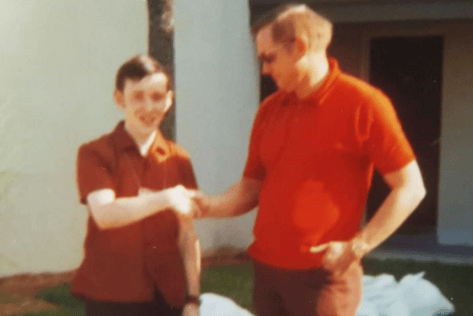
“But as I stepped out of the room, I suddenly collided with a very large gentleman. I wasn’t looking at where I was going, and I stood on his foot, and I looked up really embarrassed.
“He looked down at me, and I recognised him straight away. He was my lifelong hero, Neil Armstrong, the first man to set foot on the moon.
“So my claim to fame is, although Neil Armstrong may have been the first man to set foot upon the moon, I was the first man to set foot upon Neil Armstrong.”
At 12:33am EST, the final rocket of the Apollo mission would ascend skyward from Pad A, Launch Complex 39 at the Kennedy Space Center in Florida .
“When you get to the terminal countdown, there’s a big hush, and they turn all the lights off,” Dermot said. “It’s pitch black for miles around.
“When you get to nine seconds, the engines start to light, and there’s a sudden orange flash and the entire sky lights up. It was like being in the middle of the desert on a bright summer’s day, the alligators come out, the birds come down, and this 365-foot-tall, 3,500-tonne rocket slowly lifts off the pod.
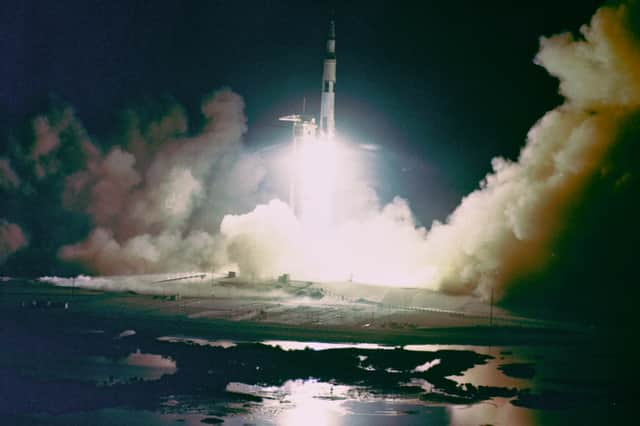
“You don’t hear anything because the sound has to travel for miles, and then just as it clears the tower, you get punched in the chest by this pressure wave and then all hell breaks loose.
“You get this incredible, extremely painful noise. It’s like a staccato, crackling, snapping sound right at the centre of your brain. You can hear the pressure waves smacking against the skin of your face.
“Then the rocket begins to arc out over the Atlantic Ocean, and then there’s this huge explosion in the sky as the first stage runs out of fuel and drops away.
“In the end, you’re watching a bright star arcing away across the sky, and you hear the sound of the astronauts’ voices all around you.”
In the days that followed, Dermot and his new friends would continue their tour across the US.
Later that day, they were spoken to live on air by the astronauts from the moon, who took back with them a moon rock which would be divided between them equally and presented to their home countries as a token of goodwill.
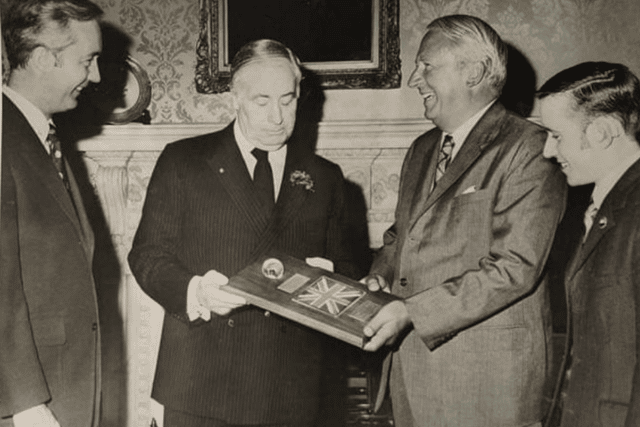
After coming home, Dermot would give the piece to Prime Minister Edward Heath, before going back to his normal day-to-day: revising for his exams and volunteering at the Jeremiah Horrocks Observatory in Moor Park.
It’s a hobby he has kept on over half a century since leaving the US, albeit now as the vice-chair of the Preston Astronomical Society, which meets regularly for stargazing sessions and group talks on astronomy.
As a result of his endeavours, he was last week featured in a documentary by University of Lancashire graduate Sarah Bullough, which was screened for the first time on Wednesday.
He said he hopes ‘The Custodian of the Goodwill Moon Rock’ will encourage more people to take an interest in astronomy.
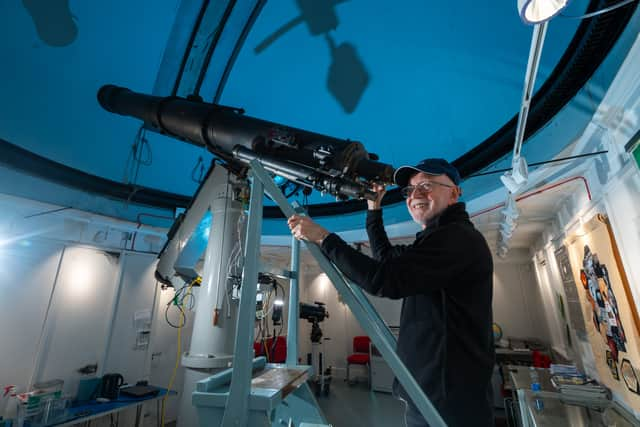
“We spent four hours shooting it, and she did a fantastic job with the editing and sound and so forth,” Dermot said. “It was entered for the Royal National Television Awards!
“About five or six years ago, Professor Victor Debattista, an astrophysicist at the University of Lancashire, asked me to give a talk down there, and it went down a bomb. He said, ‘This is an important historical story that links up with Preston and you, and nobody knows about it’. That’s when he began thinking about a film.
“I’ve kept in touch with a number of the students from around the world, and I’d like to think that all of us are still alive,” he said. “But I can still feel that take off now. It’s taken 50-odd years for me to come back down to Earth from it, and I’m still not there.”