
M65, M61, M55 and M6 in Lancashire all rank on UK 'most dangerous' list, says study
New research has revealed Lancashire motorways on the 'most dangerous' list - where drivers are most likely tobe involved in a crash.
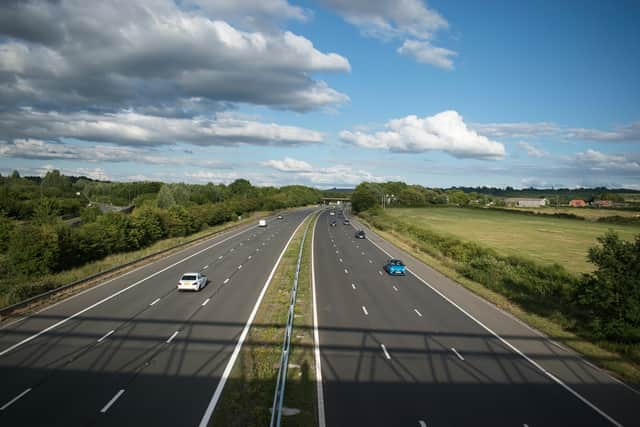

The study, conducted by used car dealership Beck Evans, measured every injury collision recorded on a British motorway between 2021 and 2025 against how many miles of road each motorway covers to determine where a crash resulting in injury is most likely to happen.
The M65, which runs for 29 miles from Preston through Blackburn and Burnley to Colne, ranks seventh, with 2.23 injury collisions per mile per year, from 323 collisions across the five years. The car most often involved in these M65 collisions was the Vauxhall Corsa, which appeared in 24 of the 323 collisions on that road.
Elsewhere in Lancashire, the M61, which passes Chorley on its way to Preston, ranks 13th, with 1.82 injury collisions per mile per year, from 226 collisions over 24.8 miles. The Vauxhall Corsa was the car most often involved, appearing in 18.
The M55, which links Preston with Blackpool, ranks 16th, with 1.53 injury collisions per mile per year, from 103 collisions over 13.5 miles. The Vauxhall Corsa was the car most often involved, appearing in 10.
The M66, which ends at Edenfield in Rossendale, ranks 18th, with 1.43 injury collisions per mile per year, from 62 collisions over 8.7 miles. The Volkswagen Golf was the car most often involved, appearing in five.
The M6, which passes Preston and Lancaster, ranks 19th, with 1.32 injury collisions per mile per year, from 1,823 collisions over 275.9 miles, figures which include the M6 Toll. The Vauxhall Corsa was the car most often involved, appearing in 94.
The M58, which passes Skelmersdale, ranks 26th, with 0.90 injury collisions per mile per year, from 57 collisions over 12.6 miles. The Ford Focus was the car most often involved, appearing in five.
The most dangerous motorways in Britain
The M606, a spur of just 2.5 miles running into Bradford, ranks number one, with 4.72 injury collisions per mile per year, from 59 collisions across the five years. The car most often involved in these M606 collisions was the Audi A3, which appeared in six of the 59 collisions on that road.
The M25 is second, with 3.90 collisions per mile per year, from 2,302 total collisions spread over 118.2 miles of motorway. The Ford Fiesta was the car most frequently involved, appearing in 147 collisions, the largest count for any model on any single motorway.
Third place goes to the M602 into Salford, at 2.93 collisions per mile per year across 4.1 miles of road. Out of 60 total injury collisions, the BMW 3 Series was the model most often involved, appearing in five.
The M32, the 4.5-mile link into central Bristol, sees an average of 2.67 injury collisions per mile per year. Its most frequently involved car was the Ford Focus, which featured in five collisions out of a total of 60 from 2021 to 2025.
The M27 along the south coast takes fifth place, with 2.40 collisions per mile per year. The Vauxhall Corsa was the most frequently involved car model, with 30 involvements out of 385 total collisions.
Kent's M2 is sixth, with 2.24 collisions per mile per year. It covers 28.5 miles, with 319 collisions recorded across the five-year period. The Ford Focus was the most frequently involved model, appearing in 23 of them.
The M60 ring road around Manchester is in joint sixth place, with 2.24 collisions per mile per year, from 423 collisions on 37.8 miles of road. The Ford Fiesta was the most involved car model, appearing in 31 of these incidents.
The M621 into Leeds comes in eighth. The motorway sees an average of 2.15 collisions per mile per year over 10.8 miles of road. Its most frequently involved model was the Volkswagen Polo, which appeared in eight collisions.
The M1 comes in ninth, with 1.90 collisions per mile per year, a rate produced by 1,929 collisions over 203.4 miles. The Volkswagen Golf was the car most often involved, appearing 105 times.
The M11 rounds out the top ten, with 1.87 injury collisions per mile of road. Overall, there were a total of 522 collisions resulting in injury over the 55.8 miles of motorway from 2021 to 2025, with the Ford Fiesta being involved in 28.
At the opposite end of the table sit the long rural motorways, most of them Scottish, which have very few crashes for every mile of road they cover.
The quietest road in the study is the M9 between Edinburgh and Stirling, with 0.37 injury collisions per mile per year.
The M54 into Telford is second safest on this measure at 0.51 collisions per mile, while Scotland’s M90 ranks third at 0.53.
The car models involved in the most motorway injury collisions
The Ford Fiesta is the most involved car model in motorway injury collisions, with 928 involvements out of a total of 16,615 across all motorways in the study from 2021 to 2025, meaning the model was involved in 5.6%.
The Vauxhall Corsa is second, with 869 involvements, 5.2% of all motorway injury collisions studied.
The Volkswagen Golf comes third, with 811 involvements, equal to 4.9% of all collisions analysed.
The Ford Focus is fourth, with 726 involvements, followed by the BMW 3 Series and the Vauxhall Astra, at 617 and 563, respectively. The Volkswagen Polo and the Audi A3 are next, at 512 and 473 involvements, and the Mercedes C Class and the BMW 1 Series round out the top ten with 454 and 452.
Sam Evans, director of Beck Evans, has commented:
“Three of the four most crash-dense motorways in the country are shorter than five miles, and none of the three carries a major airport or a stretch of open rural carriageway. The pattern running through the whole table is that short motorways and city ring road sections take the top places, while longer motorways fill the bottom.
“The models that are involved in the highest numbers of injury collisions, like the Ford Focus and the Vauxhall Corsa, appearing so often does not mean the cars themselves are inherently dangerous. They are hugely popular car models in the UK, especially among younger drivers, and if more people are driving them, they are inevitably going to end up in more collisions.
"Popular models are popular for a reason, and one of them is that parts are cheap and every garage in the country knows how to fix them. The flip side is that high volume cars have often had a harder life, so with any of the models near the top of that table I would spend the money on a full history check and a proper inspection before you buy one second-hand.
"Ask for the service book, ask what the last owner used it for, and take a long test drive at motorway speed rather than round the block, since a car that has spent five years commuting on the M25 will feel very different to one that has done the same mileage on quiet roads."