
Preston railway station's wartime buffet that served 12 million cups of tea to troops
From steaming buckets of tea to sandwiches and cakes, an army of Preston women worked around the clock to provide comfort to servicemen during two world wars. Keith Johnson recalls the remarkable story of the railway station buffet and the volunteers who made it famous.
This time of year, as the annual Remembrance Sunday services take place, we are reminded of the debt we owe to our Armed Forces. Writes Keith Johnson.
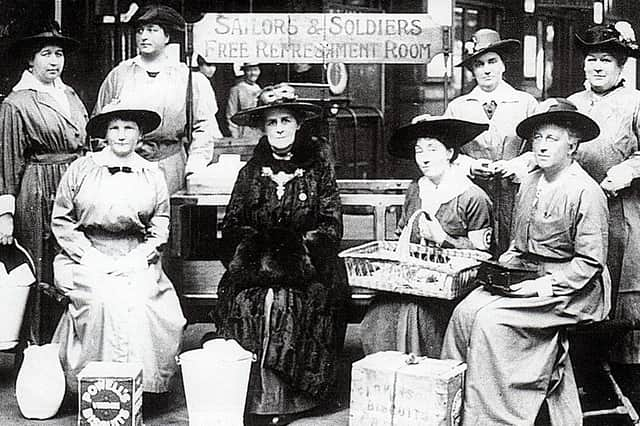

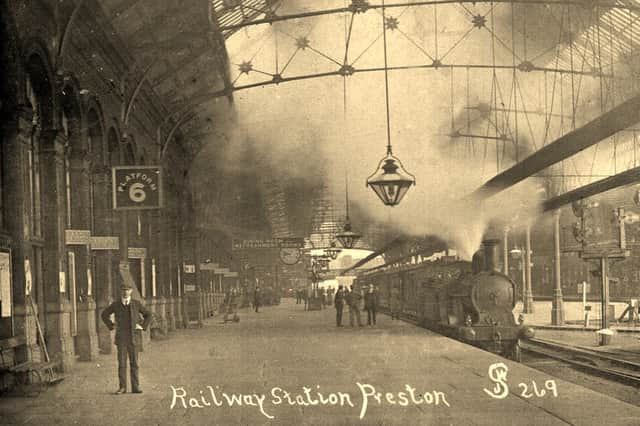
It is also a good time to recall the army of volunteers who helped them along the way. If you happen to wander into Preston Railway Station and visit the waiting room for a cup of tea or coffee, you will be reminded by the military graphics on display of one group who served our sailors and soldiers so well during times of conflict. The Preston Railway Station Buffet, in its day, became an endearing and welcoming place for those travelling to and fro on military business.
Consequently, many local people had fond memories of the work carried out at the buffet, including Kay Davenport, a popular Lancashire author, who, in a Lancashire Life magazine article of the 1960s, had this to say about her Second World War experiences.
'In 1940 girls who were not called up were expected to do voluntary work, so some of us helped at the buffet which was always open. We thought nothing of walking home in the blackout in the early hours. Some of us also helped at the Tithebarn Street Fire Station on the telephones, we had learned first aid there, and were told we should always have scissors and string in our pockets in case we met a lady in labour, how we prayed we would never meet one on our way home. We also learned how to slide down a brass pole, a skill I have nor required since!
'The huge troop trains, so long you couldn't see both ends when they pulled into the station, were jam packed with soldiers, or sailors or airmen. And we had to dash out with the heavy buckets of hot tea and baskets of sandwiches and buns. The platforms would be a mass of servicemen, some hurrying off on leave, others glad to get off the train for a moment or two. All was noise, the lighting was dim, if an air raid warning sounded there was an eeriness about it all, and a little fear too.
'The food was all free, and if the men had to stay on the train, we handed in mugs of tea, just asking that they would leave the empty one's in the carriages. How surprised they were to be greeted by us and all our welcome offerings. The ones who were perhaps going on leave would be laden with kit-bags and rifles, and one night a hefty private cannoned into me as I staggered along with my enamel bucket of scalding hot tea. I went down showered by tea, my thin frock and overall were drenched and my legs were burning. I was picked up and dumped on a kit bag and was soon the centre of attention as the sergeant ordered that some butter be brought from the train. Perhaps they were all from the catering corps. in any event the block of butter was produced and my poor legs soothed, the soldiers producing quite a few wolf-whistles too.
'I was soon back at the counter, cutting and covering with margarine hundreds of slices of bread, and filling them with spam or cheeses. Tradespeople from the town donated lots of food. In the evening they would often come along with boxes of apples or other gifts for the servicemen.'
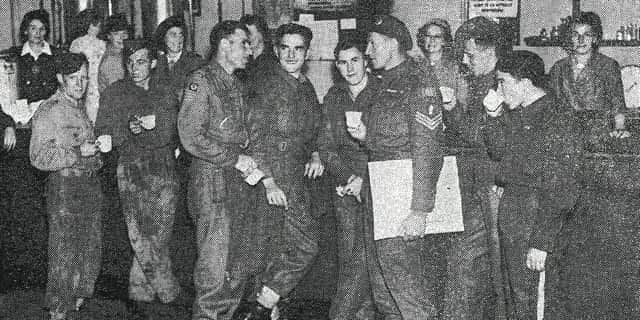
The Second World War buffet had been officially opened in mid-December 1939. It was reckoned that 1,500 loaves, 1,400 teacakes, 1,000 potato pies, 500 sausage rolls and more than 7,000 cakes were devoured each week by the grateful troops, who also enjoyed mugs of tea and coffee galore.
The buffet never closed its doors, with volunteers working day and night until peace returned and the service finally ended in December 1945. It was reported that 12 million cups of tea or coffee had been served and that, during those six years, 1,800 local women had volunteered their services. There was even a final plea for the return of mugs inscribed 'Please return to Preston Station' that had ended up around the world.
This great tradition of serving the troops had begun in August 1915, when the 'Sailors and Soldiers Free Buffet' was officially launched, staffed by volunteers and paid for through generous donations and fundraising efforts.
Situated between platforms 5 and 6 – nowadays 3 and 4 – it had previously been the ladies' third-class waiting room.
Those busy, bustling days and nights at Preston Railway Station were perhaps best summed up by a report marking the buffet's second anniversary, which showed that more than 1.3 million troops had been served, all on a budget of £5,074. This was supplemented by the generosity of local traders, who had willingly supplied coffee, tea, Oxo, biscuits, buns, cakes and other food at no cost.
That year, a shortage of margarine had led to a plea for jam, which was answered in abundance. Among the visitors was Colonel Cooper, who had returned from the war zone and told the ladies that they were the talk of the trenches on the Western Front for their wonderful hospitality.
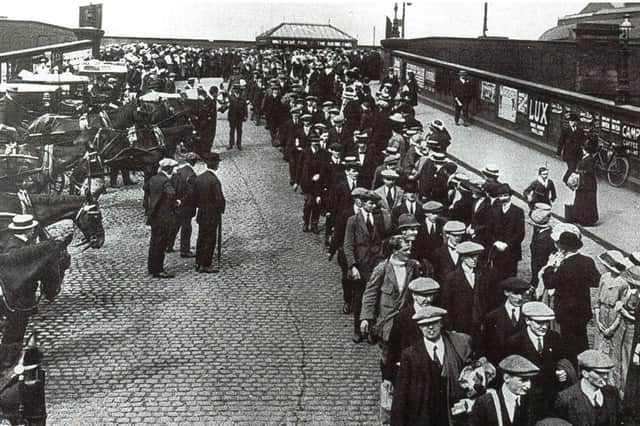
The original buffet ended its round-the-clock service at the end of May 1919, and a correspondent to the Lancashire Daily Post commented:
'I have stood on the platform and seen trains arrive full of soldiers and sailors, who were tired and hungry, and have seen their faces light up when they saw the tea and buns handed to them by the ministering angels.'
However, there was one apparent 'storm in a teacup', recalled in later years by Post historian Terry Farrell, and that took place in May 1945, when Field Marshal Gerd von Rundstedt and other high-ranking German officers had been captured and were being transported to a prisoner-of-war camp in the Lake District.
When the train carrying them under military escort arrived at Preston station, the volunteers provided cups of tea for the military escort. Alas, a few days later, a mischievous Sunday newspaper published an article stating that the German officers had also been provided with refreshments.
At a time when feelings were running high, the buffet organiser, Ethel Woodward, wrote a strongly worded letter to the Press denying any such thing.
Not surprisingly, the Preston Station Buffet is never far from the mind when our military heritage is mentioned. Indeed, many a member of the Armed Forces recalled with fondness their brief encounter at Preston railway station, where a 'cup of char and a butty' helped them on their way.
The station buffet and much more feature in my book Preston's Military Heritage, published by Amberley.