
The two Lancashire buildings named among 17 sites with Significant Development Potential by Historic England
Two historic Lancashire sites have been highlighted as having some of the best development potential in England.
Historic England has compiled a list of 17 underused historic buildings across England in their Heritage Investment Prospectus, which showcases historic sites where owners are actively seeking investment partners or buyers.
One of the sites featured is Grade II-listed Imperial Mill in Blackburn and another is Lomeshaye Bridge Mill in Nelson.
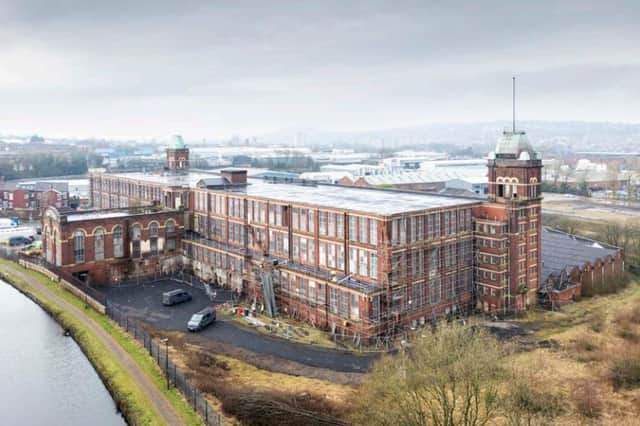

Imperial Mill
Designed by architect Sydney Stott, it was formally opened on December 14 1901 at a cost of £120,000 (more than £12m today). The Mill was the first spinning mill erected in Blackburn for nearly 40 years and contained over 70,000 spindles at its height. Spinning stopped in 1980, and the building was purchased by a saw company.
Historic England say: “Plans for Imperial Mill’s restoration are underway, promoted by the local authority, with a planning application which proposes commercial and cultural uses. Investment partners are sought to deliver a regeneration scheme. The mill will receive £1m from the £20m Levelling Up Partnership fund, with additional funding sought from other funders.
“The mill is part of Blackburn’s £1bn growth strategy. An arts programme – Super Slow Way – has also identified the mill as a potential cultural hub along the LeedsLiverpool Canal.”
The Mill has four storeys, the first floor in use by James Jones and Sons Ltd, which has a 15-year lease. The remaining floors are vacant and in a state of disrepair, although a first phase of roof repair works is currently underway. Structurally unsafe elements, including the boiler house and engine room extension, have consent for removal. The site also includes the mill gatehouse (currently home to a printing firm) and 3.7 acres of land. The site is located within a predominately commercial area, which is bounded by commercial uses to the north, north-west, open space to the east and north-east, Leeds and Liverpool Canal to the south, and a residential terrace to the south-west on Gorse Street.
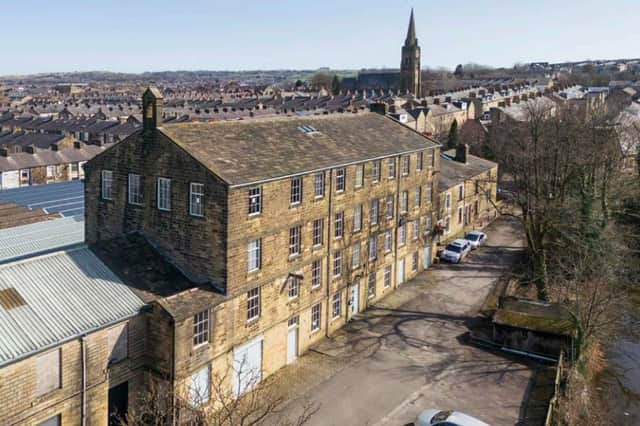
Lomeshaye Bridge Mill
Lomeshaye Bridge Mill was built in 1841 by Samuel Holt as a two-storey steam-powered cotton-spinning mill on the banks of the Leeds and Liverpool Canal. It is sometimes known as Brierfield Factory. In 1899, two additional storeys were added to the mill to increase floor space and convert it from a spinning to a weaving mill.
The mill faced demolition in the 1990s as part of the Whitefield regeneration plan. With support from various heritage organisations, including Historic England, demolition was averted when the Heritage Trust for the North West purchased the building in 1998. From 2014, a £1m conversion project funded by the National Lottery Heritage Fund transformed the mill into business start-up units, meeting spaces, and storage facilities, featuring an open-plan office/workspace layout across four floors.
The opportunity
Historic England say: “The mill has been sympathetically restored to a high standard, featuring original elements and offers offices, workshop and storage spaces, plus both service and passenger lifts, being fully accessible throughout. Currently, only the top, third floor is occupied in office use by NM Energy Ltd.
“The ground floor is ideal for workshop / storage use, while the first and second floors offer large open spaces, with good light and beautiful views across Pendle Hill which would suit creative arts use or live/work spaces. The property is in very good condition, has no structural issues and offers immediate occupancy, with no works required. Opposite is an area of car parking for approximately 10 vehicles. This is held on a separate title but will be included within the sale.
“The mill is located on the Pendle Corridor, in a tranquil setting adjacent to the Leeds & Liverpool Canal by Lomeshaye Park, surrounded by traditional stone terraced housing, half a mile from Nelson town centre and five miles from Burnley. It is well-connected via the M65, bus route, canal cycle links and Nelson railway station.”