
£300,000 lifeline for North West's red squirrels following squirrel pox outbreak
We could lose red squirrels within a decade
Lancashire Wildlife Trust has secured £299,986 to deliver vital conservation action for one of the UK's most iconic and threatened native mammals, the red squirrel.
Historically a familiar sight across woodlands, parks, and gardens throughout Britain, red squirrels have suffered a catastrophic decline over the past century. Once numbering millions, Britain’s estimated population is now around 287,000, with approximately 70 per cent found in Scotland. Remaining populations are increasingly fragmented, isolated, and vulnerable to local extinction.
Without sustained efforts, we could lose red squirrels entirely in just ten years.
A squirrel pox outbreak was confirmed in Formby - the most southerly red squirrel stronghold in mainland England - last month, raising fears for a population that has already suffered devastating losses. During the last major outbreak in 2008, Formby's red squirrel population fell by an estimated 80 per cent.
Heather Harris, Red Squirrel Recovery Network Communications Officer at Lancashire Wildlife Trust said: “Following the recent squirrel pox outbreak in Merseyside, we are reminded just how vulnerable our red squirrel populations remain and how quickly decades of conservation efforts can be put at risk. Natural England’s funding will strengthen our ability to respond rapidly to such threats and work to create more resilient habitats.”
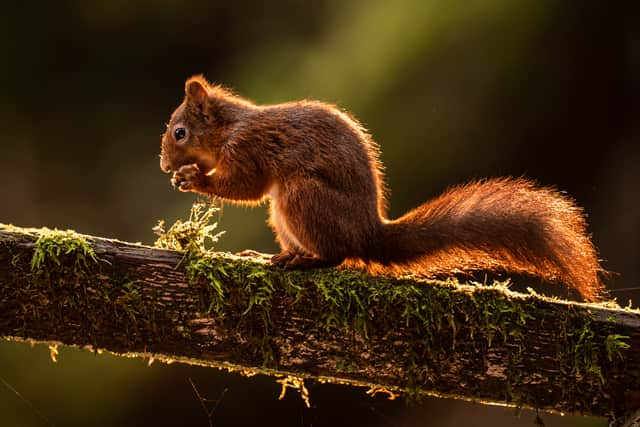

Despite ongoing efforts to protect the species, populations continue to face significant pressures, including competition from invasive, non-native grey squirrels and the ongoing threat of the squirrel pox virus. Grey squirrels carry the virus asymptomatically, but it is fatal to red squirrels, with infected animals typically succumbing to illness within two weeks.
These challenges highlight the importance of sustained conservation action to secure the future of England's remaining red squirrel strongholds.
Thanks to Natural England's funding, the project will be able to:
• Increase grey squirrel management across the region, including the recruitment of an additional Red Squirrel Ranger, providing greater capacity to respond rapidly to threats and support conservation efforts across key sites.
• Undertake a grey squirrel eradication feasibility study to better understand grey squirrel movement, incursion rates, and the level of effort required to achieve effective long-term management across different landscape types.
• Launch a community tree-planting initiative to enhance natural food availability for red squirrels. The scheme will encourage the planting of red squirrel-friendly trees in gardens and communities, helping to reduce reliance on supplementary feeding and improving habitat connectivity.
Tony Juniper, Natural England Chair, said: "We know that good science and effective partnerships can help restore species to favourable status, and this funding will enable us to support many initiatives to help halt and reverse the decline of our wonderful wildlife."
What is squirrel pox?
Squirrel poxvirus (SQPV), sometimes colloquially called ‘parapox’, is a viral infection that causes swollen lesions on the front paws, flanks and head, particularly around the mouth, nose, eyes and ears. It’s origin in the UK remains unknown, but it is believed to have been introduced with Grey squirrels and a similar infection.