
Preston high school forced to close for 2 days while teachers go out on strike - here's why
Bishop Swarbrick has previously said he wants to use academy status “to protect, secure and develop the Church’s mission in education through greater collaboration and support between our school communities and parishes”.
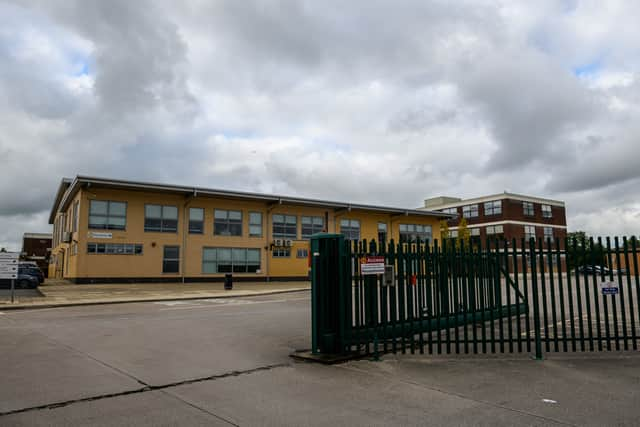
A Preston high school will be closed for two days next week while staff go out on strike.
Pupils and carers at Corpus Christi Catholic High School in Fulwood have been told the site will be shut to pupils on Monday, September 21 and Tuesday, September 22 while the industrial action takes place.
Members of the National Education Union (NEU) and NASUWT are unhappy that the Diocese of Lancaster is ordering the Ofsted Outstanding school to become an academy. The NEU says the policy of Bishop of Lancaster, Paul Swarbrick will drain vital funds away from the classroom – and could see teacher numbers cut.
Corpus Christi Headteacher, John Hankin, told the Post: “Parents and carers were informed in advance that members of the National Education Union (NEU) and of NASUWT were taking part in industrial action. Our school will be closed to all pupils on Monday 21st and Tuesday 22nd of September and will open again to all pupils on Wednesday 23rd September.”

Background
Bishop Swarbrick set out his intention back in 2020 for all Catholic schools in the Lancaster Diocese – which covers Central and North Lancashire, the Fylde coast and Cumbria – to convert to academies by the end of the current 2025/26 academic year. The vast majority of them have already made the switch.
When a school becomes an academy, it leaves the control of the local education authority for that area – Lancashire County Council for most of Lancashire and Blackpool Council for schools in that patch – and joins a trust or sponsor.
Academies have more flexibility than schools operating under a council umbrella – including an option to deviate from the national curriculum in some areas and to set their own admission arrangements and term times. Bishop Swarbrick has previously said he wants to use academy status “to protect, secure and develop the Church’s mission in education through greater collaboration and support between our school communities and parishes”.
However, the NEU says academies have to sacrifice some of the funding they previously received as maintained schools, because the not-for-profit MATs (multi-academy trusts) “top slice” academy budgets to fund the central services that would previously have been provided by the local authority. The union also claims that this cash is “used to maintain the high salaries of central executives who don’t teach”.
In July Lancashire NEU branch secretary Ian Watkinson said it would be “understandable” if those Catholic schools that had not yet converted considered taking industrial action if they, too, were alarmed at the prospect of being “forced down an academisation route that simply isn’t right for their setting”.
“They’re concerned about the top-slicing of funding that should be being spent in the classroom going to create an extra layer of bureaucracy – and that’s what’s happening with these Catholic MATs,” Mr. Watkinson said at the time.
Academies are state funded in the same way as maintained schools and, from a policy perspective, there should be no financial incentive to convert, nor any financial penalty for doing so.
However, there were claims that early waves of schools that converted in the 2010s, which became standalone academies rather than joining trust, were overcompensated by the grant they were given to cover the cost of the services they no longer received from the local authority – and now there are suggestions, like those being made by the NEU, that schools within MATs are being disadvantaged for the reverse reason.
Ian Watkinson appealed for Bishop Swarbrick to guarantee that no school will be forced to become an academy – and claimed that some of those that had done so willingly were already regretting their decision.
“There are plenty of headteachers that have converted [their schools] who are concerned, because the MATs don’t have the same capacity to provide the support that’s needed – and the level of top slice is impacting what they’re able to deliver.”
Lancashire County Council
A spokesman for LCC said: “We are aware of the planned industrial action. Decisions relating to academisation, engagement with staff and arrangements during the strike are matters for the schools, their governing bodies and the Diocese of Lancaster, not Lancashire County Council."
The Diocese of Lancaster has been approached for comment.