
Council issues update on future of Leyland asylum hotel after court ruling in Epping
South Ribble Borough Council says it is considering its options regarding the ongoing use of a hotel in Leyland to house asylum seekers, following a court ruling involving another local authority.
The Best Western Hotel, on Leyland Way, shut its doors to the public in April 2022 when it became one of hundreds of similar facilities to be taken over by a government contractor to provide accommodation for those awaiting assessment of their asylum applications.
A temporary injunction was granted by the High Court on Tuesday that will force the government to stop using The Bell Hotel, in Essex, for that purpose. It followed a legal challenge by Epping Forest District Council, which said planning permission had not been granted for the arrangement.
The Lancashire Post understands that neither was approval ever sought from South Ribble Borough Council – as the local planning authority – for the short-notice change of use of Leyland’s Best Western, even retrospectively.
However, the High Court decision in the Epping Forest case also hinged on the fact that the council produced evidence of harm flowing from the switch – specifically, the sometimes violent protests that have centred on the hotel in recent weeks after one of its occupants was charged with sexually assaulting a 14-year-old girl.
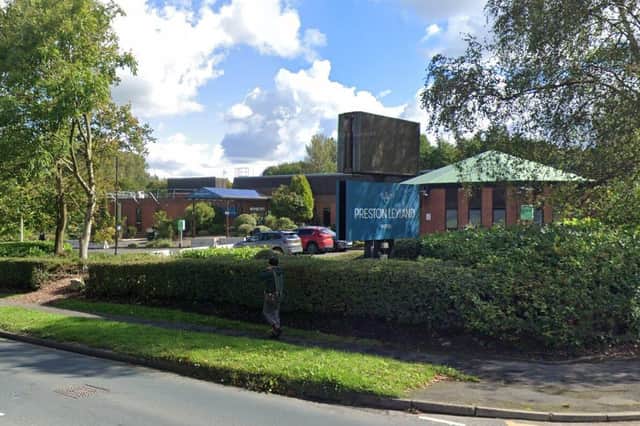

Matthew Tomlinson, the Labour leader of the council in South Ribble, told the Post that the use of hotels for the housing of asylum seekers “was not a choice by South Ribble Borough Council – and is something which was imposed on us by government”.
“We are aware of this recent ruling and we will now carefully examine the detail and circumstances surrounding the High Court injunction and explore all of our options,” Cllr Tomlinson added.
The Post also understands that planning permission was not granted for the Tickled Trout Hotel, near Samlesbury in South Ribble, to house Afghans who supported the UK military during operations in their country. However, the conversion of that facility, which emerged in June, is part of an entirely separate resettlement programme just for those individuals with entitlements under that scheme – and the site is not being used more broadly for asylum seekers.
The Epping Forest case returns to the High Court for a final ruling in October.
‘THESE PEOPLE ARE HUMAN BEINGS’
South Ribble MP Paul Foster said it was important to remember that – unlike at The Bell Hotel in Epping – there had been “not one reported incident to the police” in relation to The Best Western in Leyland in the three years that it had been operating as asylum accommodation.
He also hit out at what he described as “an orchestrated effort by certain political parties during the summer to create unrest around this issue”.
“But that doesn’t mean we don’t need to see the use of these hotels cease as quickly as possible – that’s always been the desire of me, the local council and the government,” the Labour politician added.
“However, the facts of the matter are that we’ve got to get through the backlog [of asylum claims]. The mess that we inherited has taken longer to work through than we anticipated, but we are making progress – and we will get there.”
Mr. Foster also stressed that the South Ribble facility was not being used to house lone males.
“The Leyland hotel has got young families, young children and single mums – and if [they] have a right to stay here, they’ll be allowed to stay here; if they haven’t the right to stay here, then they clearly won’t.
“But we’ve got to allow due process to take place…these are human beings.”
Nationwide, the number of hotels being used as asylum accommodation has almost halved over the past two years, from a peak of 402, in the summer of 2023, to 210 by this July - with almost all of the drop having occurred before the general election last year.
According to new figures released by the Home Office on Thursday, there were 32,059 people being housed in hotels as they waited for their asylum claims to be processed as at the end of June - up eight percent on the same point last year, but down by almost 300 individuals since the end of March. The peak of asylum hotel use occurred in September 2023 when the total number of residents stood at 56,042.
The Labour government has said it wants to see the end of asylum hotels by the time of the next general election in 2029.
However, Paul Foster is “hoping” that The Best Western in Leyland will be returned to public use long before then – “In the next few weeks, if not months,” he told the Post.
He had called upon the government to set a firm date for that return during a debate in the Commons back in March. But he added this week that the hotel should never have been deemed a suitable location in the first place.
He was leader of South Ribble Borough Council at the time of the site’s repurposing in 2022, under the last Conservative government – and says local consultation was non-existent.
“As the council leader, I found out about the decision to redesignate the Leyland hotel the Monday after they had instructed it and agreed to it on the Friday.
“[That] hotel isn’t appropriate to be in that use…either for the local community or for the people that have been housed there. It’s too isolated and there’s not [the] support facilities, right next to the motorway.
“It was a knee-jerk reaction by the previous government, because they’d just run out of space,” Mr. Foster said.
Home Office statistics show that the number of asylum cases awaiting an initial decision peaked at 134,046 in June 2023.
By the end of June 2025, that figure had dropped to approximately 71,000 – relating to 91,000 people - a fall of 18 percent compared to the same month in 2024.
Around 111,000 people claimed asylum in the year to June, 14 percent more than over the previous 12-month period - and higher than the previous recorded peak of 103,000 back in 2002.
WHO GETS WHAT?
Asylum seekers are provided with different types of accommodation depending on the stage of their claim:
***initial accommodation – used to house people who have been awarded “subsistence” support, while their application for longer-term accommodation and help is determined. Initial accommodation is normally in the form of hostel-style residences;
***dispersal accommodation – once a person has been granted broader asylum support, they are eligible for longer-term housing until shortly after they receive a final decision on their asylum claim. This is normally provided within private dwellings in local communities. The system, introduced in 1999, means asylum seekers are offered accommodation on a ‘no-choice basis’ across the UK in order that they can be widely distributed around the country.
However, the government has become increasingly reliant on ‘contingency’ asylum accommodation – like hotels – over the last five years.
Source: House of Lords Library
This article was updated with the latest Home Office asylum statistics on 21st August.