
'From two guys on a computer to a powerhouse'- chat with co-founder of Longridge based Skiddle as it turns 25

A top ticketing and events firm, founded here in Lancashire, is celebrating its 25th anniversary this year so we thought it was the perfect time to look back at its journey.
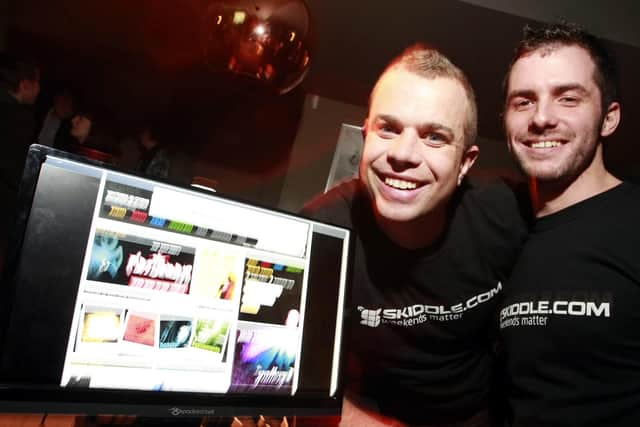
Back in 2001, college student Richard Dyer from Kirkham and his friend Ben Sebborn, a student at the University of Central Lancashire, founded Skiddle right here in Preston.
Flash forward to now and Skiddle is one of the biggest ticket outlets and events guides in the UK but it’s still based where it all began- the headquarters are in Longridge and Rich, 43, lives in Garstang whilst Ben, 45, lives in Bleasdale.
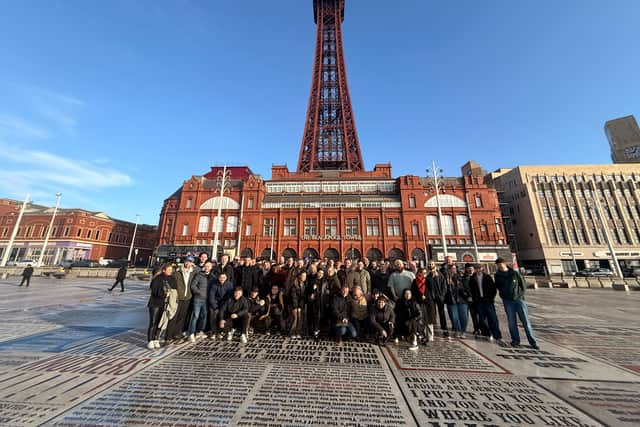
This year the firm turns 25 and they’re hosting a huge birthday party at the Blackpool Tower this week to celebrate.
Ahead of their celebratory party, we sat down for a chat with one of the co-founders, Rich, to look back over the years, see what’s next for Skiddle and to ask for some advice for budding entrepreneurs.
See what he had to say next…


How are you feeling to have reached that milestone?
“Surprised, I think is a big one. You know, Skiddle… was a college project turned into a hobby. You know, blink and you miss it we’re 25 and there's 100 staff and, yeah, it's exciting. It's something to be proud of.”
Can we go back to the beginning, where did the idea come from?
“Yeah, so originally, I was at the art college in Carlisle- Cumbria Institute of the Arts, as it was back then - and it was essentially a class project, teaming up with journalism students and performing arts students, and we had to report on the week. They wanted us to produce a newspaper and we said ‘look, it's 2001, how about we make a website?’ And that was the start of it in the form of Student Weekly. And then I met Ben, and Ben was at UCLan in Preston, very much a computer sciences guy, and said ‘look, hey, this is great. Why don't we make it better?’ We had the name ‘Skiddle’...[because] we wanted a name that didn't mean anything, if that makes sense. We didn't want to be assigned to students or have to update it weekly or anything like that and it's allowed us to evolve, you know, over the years. Ben created the website that anyone could update, which is, you know, pretty commonplace now with social media and stuff like that, but back in 2001 if you wanted to promote an event, you had to fax the newspaper and make sure you made the print deadline or or whatever else you know. So you know people were sending stuff to Mix Mag like three months before the event was happening and unable to update it and stuff like that. We created a facility for people, event promoters across the country to be able to update the information so it was a lot less special guests, and there was a lot more actual names of DJs and bands that were performing at the event that night. So that was it, and very quickly, we ended up breaking the boundaries of Preston and Carlisle and people added listings in Birmingham and Glasgow and the bright lights of London and stuff, and promoters were getting in touch with us and going ‘this is really cool. This is really, really handy.’ So, yeah, we went from there.”
Can you confirm where you are both from as I've heard that Skiddle was founded in a Preston bedroom, is that correct?
“Yeah, it's very much the Preston bedroom. Ben's an Essex boy that we were kidnapped. He came up to uni in Preston and never left. I was born in Lancaster. I lived in Kirkham, around the Preston area, for quite some time, and then, for some reason, my parents decided to punish me and move me to Carlisle at the start of my GCSE years. So I was up there for a bit but I didn't lose connection with the Preston area. When Ben was at uni, I used to travel down here quite a lot, and it was very much between the bedroom and Times Square, which is now the Ferret in Preston, where we did a lot of our planning.”
Over the next 25 years, you did grow massively, could you crunch any numbers to show the ways in which you've grown?
“We started selling tickets in 2006 - because we are very much a what’s on guide at our forefront, you don't have to sell tickets to use Skiddle- and since then, we've sold 60 million tickets. We've got 100 staff across four offices around the UK. The company's valued at about £65 million now which amazes me, it really does. I mean, yeah, 10 million customers over the years, 36.4 million secondary phone calls, apparently- when people ring up and talk to our support team. I don't know where that stat came from, but yeah, there you go.”
Over those 25 years, have you got a highlight, a moment you went ‘wow’?
“Oh, wow. Yeah, I mean, there's a lot like we've come from being, you know, two guys that set up a website in a bedroom to now, like, just earlier this year, we sold 100,000 tickets in less than an hour for the Milton Keynes Bowl. I think every every day, it feels like you've achieved something extra in the way that, you know, you’re stood working with some of these events, and you're watching these people come in, and they're all like holding up the Skiddle tickets and you're like ‘yeahhh’, they're all, like, part of that. Or you go on social media and you see people making like memes about Skiddle on Tiktok or whatever, and it's all like ‘my bank balance coming in’, ‘my mum asking where all my money's gone this week’ and then it's screenshots of the bank account, and it's just ‘Skiddle, Skiddle, Skiddle’ and it's just little bits like that, where people have really made an effort to create something about what you created. So, yeah, some great staff too. Some of our staff have been with us since 2007 so that's a testament to the team and, yeah, just like, I guess all of it's a highlight. There's been bad bits, don't get me wrong. But yeah, it's been really enjoyable. It still is. I still enjoy going to work every day.”
Has there been a big learning curve as well?
“Yes, and no, we've always taken a customer first approach with everything we do, like we put the event goer first and that's pretty unusual in the ticketing world. Unfortunately, we’ve worked with some events that haven't worked out, and customers have invested their hard earned cash into that event and the events not happened, or something's gone wrong with the events, and then we're kind of sat between the customer and the event organizer, and along the way, we've got to make some pretty big decisions where we've got to put the customer first and maybe refund shows out of our own pocket, which financially doesn't look good on your books, but then at the same time, you've maybe got 10,000 happy customers for that event that then come back and continue to use Skiddle for other things. So yeah, stuff like that. And, you know, learning, watching staff evolve over time and sadly we've lost a couple of members of staff over the years, which was like really hard news to deliver. Because, you know, it's not the family cliche but you spend a lot of your life at work with these people, and people get very close and stuff like that. Ultimately, you're responsible for these people and a lot of things and I guess that's the hardest bit, getting that right every day.”
Over the 20 years you've been selling tickets, how has the events industry changed and how have you had to adapt?
“I guess there's a lot. Covid was a big eye opener to events. It also reaffirmed that people needed to go out. They needed to be part of something still. That has changed a lot, what that is - people want more out of a day out or a night out now. Let's take a stag do, for example, once upon a time, iyou’d go to the pub and tie someone to a lamp post. Now, it's like, they want to go out. They want to do paintballing or axe throwing or go karting during the day, you know, they want these lifestyle type events. Then they might go to a dinner and possibly end up in a club. You know, there's a lot more people trying to get everything out the day.
“I guess in some ways, there's a lot more of the Instagram crowd that are maybe going out to be seen, not to necessarily enjoy it. But, you know, there's still, very pleased to say, some good old fashioned knees up happening up and down the country. It's evolving, you know, there is a culture where people aren't drinking as much, there's a little bit of that going on. I guess there's a lot more sort of micro climates in music as well. Once upon a time, you'd have a DJ that, if he was classed as big, he would sell tickets anywhere. Whereas now it's like it might work in Liverpool, but it might not work in Manchester, because of these scenes and these kind of microclimates of music that have been created. And I guess a lot of that is down to social media and tastemaking and stuff like that. You've just got to keep up with it, keep up with the tastemakers and we have a good workforce, and a lot of them are quite young, and often, you know, they're asking me why Radio 2’s on in the office. But yeah, it's good.”
You have expanded all across the world but you still have headquarters in Longridge, is that correct?
“That's right, yeah. 2014 we were renting offices in Preston and again, just another natural step. We'd gone between different rented offices and every time you go ‘oh, this one's big, and this is great’ and it's the old goldfish bowl syndrome that the fish will fill the size of the bowl, you know. So it was an old gym just outside of Longridge. It was a barn converted to a gym, and then the gym had kind of gone bust. So I took Ben in. I was like ‘Look, just use a bit of imagination here. I think this could be a good space for us.’ So we bought that. We've just recently extended it, because we do have a lot of people that come to the office and yeah, it's beautiful. You pull into the car park, and you turn around, you can see the Trough of Bowland. With the advent of fibre broadband or whatever you could be anywhere in the world now, so it's great. And then outside of that, we’ve got a couple of satellite offices in Manchester and London to stay local to the people we support around those areas.”

Why was it important for your headquarters to stay in Lancashire?
“I just love it and I think you can operate a website from anywhere in the world so we don't need to move our offices. We've got a great operations team, you know, the finance, the marketing, all those people, you've got some really talented people in Lancashire so why would you move away from them? Then, like I say, we’ve got satellite offices, because event organizers in London want to speak to a London representative for us but for everything else, it's like, we've got this beautiful space, you know. It's a great little town, Longridge, we get on really well with it. It’s got everything you need Longridge. It's one of the mad little towns where you can eat well and buy well and, you know, it's got boozer, what else do you want? So yeah, there's no reason to leave.”
You are also celebrating your birthday elsewhere in Lancashire, in Blackpool. How are you feeling about that big day?
“I mean, that's great. That's coming up very soon. We wanted to put a party on that was in you know, probably the most iconic entertainment venue in the north. I was like ‘right we'll have Blackpool Tower’ and then we got Lenny Henry hosting, who has been a huge part of the entertainment scene for, well long before I was born. You know, he's iconic and we wanted to do something that really just brings together the event organizers that work with us and our suppliers and our friends and stuff like that. So yeah, we've got the ballroom at Blackpool Tower, really excited to bring all that together and then as part of that, we just wanted to make it like a little mini adventure of, you know, whilst you're eating your meal, you've got some entertainment on and yeah, then we've got an after party until the early hours with our mate Gok Wan. So, yeah, looking forward to.”
Are you still looking for people to buy tickets?
“I mean, the after party is wide open to anyone who wants to come. Everyone from downstairs will be coming upstairs to the after party. But then if anyone else in Blackpool and surrounding areas wants to come along and see Gok Wan, they're more than welcome to. £15 a ticket, 30th of April.”
Then after this big party, have you got any goals in mind that you still want to achieve with Skiddle?
“Oh, yeah, every day is a new goal. We're very much one of the leading independent ticket outlets in the UK. We want to expand on that across Europe, you know, we've got big plans for that. And we've also been investing a lot into what we call the lifestyle market, like the ice rinks or the theatres and stuff like that, where selling a ticket is a little bit different… For example, if you go to a gig, you buy one ticket, you get in. If you go to an ice rink, ithey want to be able to sell tickets every 30 minutes, you know, throughout the day. So we've been doing a lot of stuff like that, and really look at expanding across those markets. The power of Skittle is the what's on guide. It puts people's events in front of people. And, you know, we're there to put any event in front of anyone so that's the plan. Keep going until we're 50!”
50- what are you going to do for that party?
“I've absolutely no idea, because I'll be 68 so you might need to wheel me in.”
If you go to the opposite end of the age scale, if any youngsters in Lancashire dream of being an entrepreneur, want to set up a business, have you got any advice for them?
“Yeah, just get on with it. Skiddle is a powerhouse now but it was two guys on a computer that we probably did a paper round to save up the money for, you know. And there's even less barriers now, like we had a lot of challenges when we were setting up, you know, card processing, for example, was like really difficult at the time and we had to go through a lot, and now you can literally go to Screwfix and buy a card card reader and take payments off people, if you want. Jump over walls, don't look at a wall and think ‘hey, that's going to stop me from doing this;. Just think ‘right, I'm going to jump over that and, you know, we'll deal with that when we get there’. I guess that's my outlook on life as well. Don't worry about what might happen. Just worry about it when it does and then fix it.”