
Human rights groups criticise Lancashire Police's use of facial recognition cameras
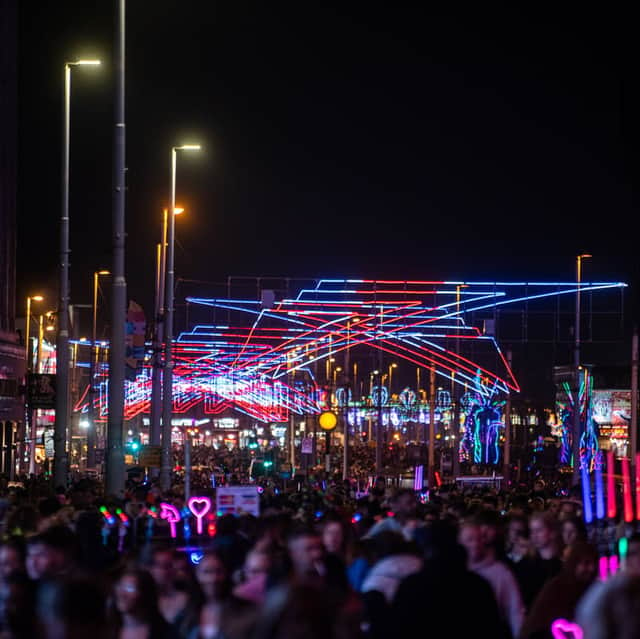
Lancashire Police will deploy facial recognition cameras at the Blackpool Illuminations Switch On, but human rights groups have criticised the move
Use of facial recognition cameras has been criticised by human rights groups.
Yesterday, Lancashire Police announced they would be using the technology at the Blackpool Illuminations Switch On.
The force says Live Facial Recognition (LFR) helps “prevent an detect crime while protecting the most vulnerable”.
However groups opposed to its use claim it’s an infringement on civil liberties and should only be used under strict observation.


The first deployment is to take place in Blackpool on Friday.
The technology is seen as a vital tool to help quickly identify and arrest those who pose the greatest community risk..
Ch Supt Chris Hardy, of Lancashire Police, said: “LFR compares faces captured on a live camera feed against a predetermined, secure watchlist of individuals wanted for serious offences, subject to court orders, or who pose a risk to the public or to themselves.
“When the system identifies a possible match, a police officer will compare the image on screen with the person in view and decide whether to speak to them. This decision will always be made by an officer, not the technology.
“Officers will always explain why they have engaged with someone and provide an information leaflet with contact details.
“I want to be clear with people – we take your privacy very seriously - if you are not on a watchlist we will never store your biometric data from passing through the LFR zone of recognition. It is immediately and automatically deleted, ensuring privacy is protected.
“Any further images are deleted within 24 hours after each day of deployment and CCTV footage is deleted within 31 days, the same as standard public cameras.”
LFR has been successfully used by the Metropolitan Police and South Wales Police since 2017 and is being trialled at several forces including Merseyside, GMP, Sussex, Hampshire, Essex and Bedfordshire.
Campaigners Big Brother Watch say: “ Police and private companies in the UK have been quietly rolling out facial recognition surveillance cameras, taking ‘faceprints’ of millions of people — often without you knowing about it.
“This is an enormous expansion of the surveillance state — and it sets a dangerous precedent worldwide. We must stop this dangerously authoritarian surveillance now.”
The group has a petition calling for the use of facial recognition technology to be curbed.
A spokesperson added: “Facial recognition is spiralling out of control in the UK and there are no clear laws in place to protect our privacy.
“Unlike CCTV, facial recognition doesn’t just record what you do, your face becomes a barcode in the same way as your fingerprint or your DNA.”
Meanwhile, a spokesman for libertyhumanrights.org said: “There are no specific laws or regulations governing the use of facial recognition technology. The police have general common law powers to prevent and detect crime.
“However, when using facial recognition technology, the police must comply with data protection, human rights, and discrimination law.
“The use of facial recognition technology must be for a policing purpose and be necessary, proportionate, and not used in a discriminatory way.”
Opponents against the use of the technology say cameras can sometimes produce a false or biased result, especially against women, children and people of colour, according to a study by the Alan Turing Institute.
Enjoy unlimited access to local news, the latest football stories and new puzzles every day. With a digital subscription, you’ll see fewer ads, get faster load times, and access exclusive newsletters and content.
Ch Supt Hardy added: “Before this technology is deployed in the community, strict checks are in place to ensure its use is both necessary and proportionate.
“LFR has already proven successful in other police forces, and we’re building on their experience to ensure it delivers the same positive results here in Lancashire.
“We will engage heavily with our communities about when we use LFR. You should expect to see information about where our deployments will take place, including online before it is used, our website where the results are published of when LFR is used, information leaflets for the public, as well as posters and signs to include QR codes to make people aware LFR is being used and where they can go to find further information.”