
High tide alert issued for North West coastline as 'Harvest Supermoon' takes effect - here's where might flood
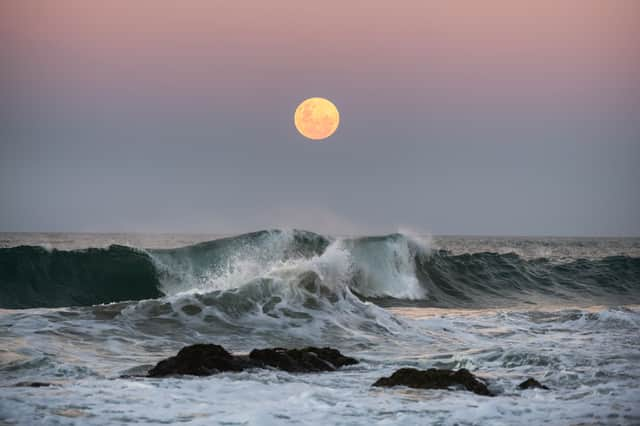
People visiting or living near the North West coastline are being warned of high tides because of a ‘Harvest Supermoon’.
The National Trust at Formby have said that there will be very high tides in their area, “right in the middle of the day”, and that people need to exercise extra care. They said: “There’ll be very little beach for you to enjoy for an hour or so either side of high tide, with the sea reaching right up to the dunes.”
They asked people to check tide times before visiting and help migrating shoreline birds rest and conserve their energy by not walking towards or through them, and to keep dogs and horses away.Horses must also not be ridden on the beach within two hours either side of high tide.
The Environment Agency (EA) has also said that high spring tides are expected until tomorrow around Morecambe Bay, potentially flooding roads and low lying land, though property flooding is not expected.
The lunchtime tide at 1.30pm on Thursday, October 9 is not forecast to reach flood alert levels. The following high tide at 1.45am on Friday, October 10 is forecast to reach flood alert level at Sandside and Arnside. The lunchtime tide at 2.05pm on Friday, October 10, and subsequent tides, are all below flood alert level. Tide levels may be high two hours either side of peak level timings.

Areas that may be affected are the Coast at North Morecambe Bay from Roosebeck to Carnforth including low lying areas around Ulverston, Canal Foot, Greenodd, Haverthwaite, Flookburgh, Grange-over-Sands, Levens, Milnthorpe, Sandside, Arnside and Silverdale.
The official advice is: “Be careful along beaches, promenades, coastal footpaths and roads as tidal floodwater is expected to impact these low lying areas. Do not attempt to drive through floodwater.”
What is a supermoon?
When a full Moon occurs at the closest point to Earth during its orbit, it appears larger and brighter, becoming what is commonly known as a ‘supermoon’. The tides are caused by the gravitational forces of the sun and the moon on the earth’s oceans. When the moon is closer to the earth during a supermoon, the gravitational pull is slightly stronger, and so the tides are bigger. Full moon and new moon tides can be much bigger than tides at other times in the lunar month, as the sun adds its own gravitational pull into the mix, producing the so-called spring tides.