
Lancashire coroner demands answers over suicide of HMP Wymott prisoner
Lancashire coroner Christopher Long has given HM Prison and Probation Service 56 days to respond to his concerns over the suicide of Clive Cocking at HMP Wymott, who had a history of mental health issues and suicidal thoughts
A coroner has asked prison services to explain why a suicidal convict was not given proper support at a Leyland prison.


Sixty three-year-old Clive Cocking was found hanged in his cell at HMP Wymott on October 22, 2024.
An investigation by the Prisons and Probation Ombudsman found that Cocking had attempted to take his own life a few weeks before his recall to prison.
Cocking had originally been jailed for the attempted murder of a 12-year-old boy and the Ombudsman’s investigation found no evidence that staff at Wymott checked on his welfare or reassessed his risk after his cellmate was transferred to another prison the day before Cocking’s suicide.

His hanging was the fourth ‘self-inflicted’ death at the prison in the last four years.
An investigation showed Cocking’s condition was not reviewed - despite evidence of suicidal thoughts - after his cellmate was moved to another prison.
Now, Lancashire coroner Christopher Long has issued a prevention of future deaths report into the incident.
Mr Long has given His Majesty’s Prison and Probation Service 56 days to respond to his concerns.
In the report, he said: “ Evidence was heard that national guidance did not require an ACCT (suicide and self-harm prevention procedure) to be reviewed where a key support measure was removed in the post-closure period.
“The “Post-closure” section of the Prison Safety Policy Framework was considered at the inquest.
“It was noted that it does not contain any guidance about steps that should be taken if risks change after the ACCT is closed but prior to the post closure review. In particular, it did not contain any guidance about bringing the post-closure review forward in these circumstances or re-opening the ACCT pending the post-closure review taking place.”
In its summary, the Prisons and Probation Ombudsman said: “Mr Cocking was recalled to prison around seven weeks before he died, and shortly after he had attempted to take his life in the community.
“Despite clear indicators of heightened risk, staff at HMP Preston did not initially start suicide and self-harm prevention procedures (known as ACCT) following his arrival.
“When they did start ACCT procedures, they were poorly managed, and some key aspects of national instructions were not followed.”
Cocking was recalled to prison having breached the conditions of his release licence and was taken to HMP Preston before being transferred to HMP Wymott on October 2.
He had a history of mental health issues, self-harm and suicidal thoughts.
The report added: “He had only been released from prison for a week when he lapsed into drinking and attempted to take his own life.
“Members of the public found him collapsed and Mr Cocking was taken to A&E before being returned to prison.
“Staff began suicide and self-harm prevention procedures the day after Mr Cocking arrived at Preston, which were closed at Wymott on October 16.
“Following the closure of ACCT procedures, staff encouraged Mr Cocking to engage with the regime and he told staff that his cellmate supported him.
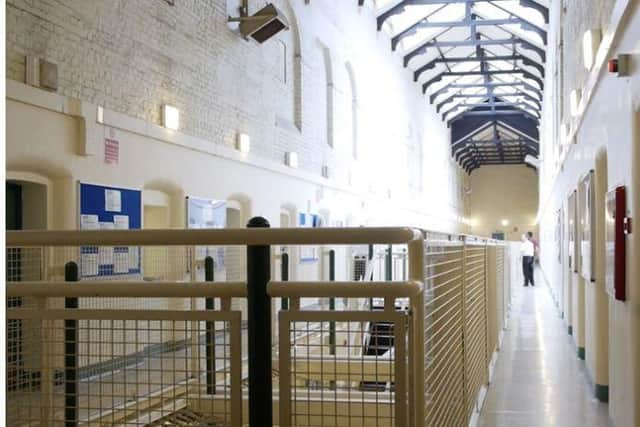
“On October 21, his cellmate transferred to another prison. At around 2.07pm on October 22, an officer unlocked Mr Cocking’s cell and discovered him hanged. Staff started CPR and paramedics continued resuscitation efforts. However, at 2.33pm paramedics confirmed life extinct.”
The report also found that suicide prevention procedures were not started when Cocking first arrived a Preston and were “not always managed in line with policy or best practice”.
And no measures were identified to “reduce or mitigate Mr Cocking’s risk of suicide or self harm”.
Emotional support is available 24/7
Call 116 123.
Staff at HMP Wymott were said to manage Cocking’s suicidal intentions “reasonably well”.
However, staff failed to check on his welfare when his cellmate was transferred to another prison.
The report said: “Although his cellmate was listed as Mr Cocking’s only source of support, no one checked on his welfare when his cellmate was transferred, and staff did not consider whether this meant that his risk of suicide and self-harm had increased.”
A clinical reviewer found that an assessment completed before Cocking was discharged from the mental health team caseload was not “sufficiently detailed” and that the prisoner should have had a full mental health assessment.
The ombudsman’s report called on the Governor and Head of Healthcare of HMP Preston to introduce a robust quality assurance process to ensure that staff consider all available information in reception.
The Governor should also “satisfy himself that robust procedures are in place to assess the quality of ACCT procedures, including identifying and correcting practice that is not in line with the Prison Safety Policy Framework”.
The Head of Healthcare of HMP Wymott should ensure that all prisoners subject to ACCT procedures receive a comprehensive mental health and risk assessment to inform future care needs.
HMP Wymott is a medium security prison for adult men. Most prisoners are serving sentences of four years or longer.
Specialist wings include two psychologically informed planned environment (PIPE) units for prisoners with personality disorders. Healthcare services are provided by Practice Plus Group. There is 24-hour nursing cover.
The most recent inspection of Wymott was in December 2023. Inspectors reported that healthcare services were not good enough, particularly the provision of mental health support for the many vulnerable prisoners at Wymott.
At the time of the inspection, there were excessive waits of up to 39 weeks for psychological therapies and over a year to get counselling. Inspectors found that neither the health trust nor commissioners were addressing the level of need within the prison.