
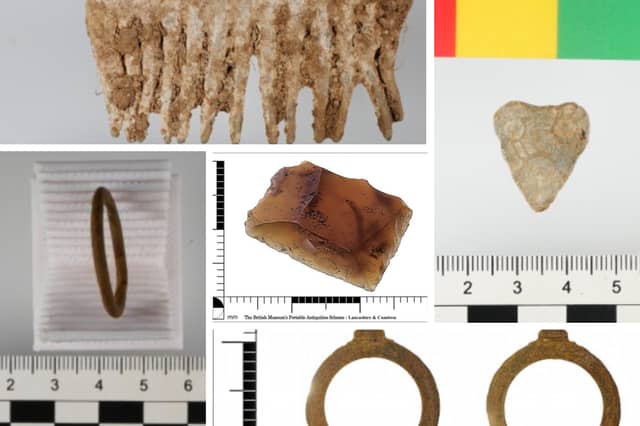

The Portable Antiquities Scheme, run by the British Museum, records archaeological objects found by members of the public in England and Wales.
Every year many thousands of archaeological objects are discovered, many of these by metal detector users, but also by people whilst out walking, gardening or going about their daily work
In the last three months, a Bronze Age axe, an ancient hair curler, and a piece of flint that could date as far back as 9,000 BC have all been discovered in the Red Rose county. And there’s many more on the database to look at.
To find out more about some of the objects discovered, click on the pages below:
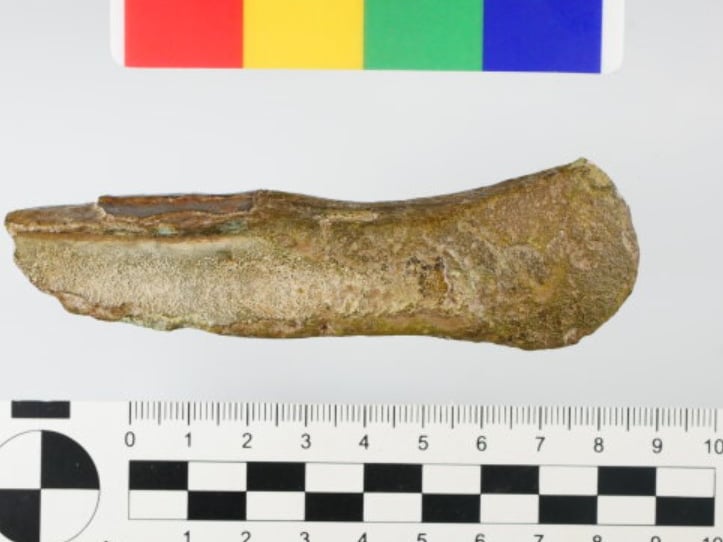
5. Bronze age axe
Bronze Age copper-alloy flanged axehead of Needham Class 5. It is waisted and flaring. Three of the flanges and part of the butt have been lost through damage, and part of the blade has been lost to wear. Found in Grindleton. Recorded in December 2025. | Portable Antiquities Scheme
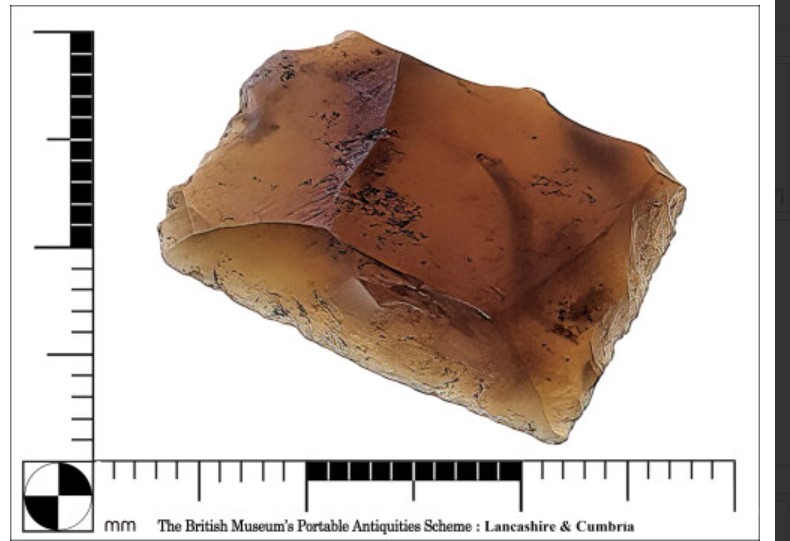
6. Gun Flint
Post Medieval tertiary yellow brown platform type gunflint, dating from 1650-1850. There is damage from use on the striking edge. From a flintlock firearm, probably a musket, possibly a rifle or pistol. It would been held within the firearms cocking mechanism by a clamp, with the flint housed inside a 'flint pad' which was a small sheet of lead alloy, cloth, or leather. Found near Clitheroe. Recorded in December 2025. | Portable Antiquities Scheme
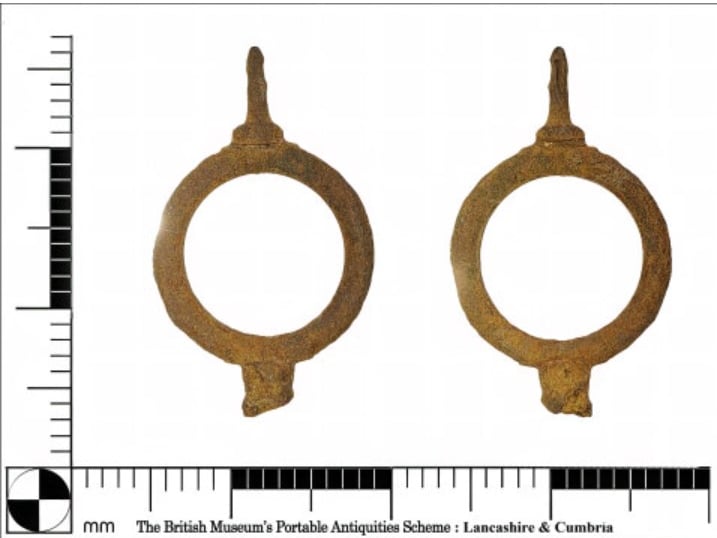
7. Watch winder
Late Post Medieval copper alloy watch winder. It consists of an annular round-sectioned handle with opposed lugs. There are traces of remnant gilding on the collar of the slimmer lug. The thicker lug contains corroded iron and was probably used to wind the watch. Date range 1800 to 1900. Length 23mm, thickness 3mm, diameter 14mm, weight 0.9g. Found near Slaidburn, December 2025. | Portable Antiquities Scheme
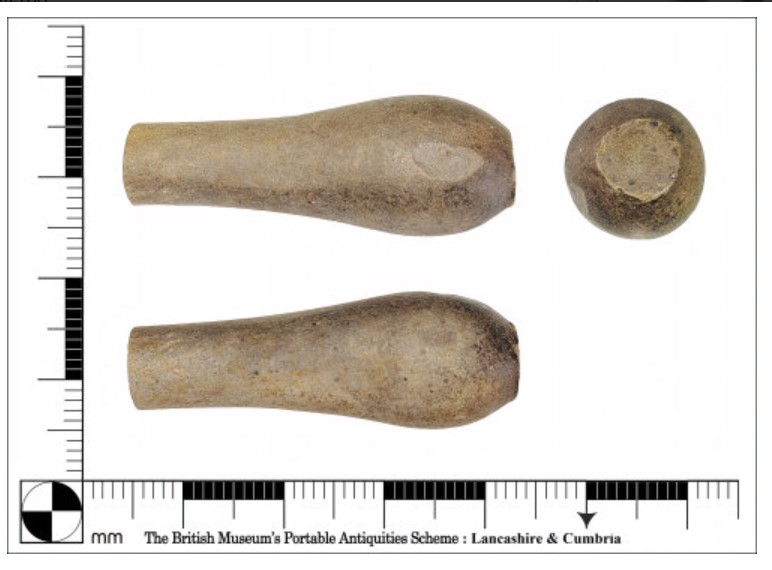
8. Hair curler
Post Medieval ceramic pipe clay wig or hair curler. One half is lost but remaining portion consists of a circular shaft which expands into a bulbous terminal. The missing section would have been the mirror of this, creating an overall shape resembling a dumbbell. The terminal has a plain flattened tip but the lost end may have been stamped with a maker's mark. This one shows evidence of having been subjected to heat, probably prior to being used in the curling process. Date range 1650 to 1800. Found on December 8, 2025, near Slaidburn. | Portable Antiquities Scheme