
How Preston North End Community and Education Trust are changing lives for cancer patients
Participants from seven clubs came together at Deepdale on Monday.
Smiles and laughter.
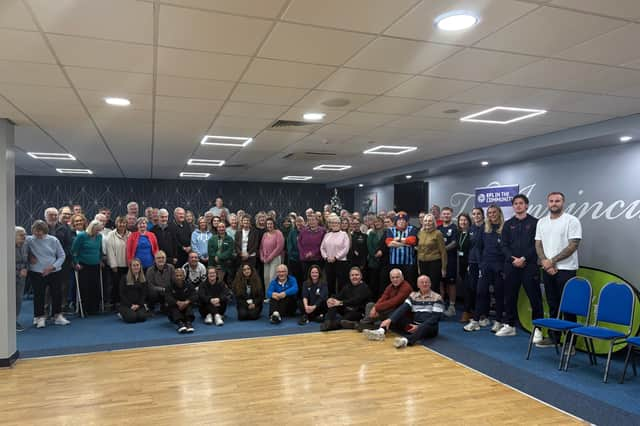

They were impossible to miss as 94 cancer patients from all across Lancashire and South Cumbria gathered together at Deepdale on Monday to meet, share their experiences and get moving in a physical exercise class.
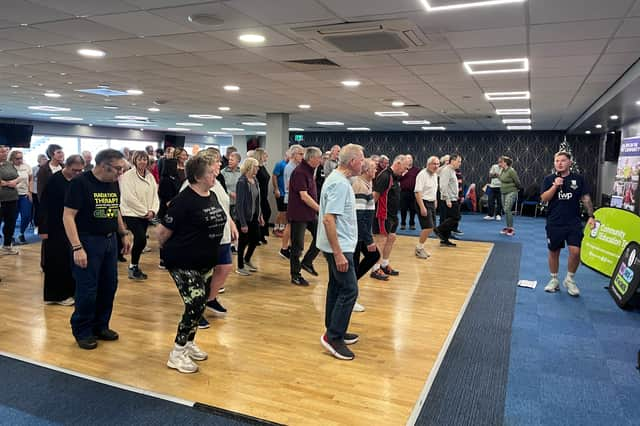
The 94 are living with and beyond cancer, with many having incurable diagnosis, but you could not tell. Everyone was up on their feet and joining in, star-jumping and squatting away to Happy Hour and Heaven is a Place on Earth. All the while, smiles and laughter and even a bit of friendly banter between the Preston North End and Blackpool representatives in the room.
PNE vs Cancer is just one of the fantastic and life-changing initiatives hosted by the club's Community and Education Trust, which started as a trial nearly two years ago with North End and seven other neighbouring Football Club charities.
Monday's event was the first time the groups - from Preston, Blackpool, Burnley, Blackburn Rovers, Accrington Stanley, Morecambe and Barrow - had come together, with organisers being blown away by the turn out. Also on hand was former Preston player Nick Anderton, who retried from the game aged 26 after being diagnosed with osteosarcoma, a rare bone cancer, and North End striker Johnny Kenny.
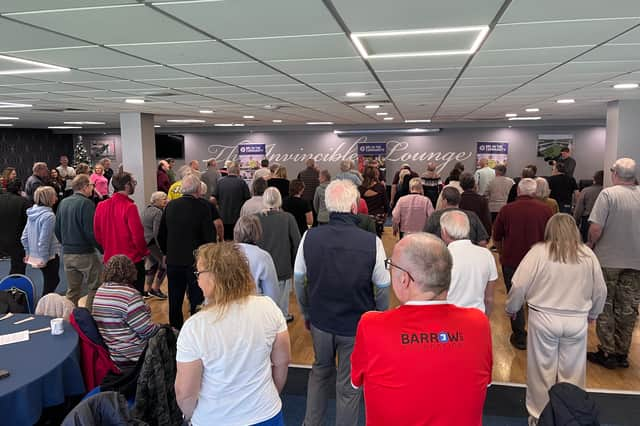
"I never anticipated seeing quite so many people come together from the right Football Club charities," Abbi Colclough, the EFL's Club Charities Health Lead, told The Post.
"A lot of participants have had to travel, which is really difficult when you're living with a long-term condition. For a lot of individuals, it's on a different day to the normal delivery of their programme, so I think it speaks volumes in terms of the commitment, the engagement with the programme and, most importantly, the benefits people are getting out of it.
"Hundred people in the room today, the smile on their faces, the enjoyment. The social connections they're getting out of this programme, it's invaluable and it's not something they're going to get from a clinical setting.
"Community is at the heart of this programme. Community is at the heart of the work the Football Club charities are doing."
"It's made such a huge, huge difference."
The programme's initial aim was to help people who had just been diagnosed with cancer at the pre-habilitation stage, keeping participants fit and active in the wake of one of the most devastating pieces of news anyone can receive.
Remaining physically active has proven benefits in helping cancer recovery – while people also need to be in a strong enough condition for some treatments in the first place - and these weekly sessions are designed to keep people fit and moving in a positive environment alongside people going through similar battles.
The benefits couldn't have been made clearer by Pauline Wilkinson, a weekly attendee at the sessions in Preston, who couldn't walk 18 months ago. Gradually, from a wheeler, to a Zimmer Frame, to walking sticks, she can now walk without any aids and has even just come back from a scuba diving holiday.
Pauline says she gained a lot of weight during her treatment, and showed the jumper she wore when she attended her first session. She stood behind it alongside Abbi and it covered both of them.
Pauline says the sessions played a huge role in her transformation: "The support I've had has been absolutely amazing. I do live on my own, I was very isolated.
"I pulled up in the car park, sat there for half an hour. Nathan [session instructor] came down and said: 'what are you doing out here? Come on in and get a brew.' That's what I did and I've been coming every Monday ever since."
The programme has become so vital for participants
Pauline's is not the only transformation, as the Vs Cancer programme have become so much more than what was initially planned.
Those who got so much out of the sessions at the prehab stage didn't want to just stop going when they reached rehab. They had built a community and wanted to stay within it. So the initiative now caters to all stages of the process.
Because it's not only the body that a cancer diagnosis can impact, but the mind as well. It can be easy for the sorrow and pessimism to swallow you up. Something that only increases for people who are isolated.
"At the heart of it is supporting people to be physically active because we know the more active they are, the better their cancer recovery journey will be," Abbi said. "But the peer support and social connections that people are achieving through this programme is invaluable.”
Additionally, no matter how good anyone's intentions are, unless a person has been through cancer, it is impossible to truly relate. In these groups, everyone knows exactly the troubles everyone is going through, which offers a sense of belonging and togetherness.
Those who are in rehab are there to offer advice to new attendees who are still at the prehab stage. A cycle of support. A safe and open space where a brave face doesn't need to be put on for friends and family, where all worries, negativity, fears, as well as hopes and joys, can be shared with understanding ears.
Pauline said: "The important thing for me was going from being on my own, in my house, worried about what was going to happen tomorrow.
“To having somewhere not clinical, somewhere that's in the community, with other people who are now really good friends.
“Knowing I've got that place to go on Monday where I can actually talk about anything. Treatment, feelings, anything. It's made such a huge, huge difference."
Abbi added: "The friendships, social connections that people are making, there's nothing been quite as strong as the support from people who are living a similar journey and lived experience of living with and beyond cancer.
“That's a real outcome that's loud and proud."
The programme has expanded massively across England
If Pauline's story wasn't enough proof of success, then the fact the programme started with a trial of eight clubs in Lancashire and has now expanded to 22 clubs across Cheshire, Merseyside, North Cumbria and the North East, absolutely is. The aim is to keep that number rising.
"It's quite easily to sell this programme. The increase in physical activity levels, the emotional and mental well-being, and to the health system as well.
"We're really starting to evidence how we are reducing side effects from surgery or treatment, reducing complications, hospital stays.
"Quite clinical stuff, which perhaps is sometimes difficult to evidence but it's all down to the success of the pilot across Lancashire which has allowed us to that opportunity and when we get in front of the right people, they're snapping our hands off for that community model."
By chance, the gathering of Lancashire's Vs Cancer groups fell on the week of the EFL's Power of 72 campaign, celebrating the positive impact the EFL's clubs and their community organisations make across the country.
More than a million people have been reached and supported over the last year across the charities, with clubs doing so much great work for the communities they represent. Work that often goes unnoticed.
PNECET has multiple programmes and initiatives to help those who are isolated, disabled, suffering from illnesses like cancer, dementia or poor mental health. From the young to the old and everyone in-between.
Clubs are supposed to be pillars of the community, and through this crucial work they are.