
How Preston’s Horrockses survived war and the slump to embrace fashion
From the Great Depression to the Second World War, Preston cotton giant Horrockses faced enormous challenges before finding a new future in fashion. In the latest instalment of his series, Keith Johnson charts the company’s changing fortunes.
The death of Sir Frank Hollins in 1924 came more than a century before the ’Horrockses Fashions’ exhibition currently on display at the Harris, writes Keith Johnson.
Having overseen a great expansion of the business, his loss was deeply felt. The man who replaced him as chairman of Horrockses, Crewdson & Co Ltd was William Wilding Galloway, who, like Sir Frank, had been part of Hollins Bros before the merger in 1885.
A colourful painting appeared in the Illustrated London News in May 1925 by C.E. Turner, depicting the scene on New Hall Lane with the Centenary Mill in full flow as an electric tram and steam-driven lorry passed the factory.
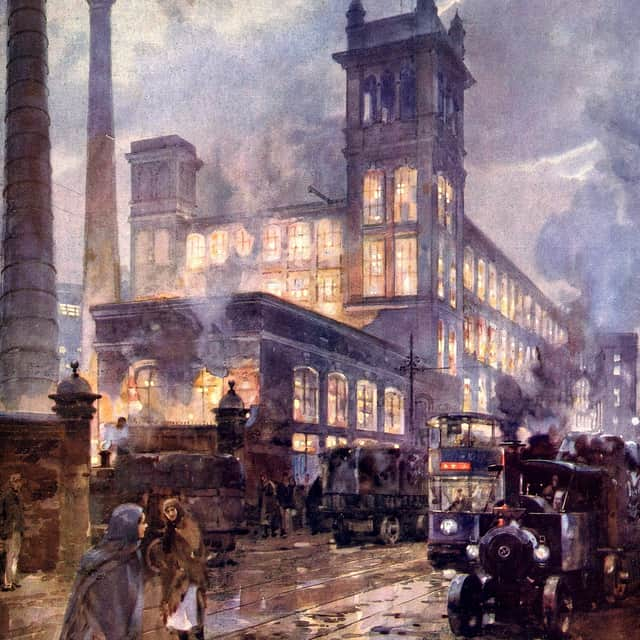

The artist remarked: “The mill is seen through the humid atmosphere that makes Lancashire the best cotton-spinning locality in the world, a huge cotton mill, aglow with electricity in the twilight, is a most impressive scene.”
W.W. Galloway, the former vice-chairman, provided the stability needed during the next decade when several Preston mills closed as trade with China and India slumped. The Japanese, with their cheaper labour costs, were gaining a hefty market share in both countries.
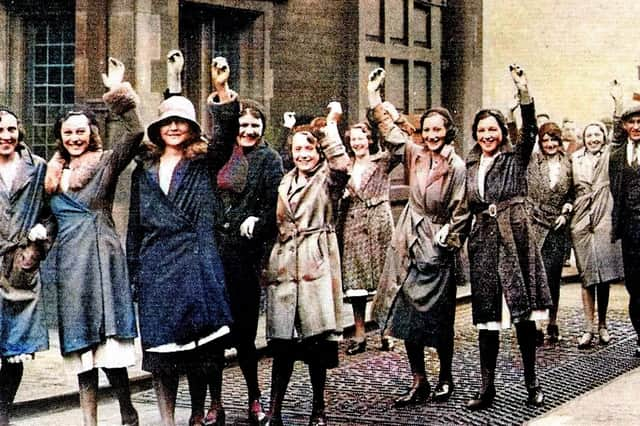
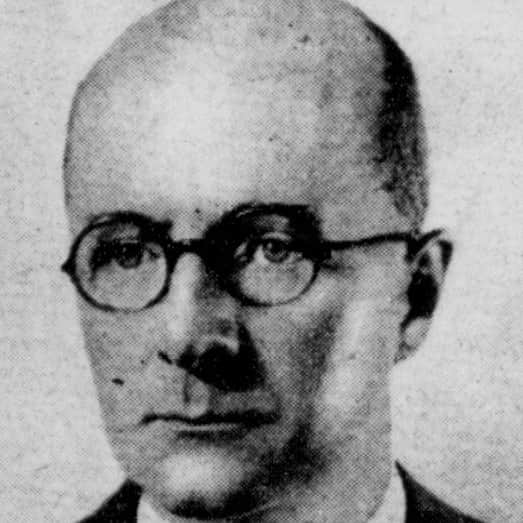
Galloway’s tenure ended in July 1935 when he was elevated to the role of president and Ernest Varley Haigh became chairman.
Unfortunately, his time as president of Horrockses was short-lived, as he died in September 1936 at his Bilsborough Hall home, aged 82.
He had been an enthusiastic yachtsman, golfer and lover of music during his lifetime. His will, published in November 1936 and valued at more than £570,000, included numerous charitable donations, with funding for the Willows Convalescent Home, Galloway’s Home for the Blind and even a district nurse for Bilsborough.
He had clearly left the business in good shape, as a Lancashire Daily Post report in 1935, some 40 years after the opening of the Centenary Mill, recorded that Horrockses was doing quite well despite the general depression in trade.
The report noted that in recent years there had been enlargement and modernisation of the company's premises.
Horrockses’ range of products, which in John Horrocks’ day consisted of 15 to 20 variations, now comprised thousands of different varieties of materials and more than 5,000 patterns.
The company employed over 6,000 workers and owned 330,000 spindles and more than 8,000 looms.
There were three main blocks of factories in Preston, in addition to mills at Moses Gate, Bolton, and vast warehouses in Manchester and London.
It was stated that the average weekly output of cloth would stretch for more than 600 miles, enough to reach Aberdeen and back from Preston by road.
The new beginning under Haigh for a company already well known for its sheets, bed linen and towelling saw an advertising campaign, initiated by Galloway, prove fruitful by offering dressmaking material by the yard.
In those cash-strapped days of make do and mend, the ‘Horrockses Fashion Portfolio’ booklet came with paper pattern offers to create your own trendy frocks using materials approved by leading fashion designers.
Soon, all the talk was about ‘Horrockses Fashion Fabrics’, the perfect material for beach suits and holiday frocks. Indeed, they were promoted as ideal fabrics for home dressmaking, perfect for pleating or draping.
The popularity of Horrockses dress fabrics was revealed in the company figures for 1939, when it was reported that under new chairman Donald Beith, the great cotton firm had made a profit for the first time in 12 years.
A profit of £25,689 was recorded, against a loss of £94,426 the previous year.
Plans were drawn up to introduce a ready-to-wear range of high-quality, fashionable cotton frocks, but unfortunately the Second World War was upon us and they had to be shelved.
Preparations for war had begun for 60 women weavers in the Yard Works on Stanley Street back in September 1938.
One evening, as they left their noisy looms behind, they were each given a number of cloth samples by their overlookers. When they returned the following morning, every woman handed over six sewn and stitched sandbags.
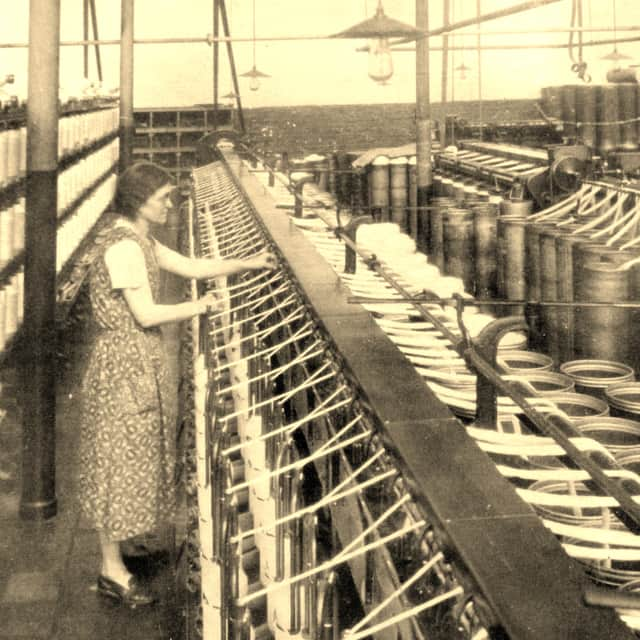
These were difficult times for the Lancashire cotton trade, with several mills forced to suspend normal manufacturing and turn to producing essential wartime products.
Blackout sheeting and military clothing were high priorities, and with many workers conscripted into the forces or doing other essential war work, those left in the mills carried the burden of production.
The decline in export trade, provision of air raid shelters and blackout equipment were among the challenges to be overcome.
Immediately after the war, many of the old cotton workers were in no rush to return to the mills, and the Government had to launch a recruitment drive.
In September 1947, Barbara Castle, MP for Blackburn, spent a week as a mill worker in the Horrockses mills, lodging with weaver Agnes Robinson at her Tennyson Road home in the shadow of the mill where she worked.
On her first day at the Horrockses mill on Stanley Street, under the watchful eye of Henry Eastham, labour officer, she was introduced to her work colleagues.
Among them were Miss Bateson of Frenchwood Avenue and Mrs Gent of Bleasdale Street, who between them had 75 years' service among the warp and weft of weaving.
Mrs Castle was proud to have been brought up in Bradford, a textile town, and the days ahead gave her a valuable insight into the life of a cotton operative.
One highlight of her working days, which began at 7.30am and finished at 5.30pm, was a visit to the Horrockses canteen, where she joined the lunchtime queue for a welcome midday meal.
In conclusion, she felt it was a week well spent amid the clatter and din of the weaving shed.
Fellow weaver Dorothy Bateson, who showed her the knack of handling a clacking loom, had told her she would soon make a weaver out of her for sure.
Mrs Castle had also been delighted with her lodgings, courtesy of Agnes Robinson, who insisted she accompany her on her usual weekly visit to the local Carlton cinema on Blackpool Road.
There, Barbara Stanwyck and David Niven were starring in The Other Love, a romantic drama.
Also in the spotlight a few weeks later was local weaver Edith Lowe, who had worked for Horrockses for 21 years.
Chosen as a typical Lancashire mill lass, she had been selected to feature on a 'Textiles For Me' poster by the Board of Trade.
Want the latest Lancashire news straight to your phone? Join our WhatsApp channel
She was proud to declare that weaving was a worthy career and that conditions were much better than two decades earlier.
The need for new recruits and to attract experienced weavers back into the fold after the war was vital, as Horrockses had launched its exclusive 'Horrockses Fashion Ltd'.
It was a business that would boom in the 1950s, as revealed in the next feature and portrayed in the exhibition currently being held at the Harris.