
How Preston’s Horrockses survived industrial turmoil to become a global cotton giant
In the second part of our series, we look at how Preston cotton giant Horrockses battled strikes, a devastating cotton famine and industrial upheaval on its way to becoming a world leader, long before its famous fashions.
The period following the death of Samuel Horrocks junior in 1846 was a challenging one for the business built by John Horrocks. It was still a century before the days of 'Horrockses Fashions', now celebrated in the excellent exhibition at the Harris, writes Keith Johnson.
In February 1815, a partnership consisting of Samuel Horrocks senior, Samuel Horrocks junior, Thomas Miller senior, John Bairstow and Peter Horrocks had been formed as John Horrocks & Co. in London and Horrockses, Miller & Co. in Preston.
Other changes, arising from deaths and other circumstances, followed over the years. Among them was the death in January 1840 of Alderman Thomas Miller senior, aged 73, who had been a trusted colleague of John Horrocks.
A former Mayor of Preston, his tremendous contribution to the town and to Horrockses was recalled at his passing. On the day of his funeral, the Horrockses mills were closed and hundreds followed his funeral cortège in silent mourning to St Paul's churchyard, where he was buried.
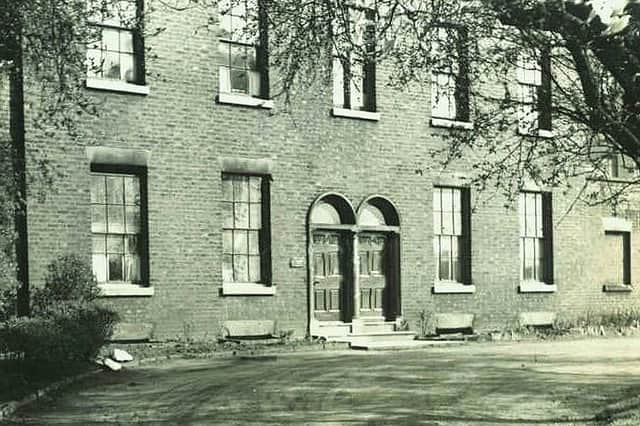

Following the death of Samuel Horrocks junior in 1846, Thomas Miller junior became the principal partner, with the Miller brothers, Thomas and Henry, inheriting the Horrockses shares.
Difficult times lay ahead, not just for Horrockses employees but for mill workers across Preston.
During the latter part of 1853 and early 1854, Preston became embroiled in a bitter dispute in the cotton industry. It became known as the 'Great Lockout', as workers attempted to claw back a ten per cent reduction in wages.
The factory gates were eventually locked by the cotton masters and, after seven months, the reluctant and hungry workers were forced back to work.
In 1860, following the retirement of William Bowman, Alderman Thomas Miller became sole proprietor of the gigantic business. He continued in that position until the following year, when Edward Hermon, head of operations in London, was taken into partnership.
Unfortunately, the new partnership had to contend with the cotton famine of 1861 to 1865, when the American Civil War disrupted supplies of the raw cotton essential to keep Lancashire's mills operating.
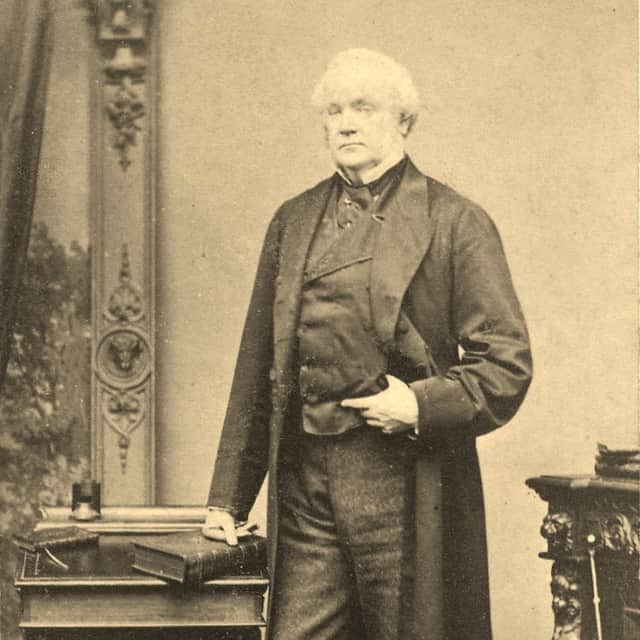
While some mills shut down completely, Horrockses, with more than 3,500 employees, managed to keep production going, although it was reduced to three days a week in March 1863.
The company continued producing its long cloths, claiming its calicoes, long cloths and shirtings were the best in Europe.
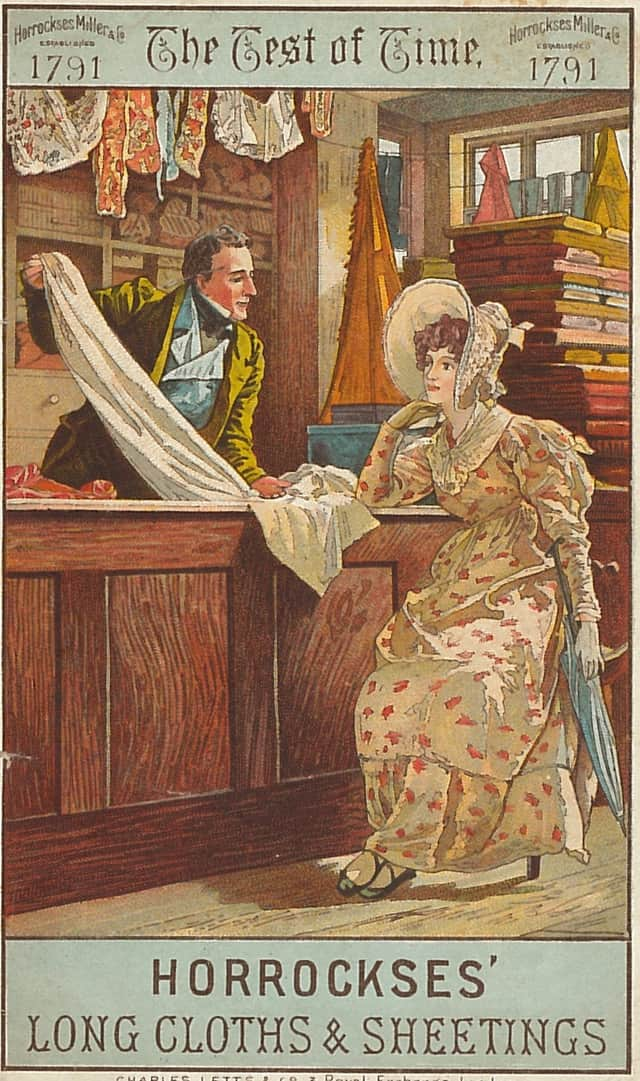
Just as the cotton famine was coming to an end, the firm suffered another blow in late June 1865 when Thomas Miller junior died, aged 54, at his Winckley Square home.
Although he had been in failing health for some months, suffering from disease of the liver, the news was greeted with great sadness.
He was remembered for his kindness by his long-serving employees, who stopped work and followed his funeral cortège to the town boundary as he was taken to Lytham for burial.
Edward Hermon subsequently became sole proprietor in 1865 and, despite his limited knowledge of cotton manufacturing, was soon contributing to the development of Horrockses.
A politically motivated character, he was elected Conservative MP for Preston in November 1868, a position he would hold until his sudden death, aged 61, in May 1881.
Before becoming an MP, Edward Hermon had brought two of his nephews into the business. One of them, Sidney Albert Hermon, served in the London office for three years before transferring to Preston.
There he underwent thorough practical training in the art of spinning and weaving, becoming a partner in 1874, aged just 25.
During the 1870s, Preston's textile industry was at its peak, with the number of mills and weaving sheds in the town approaching 80.
However, the 1880s brought another difficult decade for the cotton trade, with a shortage of orders, mill closures and strikes arising from poor relations between masters and operatives.
Horrockses did not have to look far for a solution.
In 1885, it was agreed to amalgamate with Hollins Brothers & Co., whose mills adjoined those of Horrockses. The merger brought with it Frank Hollins, who was destined to become head of the business.
At the same time, the firm began dealing directly with retail houses instead of going through warehouses.
Two years later, the Bolton and Manchester firm of Crewdson, Crosses & Co. was brought into the business, which took on the title Horrockses, Crewdson & Co.
The result was a great expansion of home and overseas trade, with the company now employing upwards of 5,000 cotton operatives.
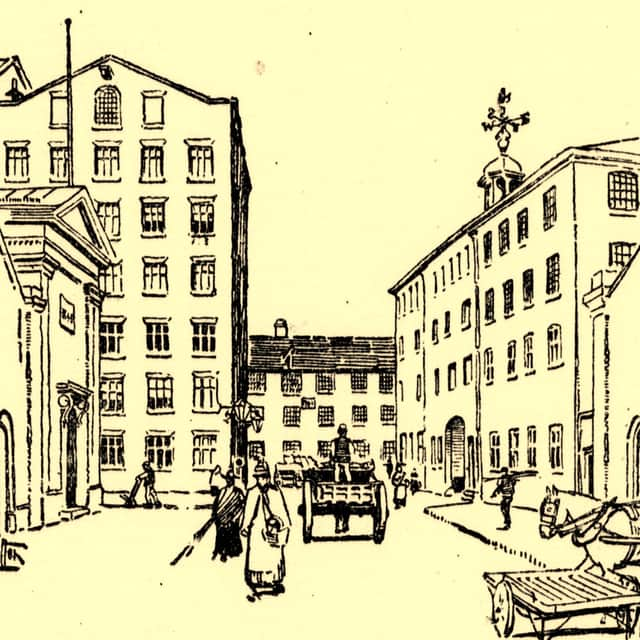
In 1891, marking 100 years since John Horrocks had begun cotton manufacturing in Preston, the company drew up plans for the Centenary Mill on New Hall Lane.
The mill would be fully operational by 1895, having cost £125,000 to build – around £15 million in today's money.
The contract for the four-storey building was awarded to local builder Thomas Croft, while electric lighting, then the latest innovation, was supplied by Preston firm Messrs Bennet & Bruce.
In fact, the Centenary Mill was only part of a vast expansion of the company's Preston facilities, with extensions to its Stanley Street Yard Works also being undertaken.
The purchase of the extensive spinning and manufacturing works of Swainson, Birley & Co. followed, involving the construction of buildings for bleaching and dyeing in the much-altered vicinity of Salmon Street.
The development of the business continued into the 20th century under the guidance of Frank Hollins.
His achievements were recognised by King Edward VII in December 1907, when he was created a baronet.
Six years later, when King George V and Queen Mary toured industrial Lancashire, Sir Frank was on hand to show them around the Horrockses mills in Preston.
He then guided the business through the challenging years of the First World War and was still at the helm in 1920 when the company was acquired by the Amalgamated Cotton Mills Trust for a price exceeding £5 million – more than £200 million in today's money.
Although he continued as chairman, Sir Frank gradually left the day-to-day running of the business to others.
In 1923, shortly before his 80th birthday, representatives of Preston's trade unions made a presentation to him in appreciation of the relationship he had maintained with them over the years.
Although his Preston residence was Greyfriars, the Stockport-born Sir Frank died in Bridgnorth in late January 1924, where he had been staying during a period of failing health.
He had married Dora Emily Cox in 1875 and the couple had four sons and two daughters. Their eldest son, Arthur Meyrick Hollins, already a director of the business, succeeded to the baronetcy.
The business Sir Frank left behind had become recognised as the largest cotton spinning and manufacturing company in the world.
What lay ahead for the prestigious Horrockses cotton empire will be revealed in the next feature in this series.