
World first trialled at Royal Preston Hospital could slash rates of superbugs including MRSA and norovirus
A world-first trial has been carried out at the Royal Preston Hospital, which could revolutionise global health policy.
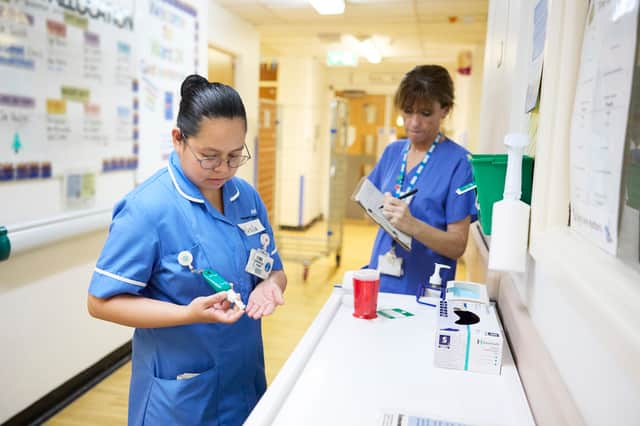
A clinical trial of a next-generation hand sanitiser has taken place at the hospital by Primel, with huge differences seen in comparison to traditional alcohol-based products.
The trial of Primel Active Hand Shield (PAHS) demonstrated an average of 91 per cent higher antimicrobial efficacy after one hour, compared to the current standard of care hand sanitiser at 15 minutes. It has been found to have sustained protection aginst pathogens such as MRSA, Clostridium difficile and norovirus - and there are now calls to review national and international health policies for safer hand hygiene.
Primel claims that the new product will improve patient safety, address the current challenges of hand hygiene compliance by healthcare workers, and reduce the cost and burden of healthcare-associated infections.

Professor Mark Wilcox said: “With hospital-acquired infection rates such as Clostridium difficile currently increasing annually within UK hospitals, and the challenges of spreading antimicrobial resistance, new solutions are needed to cut infection risks in healthcare settings.
“The results from the Lancashire Teaching Hospital trial show Primel Active Hand Shield’s superior efficacy over current alcohol hand hygiene sanitisers that are in widespread use in the NHS. This novel hand hygiene product offers the chance to break the infection transmission cycle and, importantly, provide increased safety for patients, healthcare professionals and visitors. Going forwards, infection prevention guidelines need to consider this novel way of improving hand hygiene.”
The stats
After immediate application, Primel Active Hand Shield was 98 per cent effective, and after one hour still 92 per cent effective, therefore maintaining protection on hands better than a standard alcohol-based hand sanitiser, which dropped its efficacy considerably from 97 per cent to 68 per cent, respectively in 15 minutes. In addition, Primel Active Hand Shield proved it was on average 76 per cent more effective than traditional hand sanitisers in reducing the transmission of microbes from contaminated hands to a surface.
Dr David Orr, Director of Infection Prevention and Control with the Trust, added: “In collaboration with Primel, we developed this trial to measure the immediate and residual antimicrobial activity on the hands of staff treated with Primel Active Hand Shield in comparison with an alcohol-based hand sanitiser. The results from this trial have been very encouraging, and the feedback from our staff was very positive.
“Poor hand hygiene compliance is a widespread problem in healthcare services and is nationally reported to be between 40 per cent to 60 per cent. The deployment of this product could dramatically reduce the infection control risk associated with poor hand-hygiene compliance, because, even if hands are decontaminated less frequently than currently recommended, the product will continue to provide protection.
“My hope is that we can expand the use of Primel’s product more widely across the hospital and therefore start to tackle the challenge of bringing down HAI rates and importantly provide better safety and security for our patients .”
“This trial has demonstrated that Primel Active Hand Shield offers superior protection to the more traditional alcohol-based hand sanitisers thanks to our key differentiator: increased sustained efficacy against a broad spectrum of pathogens,” says Arjun Luthra, CEO of Primel. “By offering this innovative technology, our solution adds an additional dimension to hand hygiene, by allowing users to reduce the transmission of pathogens on surfaces by their touch to further enhance the effective stopping of the spread of pathogens.”