
Verdict in on controversial homes plan for green belt land on Longton's 'millionaire's row'
A verdict has been given on controversial plans to build five homes on Green Belt land off Longton’s ‘millionaire’s row’.
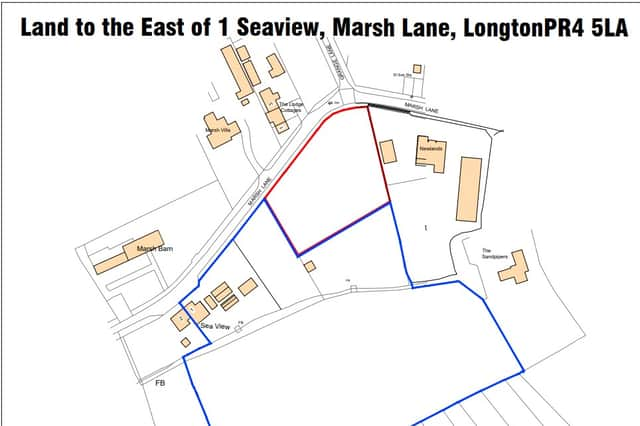
A Mr D Worcester made a Planning in Principle (PIP) application for the dwellings on a 0.327 hectare parcel of land to the west of Newlands, Marsh Lane, an area which has seen numerous multi-million pound house sales in recent years.
The proposed development site is approximately 500m west of Longton’s defined settlement boundary, but Mr Worcester’s agent told South Ribble Borough Council that the the proposals “would complete an otherwise continuously built up frontage along the southern side of Marsh Lane. Furthermore, the development of the application site would be read as part of the wider village and its infilling would not project development into, or encroach upon, the countryside.”
They also argued that the works would result in “a number of key benefits”, including the delivery of ‘much needed new homes’ and ‘support for existing businesses and suppliers in the area during construction, contributing to the local economy’.
Objections
But the plans were hotly disputed by members of the local community, who submitted 31 letters of objection within the 14-day consultation period allowed for PIP applications.
Key objections included:
- Highway and road safety concerns
- Flooding risks
- Inappropriate development in Green Belt
- Issues with the scale of the proposal and character
- Lack of local infrastructure to support the development

Planning officer’s decision
A report by a SRBC planning officer refused the application.
Although the development was considered appropriate in terms of size, it was deemed as inappropriate development in the Green Belt, which is not overcome by trying to classify the plot as ‘infill’.
The report states: “The site does not form part of a continuous built frontage and is physically and visually separated from the main settlement. Development in this locality is limited to sporadic, isolated dwellings and former agricultural buildings, which do not create a cohesive village edge. This break in the settlement pattern, combined with the open rural setting, means the proposal cannot reasonably be regarded as infill within the village. Instead, it would represent an extension into the countryside and remove the clear distinction between the built-up area and the surrounding rural landscape.”
For the latest public notices from your area, please visit: https://publicnoticeportal.uk/