
The unusual reason Government patrols are being carried out along the Lancashire coast
Government patrols have started along the Morecambe Bay and North Lancashire coastlines.
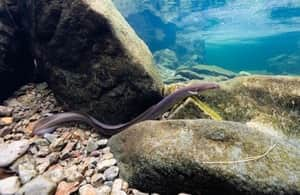
They are being carried out by Environment Agency’s Fisheries Enforcement Officers to help protect the critically endangered European eel from illegal poaching. There has been a 95 per cent decline in the number of European eels returning to rivers across the continent since the 1980s.
Young eels, known as elvers, are highly prized on the black market, attracting the attention of illegal poachers who often have links to organised crime gangs.
The Environment Agency, working closely with the Northwestern Inshore Fisheries Conservation Authority (NWIFCA), has started patrols to help protect the elvers during their migration. These patrols are part of a wider large scale work program, Operation Lake, which is a EUROPOL joint operation with law enforcement authorities across Europe and the globe.
Night vision technology
Hiding by day and feeding by night, elvers enter the river systems to feed and grow. With the nocturnal feeding habits in mind, the partnership uses advanced night vision capable drone technology to help detect illegal poaching activity. The drones help officers monitor large stretches of coastline.
Thermal imaging cameras will also be used.

An Environment Agency Spokesperson said: “Embracing technology and working alongside our partners from Northwestern Inshore Fisheries Conservation Authority, allows us to use their detailed knowledge of our coastline during patrols, and gives us more boots on the ground, allowing us to discretely monitor targets within a wider area.
“If we detect illegal poaching activity, we can quickly intercept and make arrests. We urge members of the public to share with us any information they might have on poaching activity, however small or inconsequential it might appear – it could be the missing piece of the jigsaw.”
A North Western Inshore Fisheries and Conservation Authority spokesperson said: “Joint working with the Environment Agency continues to be a priority in the North West region, benefiting from shared expertise and resourcing. This partnership approach means we can plan patrols in areas based on seasonal risk and intelligence between agencies. Additionally, Operation Lake allows us to patrol high risk estuarine habitats in protected areas which are vulnerable to poaching.”
If you see, or suspect illegal poaching, report it via the Environment Agency’s incident hotline 0800 80 70 60, or call the police on 101, unless an incident is progress – then call 999.