
The Much Hoole pub landlord who took 600 lives - including last woman ever hanged, Ruth Ellis
“All the men and women whom I have faced at that final moment convince me that in what I have done I have not prevented a single murder.”
This week, the last woman ever executed in the UK, Ruth Ellis, was pardoned by the King in light of evidence that she was a victim of domestic abuse and coercive and controlling behaviour.
The last person she saw before her death in 1955 was Albert Pierrepoint, the infamous hangman who executed 600 people in a 25-year career.
But alongside this grisly career- which was also carried out by his father and uncle - Albert was a pub landlord, and came to Lancashire upon his retirement in 1956.
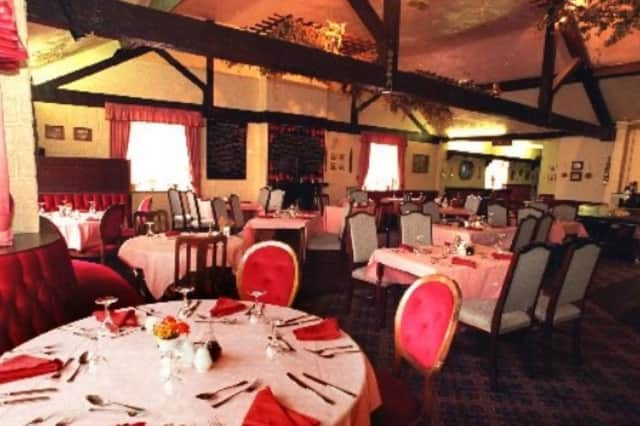
His pub was the Rose and Crown, just off the A59 in Much Hoole, which closed in 2002 to become Bangla Fusion, and now Nellie The Elephant. While he was landlord, the pub was known for its welcoming atmosphere where the famous hangman would often sing for his patrons.

Who was Albert Pierrepoint?
Born in Yorkshire in 1905, Pierrepoint knew from an early age that he wanted to become a hangman, and was taken on as an assistant executioner in September 1932, aged 27, while also working in the delivery industry. He later went into the pub trade, stating: ”I wanted to run my own business so that I should be under no obligation when I took time off. ... I could take a three o'clock plane from Dublin after conducting an execution there and be opening my bar without comment at half past five.”
His first execution was in December 1932 alongside his uncle Tom. In October 1941 he undertook his first hanging as lead executioner. During his tenure he hanged 200 people who had been convicted of war crimes in Germany and Austria, as well as several high-profile murderers—including Gordon Cummins (the Blackout Ripper), John Haigh (the Acid Bath Murderer) and John Christie (the Rillington Place Strangler).
He undertook several contentious executions, including Timothy Evans, Derek Bentley and Ruth Ellis and executions for high treason—William Joyce (also known as Lord Haw-Haw) and John Amery—and treachery, with the hanging of Theodore Schurch.
In 1956 Pierrepoint was involved in a dispute with a sheriff over payment, leading to his retirement from the role of hangman. It was at this point that he moved from his Oldham pub, Help the Poor Struggler, to take the lease at the Rose and Crown.
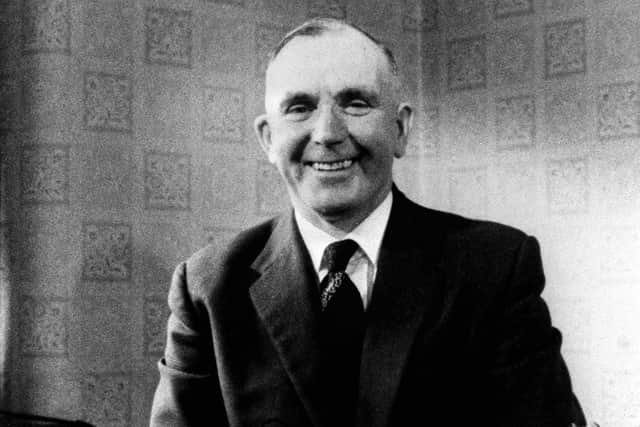
Ruth Ellis
There had been speculation that the controversial hanging of Ruth Ellis -which generated a 50,000 signature to Parliament - had contributed to his decision to quit as an executioner, but he refuted this in his autobiography. In he wrote: “At the execution of Ruth Ellis no untoward incident happened which in any way appalled me or anyone else, and the execution had absolutely no connection with my resignation seven months later. Nor did I leave the list, as one newspaper said, by being arbitrarily taken off it, to shut my mouth, because I was about to reveal the last words of Ruth Ellis. She never spoke.”
Pierrepoint’s thoughts on capital punishment
In 1949, the then Home Secretary James Chuter Ede, set up a Royal Commission to look into capital punishment in the UK. Pierrepoint gave evidence in November 1950 and included a mock hanging at Wandsworth Prison for the commission members. The commission's report was published in 1953 and resulted in the Homicide Act 1957 which reduced the grounds for execution by differentiating between capital and non-capital charges for homicide.
In his 1974 autobiography, Pierrepoint, who famously described his duties as "sacred" to him, changed his view on capital punishment and wrote that hanging: “... is said to be a deterrent. I cannot agree. There have been murders since the beginning of time, and we shall go on looking for deterrents until the end of time. If death were a deterrent, I might be expected to know. It is I who have faced them last, young lads and girls, working men, grandmothers. I have been amazed to see the courage with which they take that walk into the unknown. It did not deter them then, and it had not deterred them when they committed what they were convicted for. All the men and women whom I have faced at that final moment convince me that in what I have done I have not prevented a single murder.”
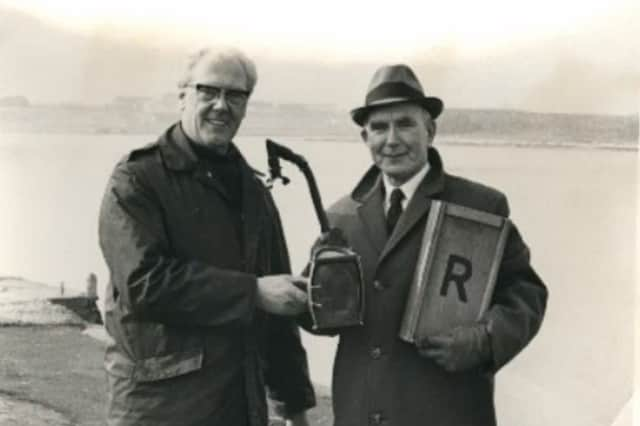
After leaving the Rose and Crown in the 1960s, Pierrepoint and his wife retired to Southport.
He died on 10 July 1992, aged 87, in the nursing home where he had lived for the last four years of his life. In 2005, a biopic starring Timothy Spall was released.
In May 2023, his macabre notebook which listed every execution he had carried out went up for auction, eventually selling for £12,400.