
Record numbers of rare bird found in Forest of Bowland have been killed or gone missing
Record numbers of hen harriers have been killed or gone missing under suspicious circumstances in the last five years, according to the RSPB.
The protected bird species is one of the rarest in the UK, known for their acrobatic “skydancing” courtship display over the uplands, such as Forest of Bowland.
Categorised as red-listed in terms of conservation concern, they are considered to be at high risk of extinction because of low breeding population levels following historic declines as a result of human persecution.
Grouse shooting in Northern England
Between 2020 and 2024, there were 102 incidents of killing or missing birds recorded, according to a report from the RSPB released on today. The majority of these incidents occurred on or near grouse moors in northern England, where grouse shooting takes place, it said.
The charity is calling on the Government to introduce licensing of grouse shooting in England, as has happened in Scotland, to act as a meaningful deterrent to wildlife crime. It comes ahead of a parliamentary debate at Westminster Hall on Monday over the future of grouse shooting, triggered by a petition launched by campaign group Wild Justice that gained more than 100,000 signatures.
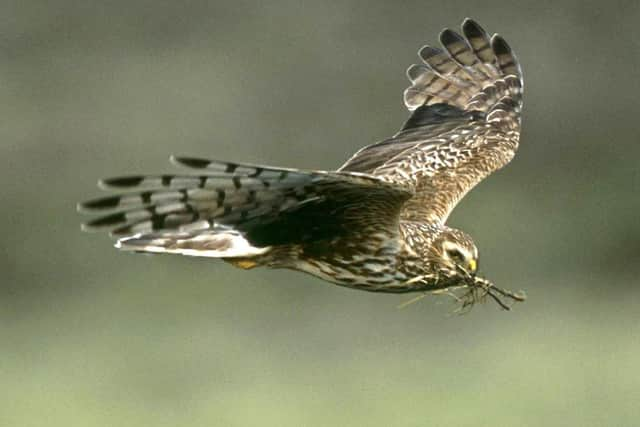

Over the last 25 years, conservationists rolled out several initiatives to support the endangered species and the population increased between 2016 and 2023.
But 2023 became the worst recorded year for persecution with 34 birds confirmed to have been killed or disappeared under suspicious circumstances, according to the RSPB.There was a 43 per cent decline in the number of chicks fledging in 2024 when compared to 2023 figures, the report said. The number of breeding females recorded in 2024 also dropped from 50 in 2023 to 34 in 2024 – a 32 per cent fall.
The charity said the current UK population estimate represents a quarter of the potential population that their ideal habitat can support, and in England it is less – at about 10 per cent.
Despite being legally protected, multiple studies and reports have found that criminal activity is the main factor limiting the species’ recovery. The RSPB report contains details of hen harriers being shot, their chicks being stamped on and one bird having its head pulled off while still alive. It also includes 112 satellite-tagged birds disappearing on or near grouse moors between 2010 and 2024.
No one in England has ever been convicted of an offence, the RSPB said, adding that most crimes take place in remote areas where such activity is hard to detect and the criminal burden of proof against the perpetrators is difficult to secure.
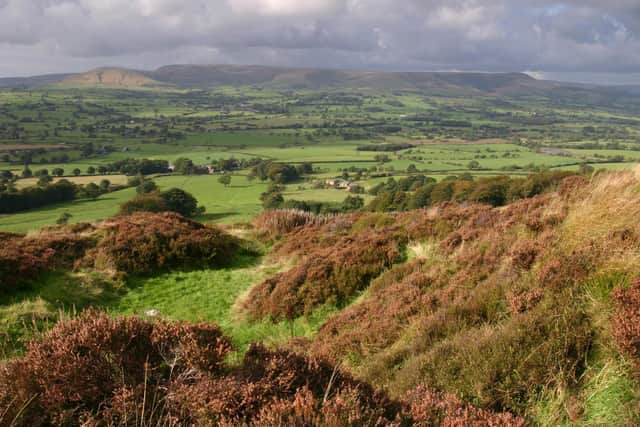
Dr James Robinson, the RSPB’s director of operations, said: “This species will not recover until the criminal activity stops, and for this to happen we need regulation of the grouse-shooting industry, specifically the introduction of a licensing system for shoots in England, so estates proven by the police and Natural England to be linked to raptor persecution would simply lose their licence to operate.”
Another recent study, which investigated the illegal killing of hen harriers in association with gamebird management, showed that the survival rates of the birds in the UK are “unusually low”.
The birds live for an average of just 121 days after leaving the nest while persecution accounts for 27-41 per cent of deaths of those aged under one year and 75 per cent of deaths in birds aged between one and two years, the study found.
Scotland’s Wildlife Management and Muirburn Act, passed last year, requires all grouse shoots in the country to have a licence to operate, which can be revoked if evidence suggests a crime has been committed. Licensing is based on evidence to a civil burden of proof, meaning that it is also easier to take action when persecution has taken place.
Different perspective
Andrew Gilruth, chief executive of the Moorland Association, disputed the RSPB report, saying the data has been assembled without independent checks and that the allegations “poison perceptions of gamekeepers”.
The British Association for Shooting and Conservation (BASC) said: “BASC, alongside other rural organisations, is a signatory to a zero-tolerance declaration on the illegal killing of birds of prey. We have always strongly condemned such activity; it has no place in our community and those convicted should face the full force of the law. We make it unequivocally clear that any member convicted of wildlife crime will be expelled.
“However, the RSPB’s report once again conflates suspicion with fact, presenting unproven allegations as evidence. These claims do not withstand independent scrutiny. Based on publicly available data from NE and RSPB, of the 294 tags fitted to Hen Harriers between 2013 and 2024, less than 5 per cent, or fewer than 14, have been listed as ‘confirmed persecution’. Policy must be driven by robust, objective evidence, not emotive headlines.
“The UK government recognises the environmental and economic value of well-managed grouse moors, and we welcome its continued support for sustainable grouse shooting. Grouse moors support around 3,000 full-time equivalent jobs and contribute over £52 million in management spending annually, with further significant investment in rural suppliers and contractors.
These moorlands, carefully maintained through grouse management, support up to 1.8 million hectares of upland habitat, where iconic species such as curlew, lapwing and golden plover thrive. Scientific studies show that breeding densities of these birds are significantly higher on managed moorland than elsewhere.
Proposals for a licensing system based on a civil burden of proof risk punishing the law-abiding without due process. Nor should we criminalise a whole sector of responsible and committed conservationists, based on the crimes of a small minority. Instead, we support constructive, evidence-led solutions such as Natural England’s Hen Harrier Action Plan.
“BASC has contributed £200,000 to the plan since 2020, working in partnership with government, conservation bodies and land managers to secure meaningful outcomes for Hen Harriers. That approach is working – in 2023, 141 hen harrier chicks fledged in England, the seventh consecutive year of population growth and the highest number recorded in over two centuries.”
Environment Department
An Environment Department spokesperson said: “Hen harriers are a rare and precious feature of our national landscapes. It’s why through our work with the National Wildlife Crime Unit, the Hen Harrier Taskforce is using innovative technology such as drones and specialist detection dogs to help tackle illegal persecution.”