
'It was so surreal' - woman to qualify as midwife six years after delivering neighbour's baby
Katie Hay, 35, from Fulwood, will qualify as a midwife six years after helping deliver her neighbour's baby
A Preston woman is about to qualify as a midwife six years after she helped deliver her neighbour’s baby.
Katie Hay, 35, from Fulwood, had been at home with her young children when heard banging on the front door one night six years ago.
Then-working as a healthcare assistant at Blackpool Teaching Hospital, she had already seen her fair share of emergencies – but was completely unprepared when her neighbour said his partner was going into labour.
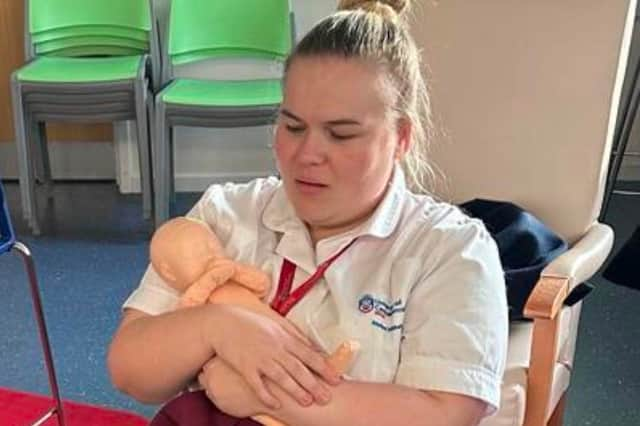

“I’ve never seen a normal delivery because I had two emergency caesareans for my own,” Katie said. “I thought I was going to go over and she would just be contracting.
“She was crawling down the stairs in labour.”
Having grabbed her mother from next door to look after her own children – then aged two and six – Katie and her neighbour rushed into the house.
“I ran in, and the next minute, this head started crowning. I was thinking, ‘God, I don’t know what I’m doing, but I’ll go with it’. I told her to just go with her body.
“Then the baby boy was delivered, obviously still attached to the placenta, but it hadn’t come away. I just had hold of this baby between her legs, still waiting for the ambulance to come. All I knew was that when a baby is born, you have to stimulate and rub them, so I did that.
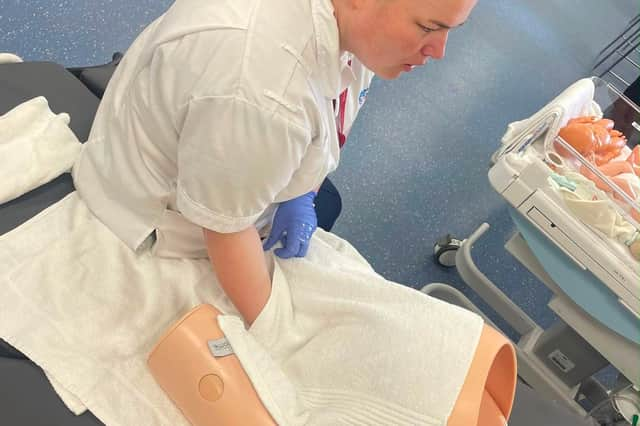
“I told her partner to get some towels, and I wrapped the baby up, stimulated it, and it had its first cry, but the mother couldn’t move. The umbilical cord wasn’t that long, and she couldn’t get off all fours.
“The ambulance came about ten minutes after the baby had been delivered, and I tied this shoelace around the cord. They gave her what I now know was an oxytocin injection to help the placenta release, and they helped position her in the kitchen.
“I passed the baby over. I was covered in blood. All I could think was, ‘what the hell just happened?’. It was the most surreal moment I’ve ever felt.”
Though they now live apart, Katie said it’s a story her neighbour continues to tell to everyone she meets, especially as baby David now goes to the same school as her own children.
In the days that followed, her neighbours brought her flowers and chocolate to show their appreciation: “But I said it should be me thanking you guys instead.”
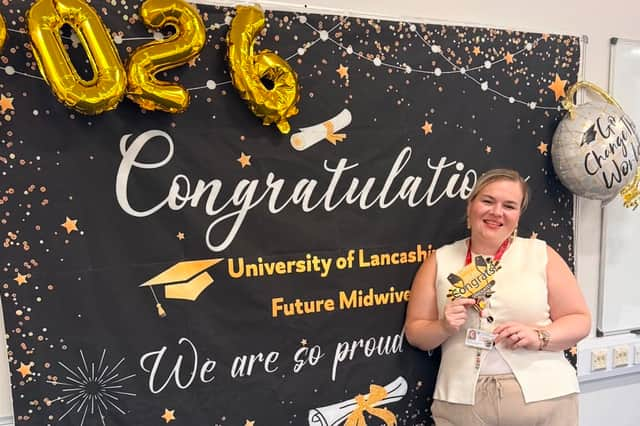
The night Katie had rushed over to her neighbour’s home, she’d been going through her own period of uncertainty at home.
Though happy with her role as a band two healthcare assistant, she said she’d then had “no idea” what she wanted to do for the rest of her life.
“At that moment in my career, I didn’t know if I wanted to do nursing or something else. I wanted to progress my career, but I was a bit up in the air in terms of what I wanted to do.
“I’ve never known what I wanted to do all my life. I’ve been from job to job, and before I was a healthcare assistant, I was a teaching assistant. I’d never found my calling. And then this happened and I thought, ‘this must be a sign’.”
It wouldn’t be long before Katie set her sights on the University of Lancashire to train to become a professional midwife.
But without A Levels or GCSEs, she knew she would be facing an uphill battle.
More than seven thousand students a year apply to study midwifery at university.
With less than 60 universities across the country offering it as an undergraduate degree, places are extremely competitive.
But after spending three years doing her GCSEs and both a pre-access and access course, Katie was thrilled when she got the spot on her first try.
“I was absolutely shocked,” she said. “Luckily I’d got all the credits I needed, and it was the best decision I’ve ever made. I can’t even put into words how supportive the university is, and I literally do feel like I’ve got friends for life from the staff.
“It’s not the easiest job to do. I’m quite thankful I had that healthcare background of working long days, as it wasn’t much of a transition going into midwifery. In the long scheme of things, I’m glad I didn’t get those GCSE results because as a mature student going straight into midwifery, that would have been a lot more daunting than having to build myself up into it.”
Even as places to study midwifery remain intensely competitive, the number of people training to become midwives has been steadily dropping for the past decade.
The Royal College of Midwives say that financial difficulties and a tough working environment in the NHS are the major drivers for students to drop out.
“There is not enough staff,” she said. “There’s not enough funding for staff, either.
“I work at Blackpool Teaching Hospital, and the staff are phenomenal – I can’t fault a single one of them, ever.
Enjoy unlimited access to local news, the latest football stories and new puzzles every day
With a digital subscription, you’ll see fewer ads, get faster load times, and access exclusive newsletters and content. Click here to subscribe.
“People just think you’re going to work to cuddle babies. Anybody could deliver a baby, but you don’t know what position that baby’s in, you don’t know where to listen to the heartbeat, you don’t know the physiology of how delivering a baby works. There’s more to it than you’d expect.
“I was involved in a neonatal death not so long ago. I’ve never done that before, and it was my biggest fear going into this sector. I just sat in my car and cried. You feel like you’re got allowed to have these emotions, but you are. We’re all human.”
Despite the pressure however, Katie was still able to achieve top marks in midwifery at ULAN, and now says she’s “thriving” since graduation.
“I’m so sad to leave, because I cannot explain how supportive the staff actually are,” she said. “Every single staff member in the maternity sector have become like family.
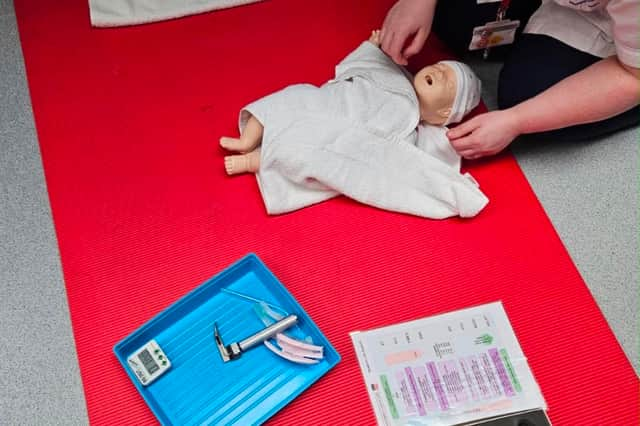
“I literally cannot comprehend how much I absolutely love midwifery. [That first delivery] feels like a million miles away now, but going from that to where I am now is amazing – I need to deliver ten babies, and then I qualify fully.
“You don’t go into this job for praise,” she said. “But when someone says to you that you’ve made a difference, that’s when I know I’m in the right place and doing the right thing.
“You work your hardest, but some days you still come home wondering if you’ve done enough. But when you hear those little comments, you realise you’ve done something good. It sticks with you forever.”