
Preston Bus Station named amongst 'most beautiful' buildings
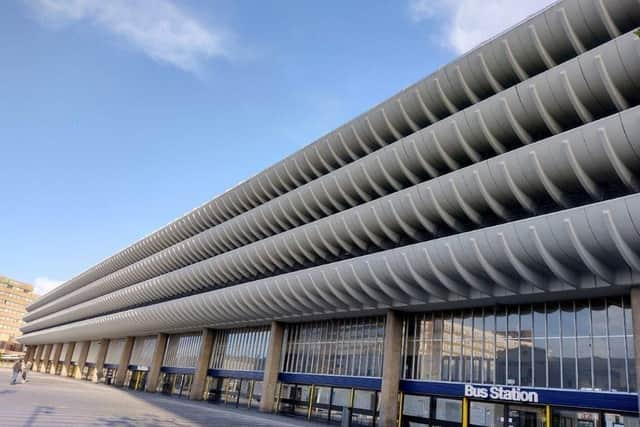
It has divided opinions for nearly 60 years, but this week Preston Bus Station has been named as one of the most beautiful brutalist buildings in the UK.
The Grade II listed structure, which was opened on October 12, 1969, is one of a number of imposing concrete monoliths dotted around the world in a style first called ‘new brutalism’.
Buildings built in the brutalist style were erected quickly in the UK as part of the post-war reconstruction efforts, born from a need to rebuild and recreate spaces for office workers, government buildings and places for communities to live and thrive.
The station - designed by Keith Ingham and Charles Wilson of Building Design Partnership with E. H. Stazicker - has has won many awards, including the prestigious World Monuments Fund/Knoll Modernism Prize for its 2015-18 refurbishment by John Puttick Associates.
It’s also been described as ‘a thing of pride' for the people of Preston, and has now been rated amongst the best of it’s kind by office space experts, Making Moves
To create the ranking, a score was calculated using factors such as architecture awards, TripAdvisor ratings, the number of Instagram hashtags, and Google search volume. Preston Bus Station came in 9th place, and was one of only three buildings outside of London in the list.

The top 10 ‘most beautiful’ brutalist buildings in the UK:
1. The Barbican, London
First opened in 1982, The Barbican is cited as one of the UK’s architectural treasures with its rich history and boasts over 50 awards for architecture, including the RIBA International Award – the highest accolade in the architecture world.
2. Hayward Gallery, London
First opened in 1968, the gallery showcases world-renowned contemporary art, installations and a touring gallery. Known as one of the UK’s most complex modernist buildings, Hayward Gallery was built under the leadership of Norman Engleback and features board-marked concrete surfaces, as well as connected walkways, staircases and roof terraces.
3. The University of East Angelia, Norwich
With an average monthly search volume of 49,530, the university is described as a ‘true megastructure’ designed by Sir Denys Lasdun and first opened in 1963. Students still live in residence, with the impressive building featuring Lasdun’s characteristic roof furniture, with concrete-housed vents and lift shafts.
4. The Brunswick Centre, London
Designed by Patrick Hodgkinson, the centre opened in 1972 and features 500 flats, a cinema, shops, restaurants and cafes. Hodgkinson was interested in developing low-rise, high-density buildings that linked the residents with retail.
5. Peckham Levels, London
Previously known as Peckham Car Park, Peckham Levels was originally by the Architect and Engineers Department of Sainsbury's supermarkets. Although the car park was built to cater to customers, it unfortunately fell into disuse and was even at risk of demolition. Fortunately, in 2017, The Turner Works Architects converted the car park into 'Peckham Levels', now a meeting and cultural space for the arts, enterprise and community action organisations in South London.
6. The National Theatre, London
Designed by Sir Denys Lasdun and Peter Softley and opened in 1976, theatre forms an ‘urban landscape’ with solid towers and interlocking terraces. In 1994, the theatre was granted listed status, and today, the charity draws audiences worldwide.
7. Trellick Tower, London
When the tower was initially built in 1972, it was the highest residential building in Europe and remains the tallest building in Kensington and Chelsea. In 1984, The Financial Times rated the tower as one of the ‘ugliest buildings in the world’; however, fast-forward to today, the tower is loved by many.
8. Park Hill, Sheffield
Park Hill is a housing estate in Sheffield, South Yorkshire. The estate is a brutalist concrete icon and the largest listed building in Europe. Park Hill was one of Britain’s first complete, post-war slum clearances and is considered the most ambitious contemporary inner-city development. Today, the estate is enjoying a new lease of life. It is filled with well-designed homes of various tenures, spaces for independent local businesses, as well as green space and community amenities.
9. Preston Bus Station
The station boasts 80 bays, large concourses and four floors for car parking. The station has been cited as one of the best Brutalist buildings in Britain; however, in the past, it was threatened by demolition. In 2013, the station was granted Grade II listed status.
10. Royal College of Physicians, London
Sir Denys Lasdun was tasked with designing the Royal College of Physicians, an institution that has been around for over 500 years. Opening in 1964, the college presented a complex blend of art and engineering and has been described as an ‘eloquent demonstration of the marriage between old and new‘. In 1998, the college was listed as Grade I due to it being of exceptional interest.
Sally Evans, Managing Director at Making Moves, said: “Brutalist buildings are increasingly being recognised as an opportunity rather than an obstacle for London’s office market. Instead of demolition, we’re seeing landmark 1960s structures refurbished and repositioned to meet modern occupier expectations.
“The transformation of Space House in Covent Garden demonstrates how retaining the majority of an existing structure can deliver both strong sustainability credentials and distinctive, high-spec workspace – qualities that are becoming more valuable in a competitive leasing environment.”
Support your Lancashire Post and become a subscriber today. Enjoy unlimited access to local news, the latest football stories and new puzzles every day. With a digital subscription, you can see fewer ads, enjoy faster load times, and get access to exclusive newsletters and content. Click here to subscribe.