
Why these South Ribble residents might want new hyper-local councils when borough is axed
Will residents be moved to act when they lose their district council?
Those parts of South Ribble that are not currently covered by parish or town councils might be prompted to establish them as a result of the forthcoming scrapping of South Ribble Borough Council, the authority’s leader has said.
Matthew Tomlinson was speaking after the government announced last week that Lancashire will be split into four new council areas from April 2028 as part of the biggest change to the local authority landscape in the county for more than 50 years.
Lancashire’s 15 main councils will disappear and be replaced with standalone ‘unitary’ authorities – including one provisionally named ‘South Lancashire’. That option – which will bind together South Ribble, Chorley and West Lancashire - had been backed by the trio of current district councils that cover the places it will incorporate. It was one of five that had been put forward by Lancashire as part of the the government-ordered overhaul.
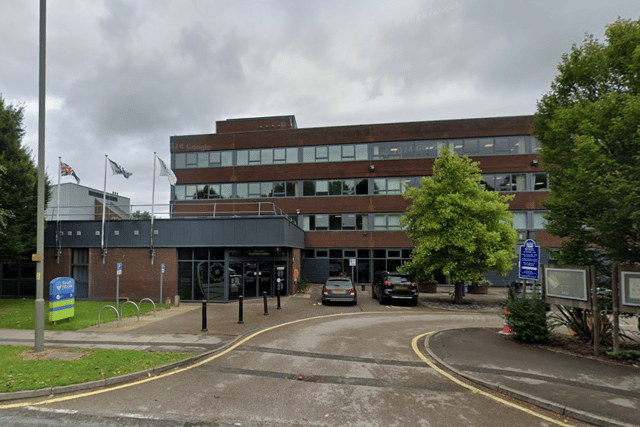

Cllr Tomlinson said his focus since the government began pursuing the shake-up in December 2024 was to get “the best for the people of South Ribble”.
“And I think this is the best we could have got,” he told the Lancashire Post.
However, he added that the shift to new larger authorities might lead places in the borough that are without a parish or town council to consider whether creating one might be a “useful” thing to do.
At the moment, those organisations act as a third, ultra-local tier of authority where they currently exist in South Ribble – in areas including Penwortham, Longton and Farington. However, they are absent in some of the borough’s largest centres of population, such as Leyland, Bamber Bridge and Lostock Hall.
Parish and town councils traditionally focus on projects to improve the quality of life in the places they serve. and sometimes running doorstep services. They are also regarded as a vital way of giving communities a voice.
The government last year highlighted their role in areas like Lancashire which are losing their second tier of local district or borough authority.
Cllr Tomlinson said he also believed the mechanisms for maintaining more local representation within the new councils themselves – via 42 community boards – were going to be vital.
Speaking about the demise of the borough authority he leads, he added: “I’m not going to say I’m pleased, because I’m a bit ambivalent about it. I can see why the government are doing it, but as somebody who’s been a South Ribble councilor and a Lancashire county councilor for a long time [27 years and, until last year, 21 years, respectively], I’m a bit nostalgic and I’ll miss the great stuff that we’ve done.”
South Ribble Borough Council, Chorley Council, West Lancashire Borough Council and Lancashire County Council will all continue to operate until 31st March, 2028.
The replacement unitary – serving 359,000 residents – will come into being in so-called ‘shadow’ form from May 2027 when the first set of elections will be held for it.
The three other new councils that will be created by the redrawing of the local, government map in Lancashire will bind together: Preston, Lancaster and Ribble Valley; Blackpool, Fylde and Wyre; and Blackburn with Darwen, Burnley, Hyndburn, Rossendale and Pendle.