
Award-winning Ribble Estuary film reveals how Lancashire wildfowlers help protect the birds they shoot
Call to the Marsh, made in partnership with the British Association for Shooting and Conservation, won Best Documentary Short at the London Independent Film Awards in August and was screened before MPs and peers at Westminster on October 13.
An award-winning documentary filmed on Lancashire’s Ribble Estuary has highlighted how the people who shoot wild ducks and geese also carry out conservation work to protect their numbers – and has taken their unique story all the way to Parliament.
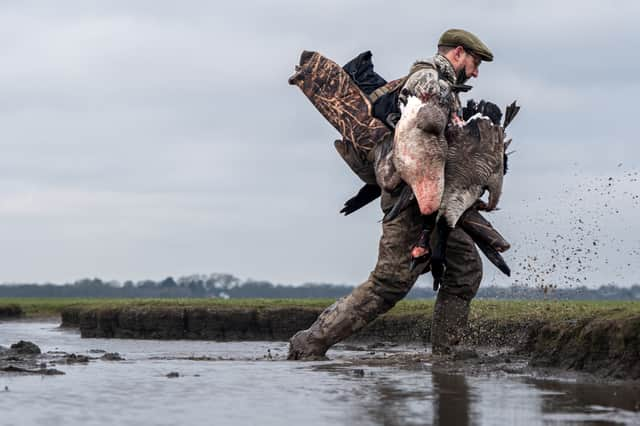

The apparent contradiction is at the heart of Call of the Marsh, a documentary which follows generations of wildfowlers who have spent decades shooting birds on the Ribble Estuary while also working to preserve their habitats.
The film, made in partnership with the British Association for Shooting and Conservation (BASC), won Best Documentary Short at the London Independent Film Awards in August and was screened before MPs and peers at Westminster on October 13.
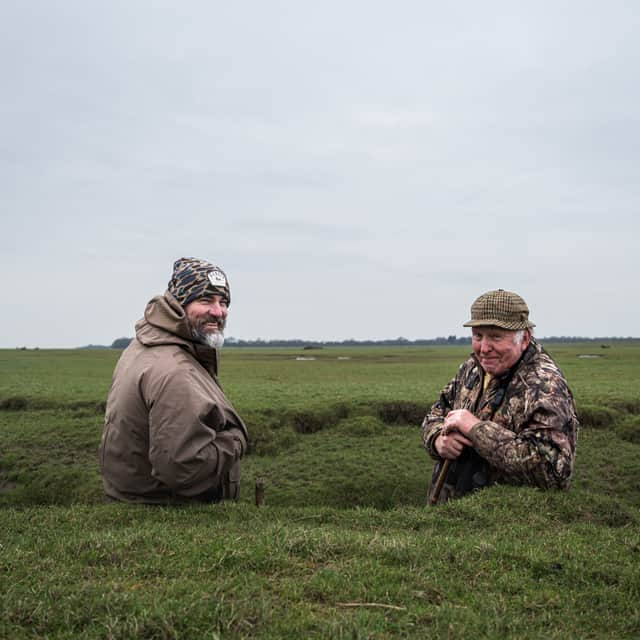
Its maker, Dr Robbie Kröger, founder and executive director of the US-based Origins Foundation, said he deliberately chose Lancashire because of the area's long wildfowling traditions.
“We wanted a story that had a deep heritage to it," he said.
"The self-regulation story wrote itself, but if you could marry that with a deep legacy and heritage in a place the story would have deeper meaning."
South African-born Dr Kröger, who is now based in Tennessee in the United States, has a PhD in biology specialising in wetland ecology. A hunter himself, he also had the opportunity to take part in shooting during the documentary's production on the Ribble Estuary.
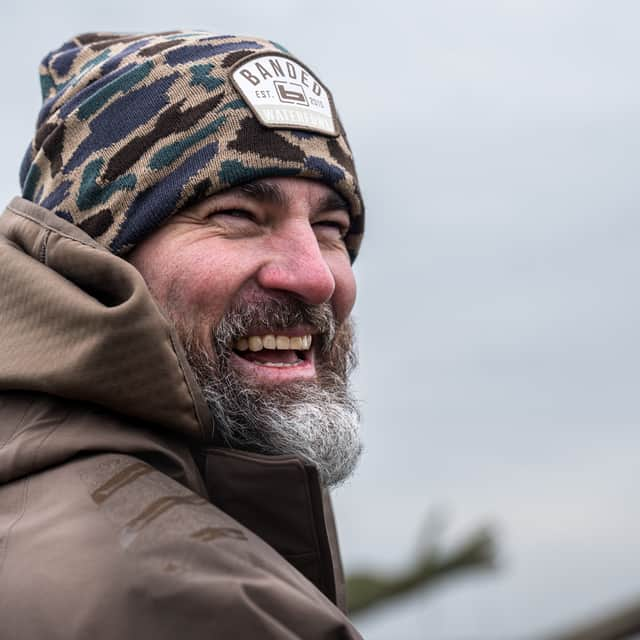
The estuary is home to two long-established organisations, Preston and District Wildfowlers' Association and Lytham and District Wildfowlers Association, both of which have existed for more than 70 years.
Among those featured in the film is Chris Kelly, a member of the Preston association who has been shooting on the same tidal marsh for 61 years.
Dr Kröger said the clubs represented a tradition maintained by ordinary working people, including postmasters, joiners and electricians, rather than wealthy landowners.
But it is the relationship between shooting and conservation that provides the documentary's central message.
Dr Kröger explained that wildfowlers have a strong interest in maintaining healthy bird populations because their sport depends on there being birds to shoot in future seasons.
Quoting Chris Kelly's argument in the film, he said that if wildfowlers were decimating the duck population, "there wouldn't be any ducks to hunt tomorrow, or next year."
He said clubs imposed their own restrictions on shooting days, the numbers of ducks and geese taken and the times members were permitted onto the marsh.
Combined with habitat conservation, he argued, these voluntary measures helped sustain the bird populations on which wildfowling depends.
And the conservation work extends well beyond simply restricting shooting.
"Ducks need specific habitats to graze, loaf, and roost in," Dr Kröger explained.
"A mosaic of short grass and long grass aids in that."
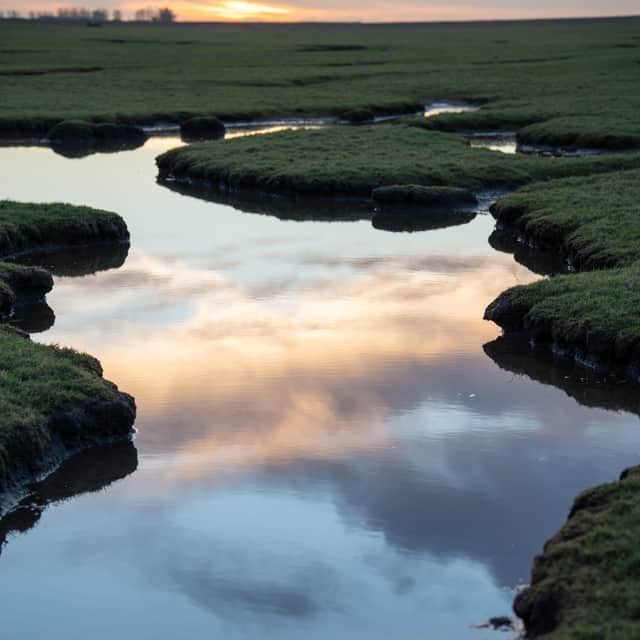
On the Ribble Estuary, he said, wildfowlers have created shallow pools known as flashes, providing feeding and resting areas for birds, while mowing sections of grassland to maintain suitable grazing conditions.
They have also dug artificial rabbit-style burrows for nesting shelducks, established sanctuaries where shooting is prohibited and created islands within those protected areas.
According to Dr Kröger, the islands are now home to several pairs of avocets, while the wider habitat improvements also benefit other species, including redshanks.
The documentary argues that such work is often overlooked in debates about the environmental impact of shooting.
According to BASC, wildfowling clubs help manage more than 500,000 acres of wetland and coastal habitat across the UK, much of it through voluntary efforts.
It was this contribution that the filmmakers wanted politicians to recognise when Call of the Marsh was screened at Westminster.
The event, hosted by BASC and co-sponsored by Conservative MP Robbie Moore and Labour peer Lord Glasman, attracted representatives from four political parties, government regulators, researchers and conservation organisations.
Dr Kröger said the documentary offered an opportunity to show policymakers the people behind wildfowling rather than simply present arguments and statistics.
"There is no better medium to explain the truth about activities than to show the people behind it," he said.
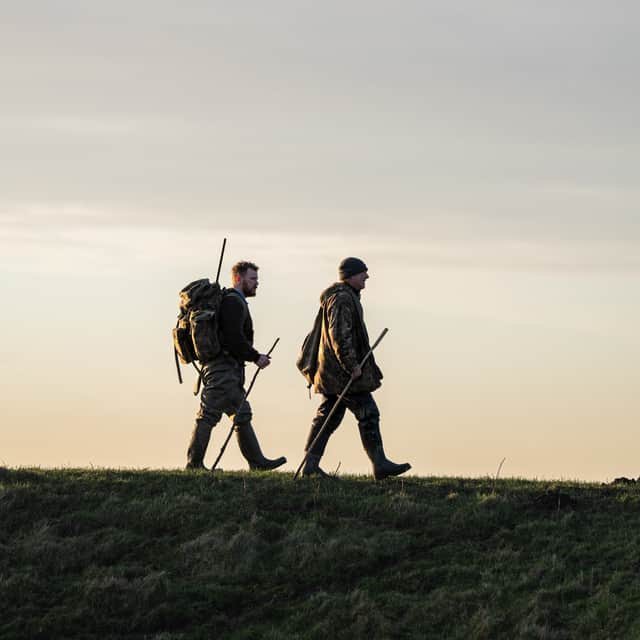
He was particularly struck by the pride wildfowlers took in conservation work carried out over decades on marshland they did not own, but on which they held shooting rights.
Asked whether concerns about further restrictions or a possible ban had influenced the decision to show the film to MPs, Dr Kröger argued that clubs' voluntary conservation measures should be recognised when future policies were considered.
He believes their existing self-regulation demonstrates that additional restrictions are not necessarily required.
And he admitted he had been taken aback by the response from politicians.
"I was honestly shocked at the response," he said.
"I was very much ready for MPs not to come, and/or not really hear the message. The complete opposite was true."
He said at least 10 MPs were present at any one time during the screening and was convinced the film had changed perceptions about wildfowling.
However, he acknowledged that the longer-term impact would be harder to measure, particularly any conversations politicians might subsequently have with colleagues, friends or constituents.
The Westminster event was followed by a screening at Preston's ARC Cinema on October 16, bringing the film back to the area where it was made.
Further screenings are planned around the UK through spring 2027, with the documentary expected to become publicly available after The Game Fair in 2027.
For Dr Kröger, the ambition is to encourage a wider audience to reconsider its assumptions about the relationship between hunting and wildlife conservation – using the experiences of Lancashire's wildfowlers to tell that story.