
'We don't want the end of South Ribble - but it's happening': councillors prepare for the future as part of larger area
Councillors from across the political divide have declared they would rather the forthcoming abolition of South Ribble Borough Council was not happening.
The cross-party preference for preserving the status quo was expressed at a special scrutiny meeting to discuss the size and shape of the authority that will ultimately replace South Ribble as a district council in 2028, thanks to a government-ordered shake-up.
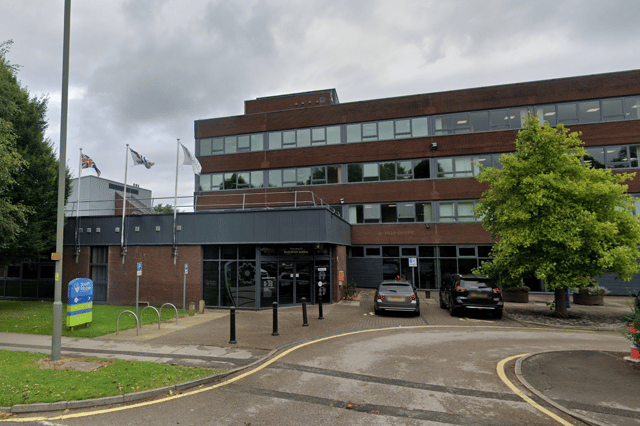

South Ribble’s Labour leader, Matthew Tomlinson, stressed that the changes were “not something I want” – but said it was nevertheless necessary to engage with the “real world” and accept that the days of the authority, which was established back in 1974, were now numbered.
All 15 main Lancashire councils are to be axed as part of sweeping changes to streamline the way local government works in the county.
The overhaul will bring to an end the current ‘two-tier’ system which divides responsibilities between Lancashire County Council – which takes care of major services like social care, the roads and education – and districts like South Ribble, which look after bin collections, park maintenance and most planning applications.
New standalone – or ‘unitary’ – authorities, covering much larger areas than existing districts, will be created by merging areas together. South Ribble is backing a tie-up with neighbouring Chorley and West Lancashire, a stance which is set to be formalised by the authority’s cabinet on Thursday.
Proposals for each existing council’s preferred option for the body that will replace them have to be sent to the government for consideration by 28th November.
Conservative scrutiny committee member Michael Green – a former cabinet member on the authority – said he felt that the South Ribble proposal should state on “the front and centre of the document that our preferred position is to remain as South Ribble Borough Council”.
“I think the general view as council [during a debate in July] was that we did not want to see the end of South Ribble.
“We can all argue all day long about the politics of the council and how we’d do things slightly different here or there, depending on political leanings – but nevertheless we all feel South Ribble is a good council and we’d like to see it continue,” said Cllr Green.
He added that the proposed replacement authority should be presented in the context of it being South Ribble’s preference only if the government were “determined” to go ahead with the revamp.
However, Cllr Tomlinson said the proposal document could not have a sole, South Ribble-specific view imposed on it, as the blueprint was one that was also being sent on behalf Chorley and West Lancashire councils – as well as those in Preston, Lancaster and Ribble Valley. The latter trio are planning a merger between themselves, which – like the South Ribble/Chorley/West Lancashire arrangement – would result in the creation of four new unitaries across Lancashire, on the same footprints.
He said: “We are not campaigning for this, we have never said this is what we want – but recognising what the government is saying, recognising the journey that local government right across England has been on for 15 years or so, then it’s our responsibility to work with other councils in Lancashire to come up with what we think is the best outcome for the residents of South Ribble.”
Cllr James Flannery, lead member for local government reorganisation on South Ribble Borough Council, said it was clear that “the public don’t like change”.
Referring back to the last time the council landscape was radically redrawn back in 1974 – when parts of the traditional county of Lancashire were moved into Greater Manchester and Merseyside for administrative purposes – he said: “There’s people now on Facebook saying, in Bolton, ‘I’m from Lancashire, I’m not from Greater Manchester’ – even to this day, 50 years later.
“So that’s the impact this type of thing does have,” Cllr Flannery said.
However, he warned that there was a lack of awareness about the current overhaul, in spite of a survey of public opinion having been carried out county-wide in September. Of the more than 13,000 respondents to that exercise – out of a population of 1.5 million people – 63 percent said they wanted their local councils to remain unchanged and were happy with the service they received from them.
Cllr Flannery said it was the duty of councillors to engage with residents so that they understood the “significance” of the change that was coming their way.
“As councillors…we’re embedded in this, but a lot of residents will be having their tea now or watching the telly. They’re not here watching us talk about this – but it’s so significant for them,” he said.
The government will select which of the five proposals it is likely to receive from Lancashire that it wants to put to a formal public consultation early next year.
The scrutiny committee recommended further work be done to explore how South Ribble could itself “consult more with residents” about the changes on the horizon. It also proposed strengthening the “neighbourhood area committees” that could form part of the new local government arrangements.