
Preston 'mini-housing estate' plans in Lower Bartle refused for one simple reason
The development was not considered suitable for the rural location.
A low-density housing development proposed for the Preston countryside has fallen at the first hurdle in the planning process.
Preston City Council had been asked to grant so-called ‘permission in principle’ for a mini-estate of nine self-build homes on land off Bartle Lane in Lower Bartle.
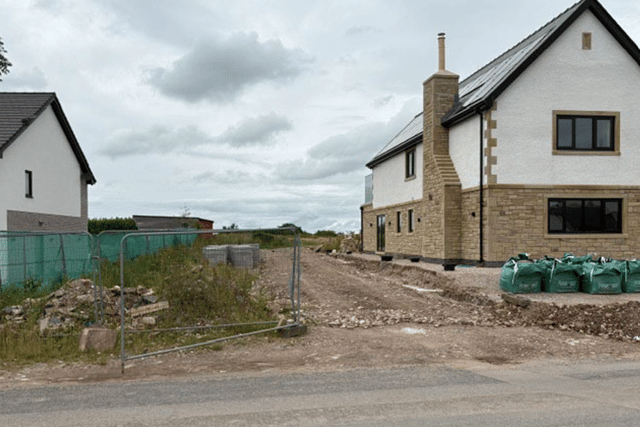

The location and rural nature of the plot means it would usually be deemed suitable only for small-scale construction schemes – largely limited to ‘infilling’ between existing buildings.
Applicant AAB Developments argued that its blueprint for the site amounted to exactly that. Application documents lodged with town hall planners stated that the proposal would “not create an isolated or detached pocket of housing in the countryside”.
Instead the blueprint was characterised as “a logical part of the expanding residential fabric along Bartle Lane…with the site sitting adjacent to the recently built houses on [the route] and the high-end, low-density development on Windy Nook Meadows”. It was also described as “a sustainable addition to Lower Bartle”, which would have had a density of just 9.5 dwellings per hectare – in contrast to the 25-35 typical of more suburban locations.
However, city council planning officials came to a different conclusion on the suitability of the scheme. In a report outlining the reasons for their refusal of permission, they noted that the plot was bounded by open countryside on its northern and western sides.
Although situated to the rear of existing dwellings facing Bartle Lane, the site “cannot be regarded as development within a cluster of buildings”, the document stated – and so fell foul of local planning policy.
The land also failed to meet the tests in national planning legislation which would permit development on sites such as the one being assessed in “exceptional circumstances” – where the benefits would “substantially outweigh” any adverse effects.
Seven public objections to the plans were submitted, setting out concerns about issues including the potential ecological impact of the estate on biodiversity, wildlife and potentially protected habitats and species.
However, those matters would only have been factored into a later decision on a full planning application had the in-principle proposal been approved.