
New look for historic relic of Lancashire's industrial past
It’s part of Lancashire’s deep history with the cotton trade but what do it’s new colours mean?
One of Darwen’s most recognisable industrial relics has been given a striking new look, but the true meaning behind its fresh appearance is not immediately obvious.
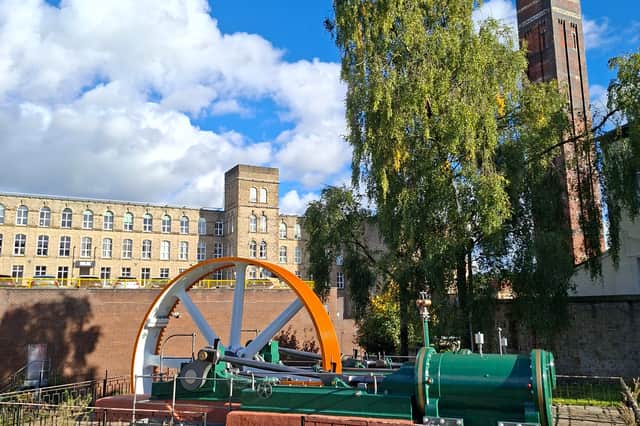

The Cross Compound Steam Engine outside India Mill has been repainted as part of a town council restoration programme, which aims to revitalise some of the town’s most important reminders of its industrial past.
At first glance, the restoration appears to be a straightforward conservation project. The historic engine has been treated to a new colour scheme, with further groundwork and railing improvements set to be completed at a later date.
But hidden within the paintwork is a carefully designed tribute to Darwen’s centuries-old connection with the cotton trade, its relationship with India, and one of the most remarkable visits in the town’s history.
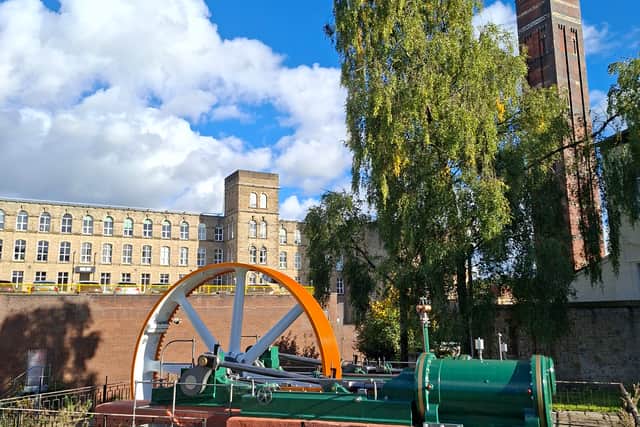
The engine has been painted in three distinct colours, each chosen for a specific historical reason.
The dominant shade, “Invisible Green”, was widely used on Victorian ironwork and machinery.
Originally favoured by wealthy landowners because it blended into the landscape, it later became a familiar sight in Britain’s mill towns. According to the town council, its use on machinery was often less about worker wellbeing and more about using surplus paint left over from country estates.
The white detailing uses “Natural White”, an authentic nineteenth-century shade without modern brighteners, intended to symbolise the quality and purity of Lancashire cotton, the industry on which towns such as Darwen were built.
The final colour, “Burnt Saffron”, acknowledges the historic links and mutual respect between the workers of Darwen and India.
Together, the green, white and saffron create a subtle recreation of the colours of the Indian flag, commemorating the visit of Mahatma Gandhi to Darwen in September 1931.
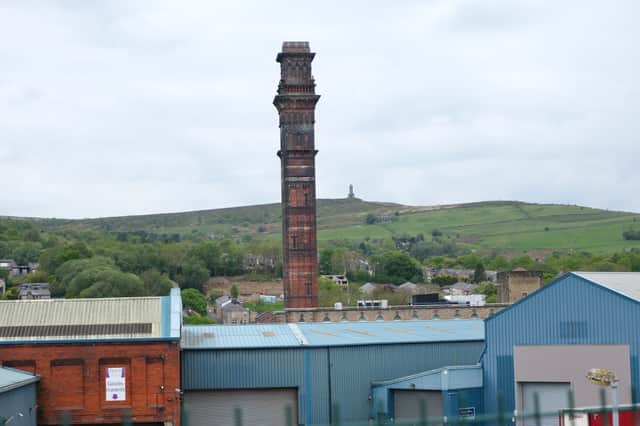
The connection is particularly significant given the history of both the town and India Mill itself. Built between 1859 and 1871, the mill became one of the most important textile buildings in North East Lancashire and was closely linked to cotton exports and trade with India.
When Gandhi visited Lancashire in 1931 during talks on India’s future, he travelled to Darwen to see first-hand the impact the Indian boycott of British cotton goods was having on local communities.
Despite the economic hardship facing mill workers, thousands of local people turned out to welcome him, creating one of the most memorable moments in the town’s history.
Cllr Anthony Shaw, leader of Darwen Town Council, praised the restoration, saying: “I am so happy with the work done on this beloved piece of history. It is vital that we protect our heritage for future generations of Darweners to enjoy and interact with.
“Our industrial past has shaped us as a town and as a community and we must celebrate it now and forever. The engine now looks absolutely superb and the symbolism behind the colours and the links to India is something that all people from Darwen are proud of.
“The Town Council has made it a priority to bring these items back to life and next on our list is the tram turning point up Whitehall.”