
'You don't forget attending Princess Diana's funeral' Retiring Preston-born journalist Bill Jacobs reflects
‘Unforgettable experiences I never would had in a normal job. ‘ Lancashire Local Democracy Reporter Bill Jacobs, who born in Ashton, Preston and went to school in at King Edward VII GS Lytham, retires at the end of this month after 47 years as a journalist. Here he recalls highlights of the early years of his career until he came back to the county to cover local councils.
There are things in life you don’t forget – in my case attending Princess Diana’s funeral and standing at midnight in a Birmingham Street where the buildings on both sides were ablaze, says Bill Jacobs.
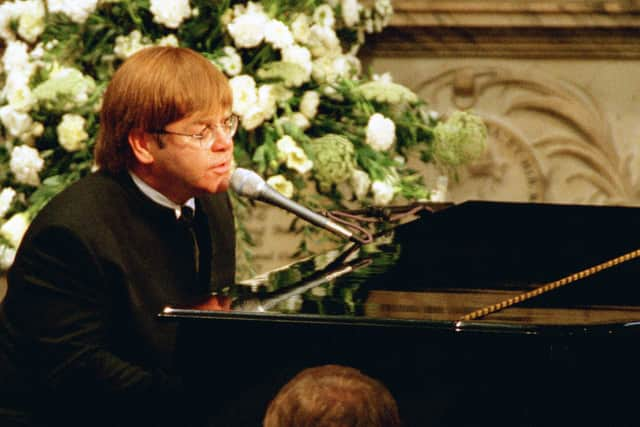
I got to the first thanks to working in Parliament for among others the Edinburgh Evening News and found myself sitting just yards away from the Queen and Royal Family as Elton John gave the only live performance of the specially-rewritten version of ‘Candle in the Wind’.


The latter was because I was the Coventry Evening Telegraph reporter who lived closest to Handsworth as the deprived Birmingham suburb erupted into its second full-scale riot in five years in 1985.
Adrenalin kicked in as I spent two and half days without sleep on the debris-strewn streets on one occasion deciding to leave my perch behind the police lines and join the rioters to find out why they were up in arms.
As I moved beyond their plastic guards a selection of stones and petrol bombs started to sail over my head and I turned back to the safety I had just left.
As I got to the shield wall one of the coppers said: “I suppose you want to come back to safety now?”
I enthusiastically nodded my head and two shields parted to let me through.
A day later I am sitting in a police van with then Home Secretary Douglas Hurd when bricks began to raid down on its roofs.
I asked the senior Tory politician: “Do you find this frightening?”
He replied: “Not really. This is nothing. You forget I have been Northern Ireland Secretary.”
A couple of days later in the pub I heard the CET’s front page sub say: “That copy by Bill Jacobs on the riots. Was brilliant. I hardly had to change a word.”
Just as my chest puffed up with pride he added: “Better than utter rubbish he normally writes about the city council.”
Of course my career has not all been Westminster Abbey and public disorder and my first days in the job at the Burnley Express taught me my chosen path would not be plan sailing.
I had written a small story about what I called a ‘cobbled street’ only to be besieged by more than 100 letters and phone calls from readers to tell me the rectangular stones that paved it were not ‘cobbles’ but ‘setts’ and demanding that I be immediately sacked for such a grave mistake.
Also whilst in the town I stood on a street corner to help cover the visit of Prince Charles whose admiration to the restoration of the ‘Weavers Triangle’ of decaying canalside cotton mill buildings led to him becoming a Clarets fan and bringing his parents Queen Elizabeth II and Prince Philip to the town in 2012 – a rare joint visit by all three together.
And while I was in the town I spent a lot of time with local punk rock band The Notsensibles (of “I’m in Love with Margaret Thatcher’ fame) and fellow John Peel favourites Blackburn’s The Stiffs.
While writing ‘Trendsetter for the Under-25s’ I also got to interview The Clash and King George’s Hall and The Nolan Sisters at the Cats Whiskers (not quite so rock and roll).
There was also free entry to Angels nightclub and a complimentary first drink at the bar and the memorable punk night at the Railway Workers Club in Nelson (where I also saw Crass) when fresh from a council meeting in slacks, a tweed jacket and rollneck sweater over my shirt and tie a boy in a ripped T-shirt and orange and black kilt turned to his mate wearing leather, zips and safety pins pointed at me and asked: “Whose the strangely dressed bloke over there?”
From the mean streets of Burnley next stop in this Preston-born lad’s journey round what The Guardian’s Matthew Engel unkindly dubbed ‘Fourth Division England’ was that Monte Carlo of the North-East coast Hartlepool.
When I arrived at the offices of my new evening newspaper I was shown the lovingly preserved front page of its predecessor The Northern Daily Mail about the 1912 Titanic Disaster headlined ‘Hartlepool Man dies at sea with a second deck ‘Hundreds dies in Iceberg Tragedy’.
It was an old ‘hot metal’ operation and one day I phoned a story from a phone box and after a 20 minute walk back to the office picked up a still warm copy of the paper as I want back in.
While I was there the residents of a council estate on an islet in the Tees Bay were systematically burning themselves out house by house. The site is now ironically as rather swish marina full of expensive yachts.
One of my better stories was the Mayor being forced to resign and one of saddest was a former ‘First Citizen’ of the borough being killed by her son.
The countryside around the town was, like Burnley, glorious including a delightful Saxon church in Hart then with its own medieval chalice and paten (now in Durham Cathedral’s Treasury).
I did a feature series of going out with the police which involved being carefully monitored by the biggest detective in a very dodgy nightclub as unknown to me one of his colleagues had had an affair with the wife of its gangster owner who had been released unexpectedly from prison and was on the premises in a very angry mood.
And I did a similar set of articles on the fire brigade when they send me up on the extending turntable ladder without telling me that as the final bit clicked in the whole thing whipped back several feet.
This produced a stream of foul language as I forgot I was hooked on and believed I was about to be projected into the North Sea – the crew were gathered round the speaker at the bottom awaiting my predictable reaction.
Retiring Local Democracy Reporter Bill Jacobs continues his account of life in journalism as he heads to a big city newspaper.
PART TWO: ‘My legs would turn to jelly as I awaited the expected ‘bollocking’
Despite having felt I has come to the armpit of the universe when I first drove over the Tees Bridge to Hartlepool a year before and surveyed the Mordor-like landscape of flames and fumes from two chemical works and an oil terminal with a mud-flat nature reserve and nuclear power station, I had come to love living in Hartlepool.
The as I sat happily in the rather grand office a took a phone call from the Birmingham Evening Mail’s chief news editor Ian Mean.
He asked me if I still wanted the job on the paper I had applied for but not got a year before. I of course said ‘Yes’ not realising what I had just signed up for.
The Evening Mail was a 12-edition publication selling just shy of 300,000 copies hitting the streets at intervals from 8.30am (‘The Racing’) to 4pm (the Late Final).
And the newsdesk – headed by Ian ‘Mean by name and mean by nature’ – was the most terrifying group of people I had ever come across.
In that atmosphere among a very competitive set of reporters young journalists either learnt fast or fell by the wayside.Luckily I learnt quickly and wrote fast.
My day began in bed listening to ‘Ring and Sing and Things’ on the local commercial radio station where Brummie locals displayed their lack of musical and poetic talent before a set if police, fire and ambulance calls and then contacting the fearsome newsdesk.
I could be despatched at a moment’s notice to anything from a murder on the dodgy Castle Vale estate to a special primary school assembly in the genteel suburb of Sutton Coldfield that was my patch.
Jobs I did varied from heading off at 6am with a union rep to collect a sample of polluted water issuing out of a local sewage works into the nearby river to finding myself at midnight with my foot in the door of the house of a man who had just returned from being bailed after desecrating some military graves in Aldershot.
I removed my foot after he threatened to break it with the door in return for a promise to come and see me later. To my surprise he turned up and did a full interview which made the front page lead of all editions.
I covered a lengthy civil service strike at the Erdington social security office which required me to know where the union rep and government press officer would be at noon in the days before mobile phones in order the file a story for the main City Final edition deadline at 1pm.
And then there was a dreaded afternoon phone call from Louise the newsdesk secretary who said: ‘Bill, I’ve got Ian Mean for you’.
My legs would turn to jelly as I awaited the expected ‘bollocking’ but just occasionally his gruff voice would say: “That front page story you did today. Great job.”
Then I walked on air for two days especially when I got praised for a tale about the new bank manager of the branch below my office locking his staff out when he left his key at home when we already had pictures of him in his bowler hat and with his beloved classic Triumph motor bike.
I didn’t mention I only got the story because I was late into work having fallen back to sleep!
I learnt more from two years there than I did anywhere else and was then ready to take up reporting local government on a politics team of three (yes THREE) the Coventry Evening Telegraph.
This was another eye-opening experience as the city council was in the middle of a bitter battle between the traditional Labour councillors trying to run the authority and an equal number of Militant Tendency Trotskyites trying not to make it work but create a ‘revolutionary vanguard’ for the fight against Margaret Thatcher.
I watched as the veteran Labour group leader – himself once a left-wing firebrand – negotiated with his Tory opposition counterpart over what would be given to his ward in return for voting the council budget through.
And when I asked a distinctly queasy-looking senior Labour councillor called in to the meeting despite a severe stomach upset why she was there she replied: “I’ve got the trots in more ways than one.”
But Militant were not all bad – their MP Dave Nellist was a fine contact who once when told we needed a front page lead at a late stage said: “Would calling for a General Strike do?”
It did.
While I was there I got send outside my normal brief to the 1985 Handsworth riots as I mentioned before.
And I also picked up reporting the non-football aspects of Coventry City’s 1987 run to winning the FA Cup.
As part of outlining the boost to local pride and the local economy I used to drop down to the Hen and Chickens pub on the Foleshill Road and chat to England forward Cyril Regis, captain Brian Kilcline and star player Phil Bennett.
You would not get near today’s football stars in such a setting now.
And then on the day before the cup final the editor offered me two standing tickets at £6 face value.
So having been to the quarter and semi-finals I was there for a bit of Coventry history as the club won a cracker of a match by three-two despite Spurs forward Clive Allen silencing our end with a goal within minutes of the opening whistle.
And the celebrations in the city were something to behold and be part of.
Unforgettable experiences I never would had in a normal job.
NEXT, HE’S OFF TO WESTMINSTER (C0NTINUES IN SECOND ARTICLE HERE).