
Fresh questions asked re how Lancashire towns will be protected from flooding this Autumn

Fresh questions about flood protections for communities have been raised at Ribble Valley Council, as autumn rain and storms arrive.
Flooding, land-use and climate change topics have been raised by various councillors across different areas of activity recently, from planning and policy-making to financial decisions about community projects worth supporting. New home proposals for Whalley and a call for flood prevention measures at Ribchester are two examples.
Flood topics were raised again at the latest full council meeting, during questions.
Labour Coun Michael Graveston said: “For residents, one of the most direct impacts of climate change is the increased risk of flooding. Communities like Ribchester, Whalley and Billington, and latterly Clitheroe, have all been affected.
“As we enter the autumn storm season, does the council leader believe this council is doing enough to mitigate the predicted impact of higher rainfall and more extreme weather, and to protect residents from further flooding on the scale of 2015 and 2019-20?”
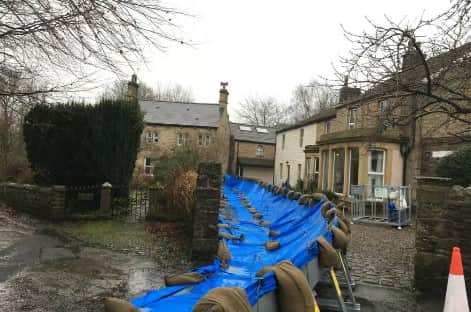

Replying, Conservative Coun Simon Hore, the council leader, said: “It’s useful to set out the statutory position, so the public does not wrongly assume from the question that the Ribble Valley is responsible for flood mitigation measures across the borough.
“The main organisation for flood risk management is the Environment Agency. It is the lead body for main rivers and reservoirs. It is responsible for building and maintaining flood defences, for public warnings and information, and strategic flood risk management.
“Then Lancashire County Council, classed as the local lead flood authority, is responsible for surface and ground water, smaller streams and ditches. Its duties include having a local flood risk management strategy and investigating significant local flooding. It also coordinates highways, water companies and drainage boards.
“The role of borough councils like the Ribble Valley is to work with the lead authorities and emergency services during floods. And to be responsible for planning controls and ensuring new developments include proper drainage and flood mitigation. We consult both the Environment Agency and the county council.”
Then Coun Graveston asked: “Is the leader concerned about recent planning applications, specifically for Whalley? Do you believe building on land could exacerbate the problem?”
Coun Hore replied: “Without seeing a specific application, I cannot comment. But if you give me details, I can speak to the planning director. But all applications go out for consultation to statutory consultee bodies. On that basis with their feedback, our teams will make planning decisions.”
Last month at a finance meeting, Labour Coun Karl Barnsley said council funding for natural flood controls upstream of Ribchester should be a higher council priority than potentially giving £12,500 for extra fencing at Clitheroe’s Brungerley Park.
At Ribchester, flooding on occasions has impacted homes and roads, including a junction with the A59. He said some households want top sell-up after flooding in January this year.
He said an expression of interest from local groups interested in a Ribchester flood prevention scheme had not been included, so far, in a list of projects earmarked for potential council cash.
However, final decisions are yet to be taken and the council has invited community groups to send expressions of interest. The borough has its own £1.6 million Shared Prosperity Fund plus other government funds. But there are allocation deadlines next spring.
Also last winter, a planning application by developer Oakmere Homes for apartments, houses and a car park near Accrington Road, Whalley, was refused by Ribble Valley’s planning committee. Officers had recommended approval but councillors refused. Their reasons included disagreeing with the Environment Agency about flood risks.