
'I've enjoyed every moment of it': 77-year-old climate activist wins BBC Make a Difference Award
Glynis Goldsbrough, 77, has won the BBC Make a Difference Environmental Award for her work with Sustainability Learning CIC in Preston, which has taught over 6,000 students in 200 schools across the UK.
Educating the next generation is a lot of pressure - and receiving a letter addressed to ‘The person responsible for saving the planet’ probably didn’t help.
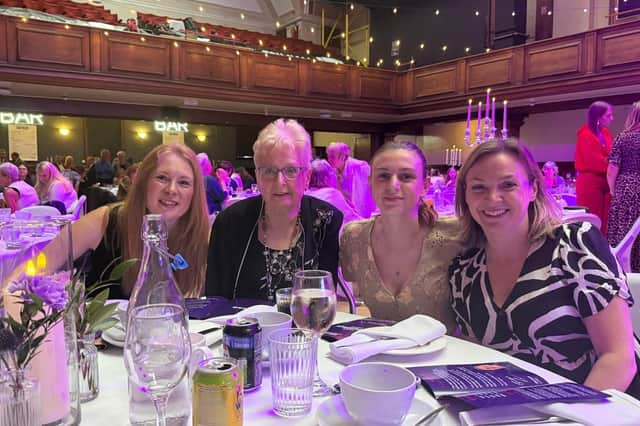

Since the 1980s, Glynis Goldsbrough, 77, has worked tirelessly to make her local community more environmentally friendly, and to teach more young people about climate change through her project Sustainability Learning CIC.
In an age where conversations around the environment are more pressing than ever, hosting workshops and classes for children had always been something Glynis said she’d done out of her own passion - which was why winning a BBC Make a Difference Award this week was “completely unexpected”.
“I didn’t know I’d even been nominated,” she told the Lancashire Evening Post. “It came as a total surprise!
“It was a wonderful ceremony, well organised, a fantastic venue, and the afternoon tea was lovely. All the BBC staff were excellent.
“Apparently I made everybody laugh. My granddaughter helped me up the stairlift at the front of the stage, and when I got up, Graham Liver asked, ‘How do you feel?’.
“I said, ‘How do I feel? I’m in paint at the minute - I’ve broken my femur!’.”
Since launching Sustainability Learning in Preston in 2007, Glynis has taught workshops to more than 6,000 students in 200 schools across the UK.
Back then, Glynis had worked as a headteacher in Brabin’s Endowed Primary School, Chipping, and said the urge to do something more with her environmental work came from nothing more than a glance out the window.
“I was sitting in my office - though it was too small to be called an office, it used to be referred to as a cupboard - and I was looking out of the window, and I could see the chicken at the bottom of the school field.
“I could see the raised beds where we grew our vegetables, and the greenhouse, and I thought we should really be sharing what we did with other schools.
“I was a very proactive member of what was called the Lancashire Schools Sustainability Forum, and at one meeting, I said, ‘I’ve got all these contacts, so should I not be using them to promote [other schools] and run conferences for young people, promoting the organisations that support them?’.
“We did two days, for Key Stage Two and Key Stage Three, and then we outgrew that facility. Then we were moving to the University of Lancashire, but at short notice, we were told we wouldn’t be able to go because there was building work.
“And then, it was the Blackburn Rovers who were our knights in shining armour. They came forward and said, ‘We can offer you a facility’, and it’s been absolutely wonderful.”
Now nearly two decades on, Sustainability Learning has expanded far further than Glynis could have anticipated. The team have hosted thousands of workshops and conferences, been mentioned in government documents, and last year was presented with the David Bellamy Award for Environmental Cleanliness.
“Primary school children are eager to learn,” Glynis said. “For quite a few years I’ve run a competition to make a rap song about sustainability. You know: ‘Reduce, reuse, recycle, don’t put it in the bin. Reduce, reuse, recycle, your plastic, paper, and tin’.
“If you’re shortlisted, you’ve got to perform it in front of like 300 children, and you’ve got to give it attitude. I expect a performance of a high standard. And the children are very good at it!
Join our WhatsApp channel
“I provide something more structured for the high school students. We’ve done debate competitions, biodiversity art competitions, trashion garment-making competitions... and then we have the production line roleplay.
“There’s groups of six children, and each does a different job. They have to organise themselves under Mrs. Jagatiya, who owns a sweatshop in a developing country.
“The students get paid for the items they make, but they can have wages docked if they waste materials. They’re constantly told how lucky they are to have this job because all their brother and sisters are out begging, and they won’t get a job anywhere else if they get the sack - there are five or six other children all waiting to take their job.
“What we’re trying to get over to them is how lucky they are to live in the United Kingdom where we do have fair trade, where we do have minimum wage, where we do have the National Health Service, because some children don’t.”
Now with the Make a Difference Trophy stored proudly on the mantlepiece, Glynis is preparing to take a step back from leading the group.
She will be taken over by forum chair and long-time friend Wendy Litherland, though the group are continuing to look for new volunteers to keep up their work educating the next generation.
“Wendy is raring to go, and you can’t hold onto the reins forever,” Glynis said. “This would be an ideal time to stand down and let her develop it in the way that she wants to.
“I’ve always done this work voluntarily, and I probably put in about 1,000 hours every year. We got recognised as the largest event of its kind in the North West.
“When I leave, there’s probably going to be a gulf, because who will there be who’s going to do these extra hours? Wendy’s major role now is to find suitable finances to bring in some sort of facilitator.
“When I used to talk to headteachers about sustainability, they would say, ‘Oh, well, we are managing, and although the budget isn’t as much as we thought it was going to be, we have managed to maintain our staffing levels’. It was all about keeping the status quo.
“Now, every sector from nurseries up to universities have the responsibility to have sustainability well-established in their curriculum, their building, and their community.
“So, good luck Wendy - I’ve enjoyed every moment of it.”