
One Lancashire borough is bucking the national rise in homelessness

One Lancashire borough has impressively bucked the national trend of increasing rough sleepers on its streets.
Blackburn with Darwen borough has seen a 47 per cent cut in the number rough sleeping since 2021 while across the UK there has been a 20 per cent rise.
The figures were revealed by council public health boss Cllr Damian Talbot as its executive board approved a new ‘Homelessness and Rough Sleeping Strategy 2026-2031’.
The rough sleeping reduction was despite a 108 per cent increase in the number of households seeking homelessness assistance from the Housing Needs and Support Team from 168 assessments in Quarter One of 2020/21 to 350 in Quarter Four of 2024/25.
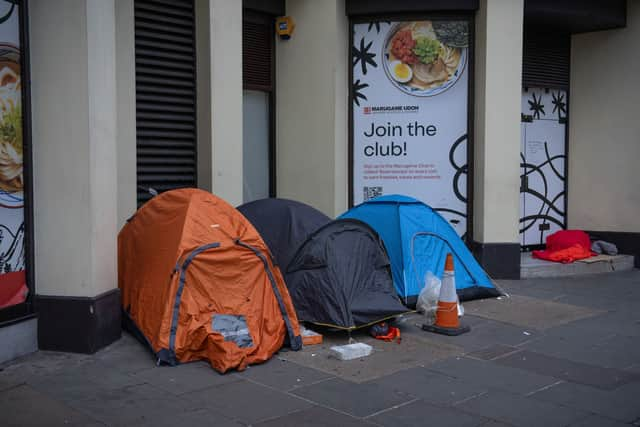

Cllr Talbot listed other achievements under the previous five-year blueprint to tackle homelessness between 2020 and 2025.
They included:
- 3,146 households prevented from becoming homeless;
- 3,094 households assisted into alternative accommodation;
- 5,478 households assisted by the Housing Needs and Support Team;
- 10 rough sleeper accommodation pods established in 2020;
- a dedicated rough sleeper outreach team created in 2021.
- a new health and housing officer created to co-ordinate homeless hospital discharge;
- 1,572 households referred to supported accommodation;
- a new recovery hub developed at the Salvation Army to support those with substance misuse.
- 252 new affordable rented homes completed;
- 39 new affordable shared ownership homes completed; and
- 189 new affordable homes with planning permission and in the pipeline.
Cllr Talbot said: “A Homelessness Review was undertaken by the housing needs team in May.
“There has been an 108 per cent increase in the number of households seeking homelessness assistance from the Housing Needs and Support Team.
“This increase is the result of various factors including legislative changes, welfare reforms, and economic challenges such as the cost-of-living crisis, increasing rents and mortgage interest rates, and the freeze on Local Housing Allowance rates.
“The main reasons for homelessness were due to family/friends no longer willing to accommodate (32 per cent), the end of a private rented tenancy (14 per cent), households required to leave asylum accommodation (12 per cent) and those who left an institution with no accommodation, i.e. hospital/prison (10 per cent).
“The cost-of-living crisis has meant that housing is becoming less affordable, and some private landlords has chosen to come away from the sector due to interest rates and inflation, meaning less affordable available properties being available and as such the team being unable to prevent homelessness.
“Most of the temporary accommodation used is leased from a Registered Housing Provider and bed and breakfast use has remained low over the past five years as a consequence.”