
Last surviving structure from Penwortham Priory estate could soon be demolished - here's why
It is thought the gatehouse dates to the early part of the 1800s.
The last surviving structure from the historic Penwortham Priory estate could soon be demolished, under new plans.
The Penwortham Priory Gatehouse, which is also known as the Penwortham Lodge or Church Lodge, originally stood on Penwortham Hill and is thought to date to the early 1800s. To accommodate the widening of the A59 road, it was dismantled in 1912 and carefully re-erected in 1915 on the corner of Tolsey Drive and Moor Lane, two miles away in Hutton.
The building, now known as The Lodge, 2 Moor Lane, has been used as a home for decades, with the addition of a small side extension and conservatory.
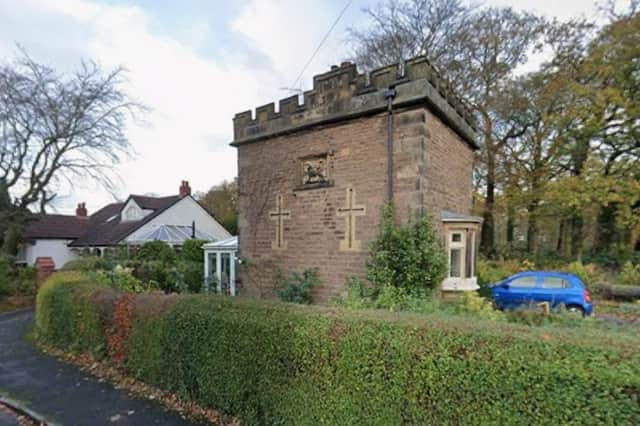

The main Penwortham Priory mansion was demolished in 1925 to make way for the housing developments currently surrounding Penwortham Priory Academy, leaving the Hutton gatehouse as the sole surviving intact structure from the historic estate.
But now, it too could be consigned to the history books, as executors for the estate of Anne Whitworth look to raze it to the ground and redevelop the site for up to two houses.
A planning statement for the permission in principle application by Gibraltar-based agent Robert Gifford Von Schiller makes no reference to the historical nature of the building, nor does it give any indication of what would happen to material from the demolition.
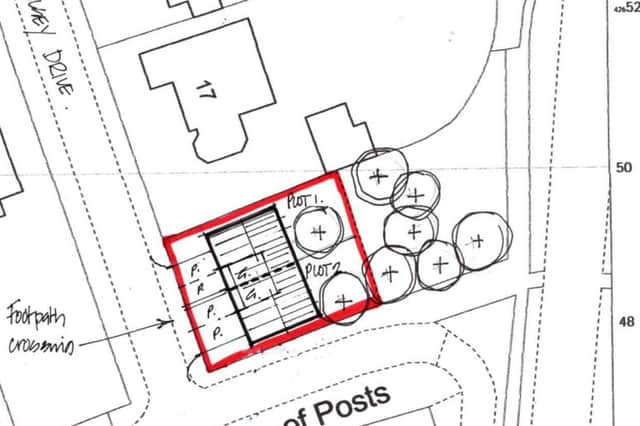
Mr Gifford Von Schiller states: “The proposal would deliver two additional dwellings within an established residential area and represents a modest and proportionate form of development that would contribute towards meeting local housing needs.”
“Improve its appearance”
Details of the design of the two replacement homes has not been given, as this is a permission in principle application, but the agent states that the proposal “gives the opportunity to redevelop an underutilised site, improve its appearance and deliver a high-quality residential environment in accordance with the design principles contained within Policy D1.”
Despite the planning statement saying the land would be for three houses when the rest of the application is for two, Mr Gifford Von Schiller states: “The amount of development proposed is proportionate and compatible with the surrounding settlement pattern.” He says it falls into the bracket of Previously Developed Land, and consequently, substantial weight should be attributed to the redevelopment of this site for residential purposes.

Mr Gifford Von Schiller has been contacted for comment.
South Ribble Borough Council will make a decision in coming weeks.
For the latest public notices from your area, please visit: https://publicnoticeportal.uk/
The history of Penwortham Priory
Penwortham Priory was first a Benedictine priory and, after the Dissolution of the Monasteries, a country house in what was the village of Penwortham. Before 1086, William the Conqueror gave this area of Lancashire to his relative, Roger the Poitevin. Roger gave land to the Benedictine Evesham Abbey and a small daughter cell was built at Penwortham, starting in 1075. The priory, dedicated to Saint Mary, had no independence from Evesham but functioned until the Dissolution of the Monasteries in 1535.
Once seized, the priory and its lands were sold to the Fleetwood family at a price of £3,088. The Fleetwoods built a mansion on the site which took the name of Penwortham Priory. The family continued to live there until 1749. Ownership then passed first to the Aspinall family, and then to the Rawsthornes.
Major alterations occurred in the first part of the 1800s, which culminated in the house being hugely expanded through the work of architect George Webster, who also worked on Samlesbury Hall. Penwortham Priory became a massive gothic mansion, complete with mock battlements and corner turrets.