
Preston North End use the power of sport to help vulnerable members of the community
Preston North End's Deepdale stadium hosts Sporting Memories sessions for elderly, tackling isolation and dementia, with attendees enjoying a brew and a biscuit while discussing sporting issues and meeting new friends.
The iconic Deepdale - home of the famous Preston North End - is without doubt the biggest community hub across the city.
Every other Saturday - and many Tuesday evenings - thousands of Lilywhites fans head to the stadium to cheer on their team.
But it’s not just on the field of play that Deepdale’s presence is felt.
The famous old ground provides a foundation stone for Prestonians beyond events which happen on the pitch.
Preston North End’s Community and Education Trust (PNECET) is a charity organisation which utilises the power of the football club and its badge to deliver health, wellbeing, education, and community engagement projects.
Located in the Alan Kelly Stand, the trust employs more than 40 full-time staff and community coaches.
It provides education and guidance for young people such as school holiday soccer camps and activity zones, along with its initiatives Game Plan and Game Changer which provides life skills and career pathway support.
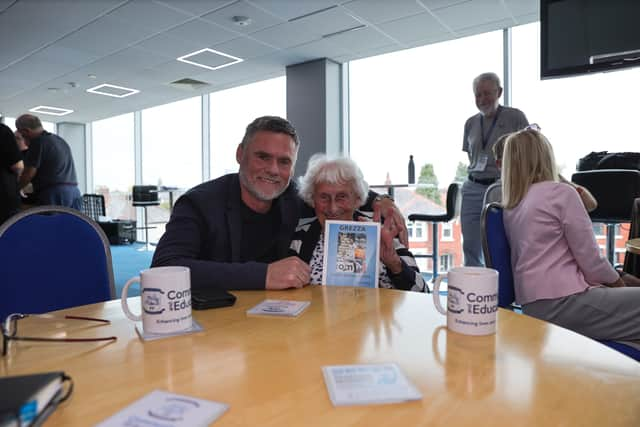

Other community engagement projects include workshops helping in the fight against racism and PNE Forces Football, which provides sessions for current and former members of the Armed Forces.
PNECET is also a vital support resource for older members of the community.
It hosts of variety of events aimed at supporting the elderly, particularly people who may be isolated, or suffering from dementia or mental health issues.
One of its most popular initiatives is the Sporting Memories sessions held at Deepdale every Tuesday.
Attendees can enjoy a brew and a biscuit, while discussing various sporting issues whether topical or historical.
Run by Georgia Hills and April Irlam, who are heath and wellbeing coaches within the trust, the Sporting Memories sessions often attract guest speakers.
Last year, North End manager Graham Alexander attended one session to discuss his career in football and as recently as this month, former veteran and paralympian Stuart Robinson spoke to the group.
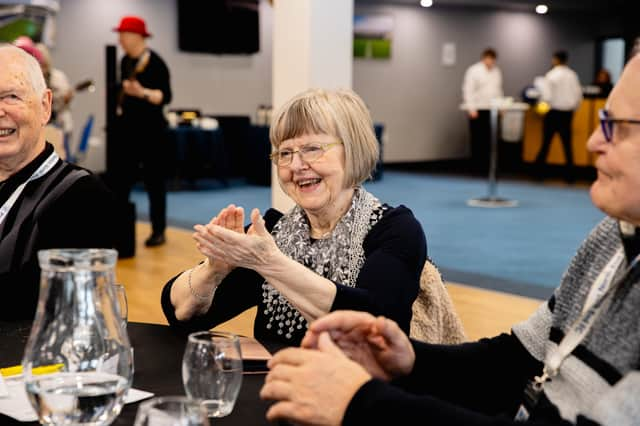
Georgia said: “Our Sporting Memories sessions came through the Sporting Memories Foundation, which started in 2011. We then did our own here just before COVID, where we could convene all in person.
“But it really took off in COVID when we went online.
“During that time, we could all meet online once a week. And that's when our numbers really started to grow for the sessions.
”After COVID, we were able to do our in-person sessions again, and then obviously due to the popularity that we've had over COVID, we just started growing and growing from there.”
April added: “Our Sporting Memories sessions are for people of retirement age, especially those either living with dementia, the socially isolated or maybe (living with) mental health conditions, for example, depression and anxiety, things like that.”
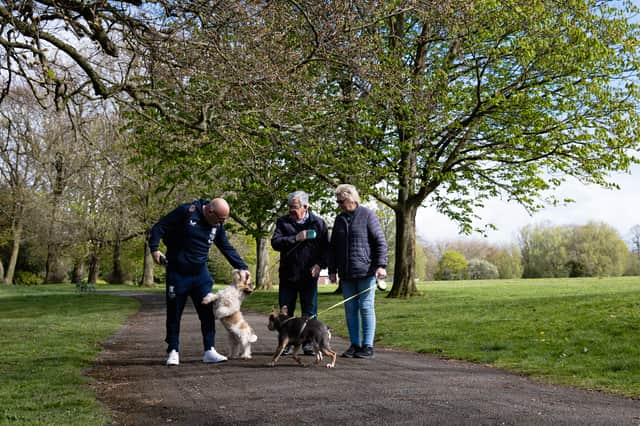
Many of the group attendees have become volunteers - one such volunteer is former school librarian Jo Harwood, who first came along to the Sporting Memories sessions with her husband Peter.
Peter was a chemistry teacher and authored several books, but was diagnosed with dementia and Parkinson's disease and sadly passed away.
Jo - a mother of four and grandmother of five - continued to attend the sessions and is now a much-valued member of the trust’s voluntary team.
“The sessions are brilliant,” she said. “They have grown exponentially; when you see people week after week wanting to join in and when they miss one week, they are not happy about it.
“There’s a variety of activities so that they can participate. It’s a chance to meet new friends or reconnect with people they might have played football with or other sports from years ago.”
For breaking news, live updates and everything happening across Preston and Lancashire, follow us on Facebook today.
One of the very first attendees of the Sporting Memories sessions was Malcolm Rae OBE.
A former director of nursing at Prestwich Hospital, Malcolm was one of the co-founders of the charity State of Mind Sport which was set up following the tragic death of rugby league star Terry Newton in 2010.
It is a multi-award-winning charity that harnesses the power of sport to promote positive mental fitness among athletes, fans, and communities — ultimately helping to prevent suicide, particularly among males.
He said: “We set up State of Mind Sport, where we use the power and language of sport which relates particularly to men who are vulnerable.
“Stigma is one of the biggest killers. Men bottle things up, they don't open up, and I think the charity scored by engaging with ex-players, big lads, tough lads, lads with plenty of credibility, who say it how it is, in language that the man in the street will identify with.
“So we use language like ‘help a mate’, ‘off-loading your problems’, ‘making ground’.
“We've gone on to give talks to emergency services, schools, prisons.”