
'I'm a waste expert and this is why disposable vapes are a major risk' - Blackburn man on fire dangers
A Lancashire waste expert is calling for urgent public education to prevent people from throwing vapes in general rubbish, warning that the Government’s single-use vape ban may have inadvertently increased fire risks.
Greg Smith, Technical Manager at Blackburn-based CSG Recovery, said people remain oblivious to the significant problems caused by not disposing of vapes correctly. He has called for clear education and warnings – potentially on the vape’s packaging or at the point of purchase – advising people of the fire risk caused by throwing a device away with general rubbish.
In June last year, the Government banned single-use vapes to curb underage use and reduce environmental impact. That means all vapes bought today must be rechargeable. However, since there are many low-quality rechargeable products available for a similar price to the now-banned single-use disposable alternative, many people only use their reusable vapes a handful of times before throwing them away.
And often that means the devices still have some power in them when they are binned, unlike disposables which were generally used until the power was completely drained.
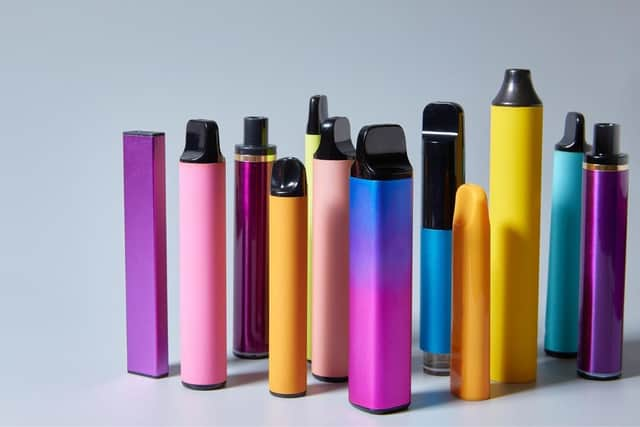

Greg said: “The risk comes from the lithium-ion batteries inside every vape. Lithium-ion batteries should not be thrown away with general rubbish in any circumstance – it’s as simple as that.
“Incorrect disposal is, however, even more dangerous when there is some residual power left in the battery. The fire risk comes from a process called thermal runaway, which causes battery cells to rapidly heat to extreme temperatures. The risk of thermal runaway is particularly high if a vape still has more than 50 per cent charge.
“It's unlikely that someone would throw away a disposable with 50 per cent charge left - but quite possible with a rechargeable. Educating the public on correct disposal is vital. The message isn’t reaching enough people so, in my opinion, it should be prominently displayed on packaging or at the point of sale.”
How used vapes are dealt with
Each year, the UK sees around 1,200 battery-related fires, many caused by vapes, most occurring in bin lorries and recycling centres.
When CSG Recovery receives a used vape, its experienced team painstakingly dismantles the product by hand into its retrievable parts. Greg said: “There is no machinery that exists that can reliably separate parts of small electronic devices like vapes. In many cases, the products have been very cheaply constructed with parts crudely glued together to save manufacturing time.
“We separate the highly toxic nicotine, the electronic waste in the circuit board, the lithium battery, the cardboard and plastic. The nicotine can be extracted to create energy, the electronic components and battery can be reused and the plastic can be granulised and made into new plastic. Some of these materials are finite and in high demand so should be salvaged wherever possible.”