
I had a stroke days before my wedding - this is the crucial information people don't realise
A Preston woman who had a stroke two weeks before her wedding because of “off the scale” high blood pressure has spoken out to warn others.
Carla Maloco, 66, from Much Hoole was preparing for her big day with partner Maureen in September 2023 when disaster struck.
On the day of her stroke Carla began to feel nauseous. She went to tell Maureen but collapsed in the living room. Carla said: “I was staggering like I was drunk. The carpet was rising off the floor like waves in the sea, with the dog bed floating on it like a boat. I bounced off the sofa and fell into the chair. I was retching into a bucket, my left hand was twitching, and my speech was going weird. It was horrible.”
Suspecting a stroke, Maureen called 999 and an ambulance arrived within 10 minutes. Carla was bluelighted to Royal Preston Hospital with a blood pressure reading so high it was “off the scale.” After a CT scan confirmed a blood clot in her brain, she was put on medication to stabilise her blood pressure. She would only learn weeks later that her stroke had also been caused by Atrial Fibrillation or irregular heartbeat. Carla said: “All I cared about was Maureen and being at my wedding. I think I was on a high. I kept asking the staff when I could leave hospital, and they would tell me they hadn’t even done their assessments yet!”
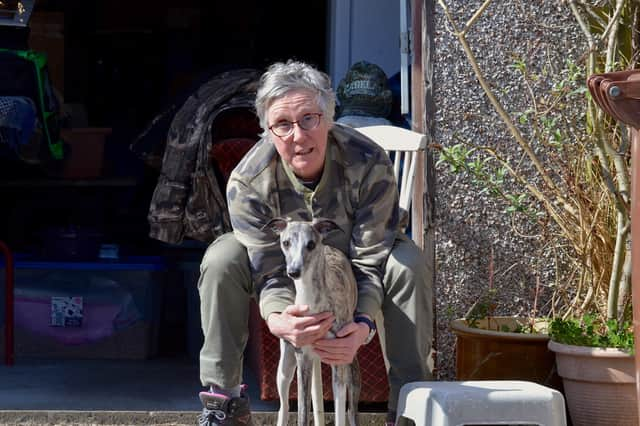

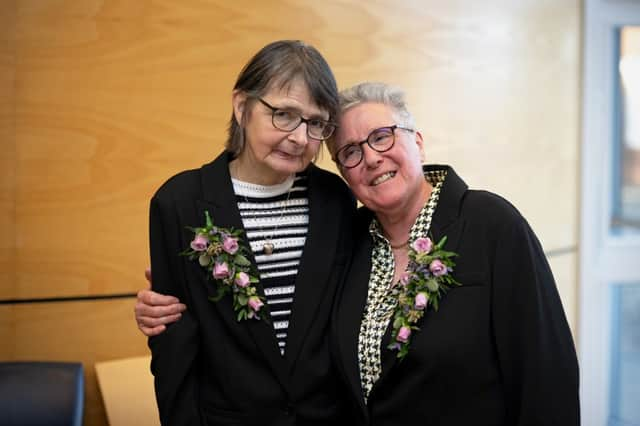
Carla was discharged after four days and on September 25, 2023, Carla and Maureen tied the knot. However, once daily life restarted, the real impact of the stroke began to sink in. She noticed her left-hand function was still not right and she felt drained after everyday activities. Carla said: “I was certain I was going to be alright. But the day after the wedding, the fatigue was so bad it felt like a truck had hit me. Some days are really bad. Just walking the dog or going food shopping leaves me exhausted.
“I’m aware that I’m not the same person I was. My confidence has gone. I get anxious doing things that are not familiar to me. For example, when I drove my new car for the first time, I had a major panic attack and couldn’t even start it up. I felt sick, useless, and just wanted to run away.
Carla and Maureen are working to overcome the challenges presented by the stroke and want others to know that, with support and time, recovery is possible. Carla said: “The stroke has affected Maureen’s life, as well as our relationship. We have discussed and read a lot about the life-changing event that stroke is. What keeps us together is the love we have for each other.It’s been a bumpy ride and stroke recovery is not a quick fix but I want people to know they can turn things around for themselves.”
Stroke awareness
A worryingly large proportion of UK adults don’t know that high blood pressure is the most likely cause of stroke, according to new statistics from the Stroke Association. Findings from the leading stroke support charity, collected last month show that 36 per cent of people who have experience of, and therefore a connection, to stroke don’t know that high blood pressure is the biggest risk factor for the condition. Their connection to stroke - either through their own diagnosis or that of a loved one - is likely to increase their knowledge of stroke and its causes.
In addition, the Stroke Association has found that awareness levels are even lower amongst people who don’t have such a connection to stroke, with 43 per cent not knowing that high blood pressure is the leading risk factor for stroke.
The data also found that a surprisingly low number of people with a connection to stroke knew about the condition’s additional risk factors - 85 per cent didn’t identify eating badly as a major risk factor and 57 per cent didn’t select smoking as a factor most likely to contribute to stroke.
Have your blood pressure checked
In total, 1.4 million people in the UK are survivors of stroke and someone in the UK has a stroke every five minutes, with high blood pressure accounting for around half of those. Stroke survivors are frequently left with physical and mental disabilities including paralysis, problems with vision, difficulties swallowing and a struggle to communicate.
To mark Stroke Prevention Day today, the Stroke Association is encouraging people to have their blood pressure regularly checked. As well as high blood pressure, risk factors of stroke also include poor diet, lack of exercise and smoking. Those with high readings can cut their stroke risk by reducing salt intake, regularly exercising, reviewing alcohol consumption, and smokers should try to quit.
The charity is also lobbying the Government to prioritise stroke prevention as part of the 10 Year Health Plan for England. Prompt treatment, such as thrombectomy or thrombolysis, as well as effective recovery can help stroke survivors to live physically and mentally well.
Whilst people of any age can have a stroke, it is most likely to impact those over the age of 65. Free blood pressure checks are available from the GP, participating pharmacies, and are also part of NHS health checks for those over the age of 40 in England and Wales. Yet recent data from the National Audit Office found that only 44 per cent of eligible adults attended these health checks in the last five years.
If you have high blood pressure, and want to support the Stroke Association, get involved with its fundraising initiative, Stride for Stroke. The charity is asking people to take one step for each of the 1.3 million stroke survivors currently living in the UK, which works out as 10,000 steps per day for 130 days. Spin or Swim for Stroke also allows participants to set a personal challenge for time or distance. Or Run 50 asks people to cover 50 miles across a month of their choice. Visit Choose Your Challenge | Stroke Association