
Majority of women 'scared at night in Preston', survey suggests
More than two in three women feel unsafe at night on the streets of Preston city centre – with the bus station being the place they believe they are most at risk.
That was one of the main findings of a recent survey carried out on behalf of the Lancashire Police and Crime Commissioner (PCC), which also revealed that a third of women in Preston have felt “frequently unsafe in public spaces” over the past year.
A total of 431 women from the Preston area responded to the county-wide exercise, designed to better understand both the reality and perception of violence against women and girls.
The Preston results – shared with the Lancashire Post – reveal a raft of serious concerns amongst respondents.
Sixty-eight percent of those who took part in the survey said they felt unsafe after dark in Preston city centre – while 45 percent had the same concern during daylight hours.
Parks and open space were considered problematic places for 72 percent of Preston women at night – and 38 percent during the day.
However, the most feared place of all after sunset was the city’s bus station. Seventy-three percent of respondents said they felt unsafe using the iconic interchange at night, while 44 percent were equally concerned even if they were daytime travellers.
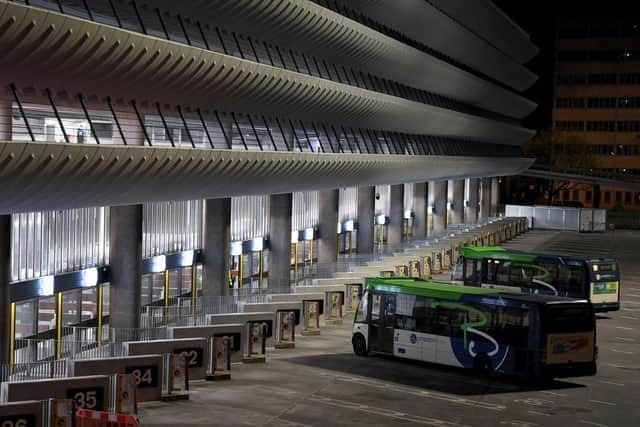

Exacerbating fears about specific locations was a belief amongst 72 percent of survey participants that bystanders would not intervene to help a woman who found themselves in trouble after falling victim to harassment in a public place in the city.
Amongst the other major concerns listed by Preston women about their safety when out and about were: spiking (74 percent), sexual assault (72 percent) and rape (69 percent).
Limited or non-existent CCTV, poor lighting, a lack of visible policing and antisocial behaviour were all major contributors to how vulnerable women felt while simply going about their business.
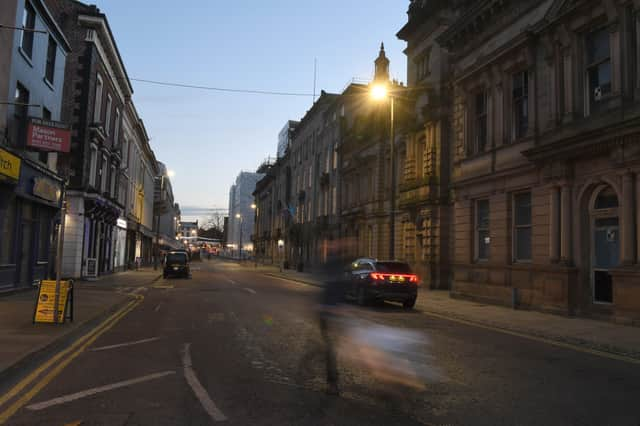
Responding to the findings, Preston City Council said it was taking action to improve women’s experience of being out in the city – and the confidence they could feel in their own safety.
The authority highlighted plans to install 14 new CCTV cameras on key routes within the city centre, along with the recent refurbishment and upgrading of all the existing cameras that are monitored around the clock.
There is also live monitoring of a camera which covers the Lancashire County Council-operated bus station forecourt and the surrounding area.
CCTV has been extended to two of the city’s parks, while another is in line for a camera rollout.
Improvements to lighting are also being made, with additional lights being placed on main streets in the city centre – including in and around shadow-casting trees – and a wholesale upgrade of the lighting on pedestrian routes to and from the bus station and on the Flag Market, Orchard Street and Friargate South.
Meanwhile, street safety patrols carried out by council staff charged with helping tackle antisocial behaviour – often jointly undertaken with Preston’s Neighbourhood Policing Team – target potential problem spots, while regular checks are made on licensed premises. The city centre has, since last year, also been covered by a public spaces protection order, which outlaws a range of potentially alarming behaviours.
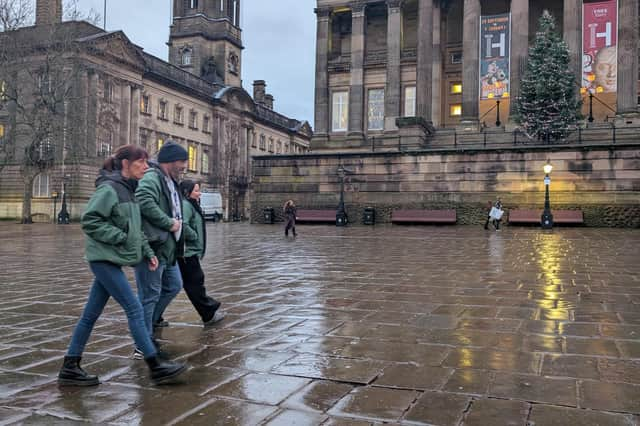
Preston City Council’s cabinet member for communities and social justice, Peter Kelly said the Commissioner’s survey had “laid bare some staggering statistics” and highlighted “how important it is that we make our city safe for everyone”.
He added: “The council is involved in some fantastic collaborative work across the city to tackle some of the key issues that impact on the safety of our residents. We look forward to strengthening our community networks and joint partnership working in 2026. Together we can achieve so much more.”
‘INTIMIDATING AND SCARY’
Amongst the more than 4,800 women and girls who responded to the PCC survey across Lancashire, almost four in five said they felt unsafe at least some of the time, especially when walking alone after dark. Town centres, car parks and public transport were the most often-mentioned locations of concern.
Forty-nine percent of Lancashire women said they felt unsafe “frequently” – higher than the one third who had done so in Preston over the past 12 months.
Only a third of respondents felt confident that the police would act if they reported an incident and just 29 percent of respondents said they believed the police would “take all the actions they can to improve safety for women and girls in Lancashire”.
Speaking last month at the launch of his ‘Get the Message’ campaign, encouraging men and boys to reflect on how their behaviour affects women and girls in the wake of the survey findings, Clive Grunshaw, Lancashire’s Police and Crime Commissioner, said: “Misogyny and violence against women and girls have no place in our communities.
“We all have a responsibility to challenge harmful behaviours that may wrongly be perceived as harmless. They are not. They are dangerous, intimidating and scary for those on the receiving end.
“Women and girls deserve to be safe and feel safe and I hope by raising awareness, and by challenging behaviours and highlighting the consequences words and actions can have, we are enabling change.”
The Post approached the PCC for further comment on the survey results.
HOW WOMEN AND GIRLS TRY TO PROTECT THEMSELVES
Around nine in 10 of the survey respondents across Lancashire said they adapted their behaviour, as women and and girls, in an attempt to feel safer – avoiding certain areas, altering how they dress or limiting social activities.
They did so, because, according to the survey, harassment was widely reported and often seen as “routine” – with catcalling, unwanted touching and comments from passing cars being common experiences.
These were all of the “coping strategies” women said they had developed to reduce their risk and levels of fear when out on the streets of Lancashire.
I avoid streets or areas I consider to be unsafe – 93%
I cross the road to avoid men/groups of men – 88%
I stick to main roads or near properties or venues where I could shout for help – 86%
I stick to well-lit routes during darker hours – 84%
I let people know when I start my journey – 72%
I let people know my expected arrival time – 70%
I avoid travelling alone by darker hours – 67%
I use routes where there are safe spaces i.e. late night shops – 60%
I use my car to avoid public transport even though it’s costly – 57%
I avoid public transport during darker hours – 55%
I call someone to talk to whilst navigating unsafe areas – 52%
I pretend to use my mobile phone – 50%
I choose not to go out at all in the dark to avoid feeling unsafe – 46%
I change or wear extra clothing to avoid drawing attention to myself – 23%
I carry a personal safety alarm/device – 12%
I avoid travelling alone by day – 11 %
I use my bicycle as it’s safer – 2%
Other – 6%
Source: Understanding Violence Against Women and Girls in Lancashire 2025 – (SMSR Research on behalf of Lancashire PCC)